Augustine’s Confessions
Read the first autobiography: Augustine's account of a soul fleeing, then seeking, its home.
Spring 2027
Online
Michel de Montaigne (1533–92) inaugurated a new literary form with the publication of his Essays in 1580. Yet despite the essay’s ubiquity, Montaigne’s own work has been unduly confined to the margins. Perhaps this is because the Essays is peculiar in both matter and form—and Montaigne himself a peculiar figure. Or rather, as he put it, “A new figure: an unpremeditated philosopher!”
This seminar invites a small group of fellows to retrieve Montaigne’s masterpiece from the too-seldom-visited “nook in a library” where he expected it might reside. But what kind of book is the Essays?
The work is Apollonian in spirit, despite its seemingly spontaneous and disorderly appearance. Montaigne’s studied carelessness is an artful artlessness; his text only appears to be an unruly assemblage of “grotesque and monstrous bodies.” Montaigne was an artist who likened himself to a painter. He answered the Delphic injunction to “Know thyself” with a portrait: a self-portrait, but also a portrait of the human self—his own as well as ours. “It is myself that I portray,” Montaigne announces at the outset. “I am myself the matter of my book.” Yet he later reveals that the true subject of the Essays is “man” as such, for “each man bears the entire form of the human condition.” At the heart of the work, then, is humanity: Montaigne’s and our own.
The Essays offers an intensely personal yet remarkably capacious portrait of the human condition. Tearing away the masks, robes, habits, and cloaks through which human beings both conceal and reveal themselves, Montaigne depicts human nature undressed. He leaves it to his readers to test—to essay!—the truth of his account. Will you answer his invitation? Might you, like Pascal, discover yourself in Montaigne?
Through a wide-ranging selection from the Essays, this seminar will consider both the matter and the form of Montaigne’s text. We will explore how the practice of essaying may construct, reveal, or ground the self; how Montaigne understood the nature of human longing; and how he believed those longings might most wisely be answered. Above all, we will ask how Montaigne sought, through essaying, to educate both his own desires and those of his readers.
Image: Jacques-Louis David, Two Studies of the Head of a Young Man Crowned with a Laurel Wreath, 1775/80
This course is offered by Humanities at Hertog. It will take place weekly via Zoom; the meeting day and time will be announced. Fellows who complete the seminar in good standing, including full participation, timely completion of the response paper, and submission of the course evaluation, will receive a $150 Amazon gift card. Required course materials will be provided.
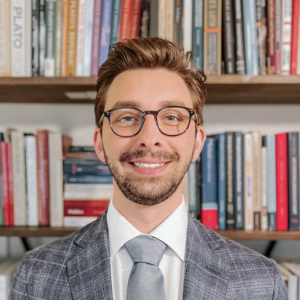
Neco Donohue is a doctoral student in political theory at the University of Texas at Austin and editor at large of The Vital Center. His research focuses on early modern and Enlightenment political philosophy, moral judgment, and political psychology.
Neco Donohue is a doctoral student in political theory in the Government Department at the University of Texas at Austin and editor at large of The Vital Center. His research examines early modern and Enlightenment political philosophers, especially their efforts to cultivate the self-knowledge and political psychology required for sound moral judgment. Before beginning his doctoral work, Donohue served as program manager at the Hertog Foundation. He holds a bachelor’s degree in political science and a certificate in Advanced Leadership Studies from American University.
Meeting date, time, reading, and discussion details forthcoming.
Meeting date, time, reading, and discussion details forthcoming.
Meeting date, time, reading, and discussion details forthcoming.
Meeting date, time, reading, and discussion details forthcoming.
Meeting date, time, reading, and discussion details forthcoming.
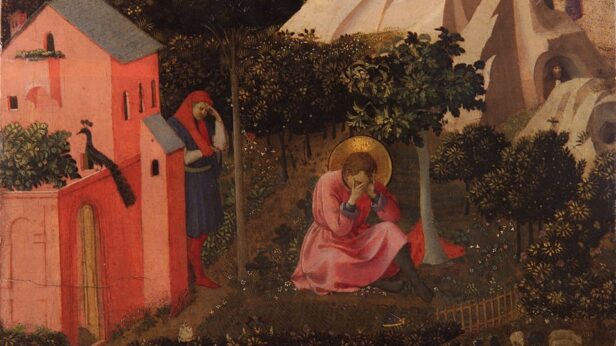
Read the first autobiography: Augustine's account of a soul fleeing, then seeking, its home.
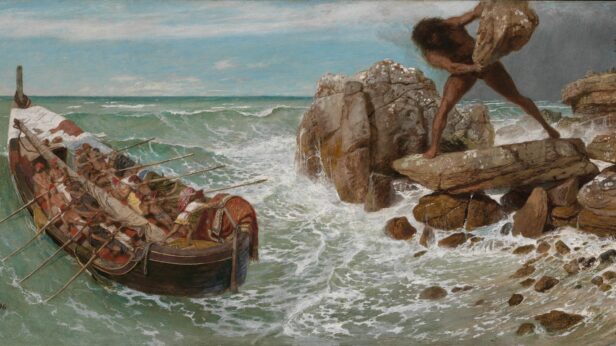
Read Homer's great drama of homecoming with a celebrated translator & critic.
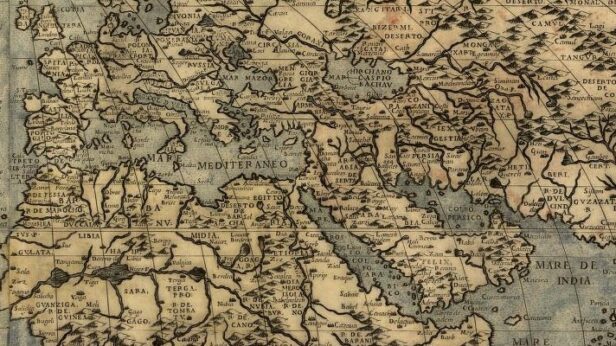
Inquire into empire, freedom, & fate with Herodotus, the father of history.
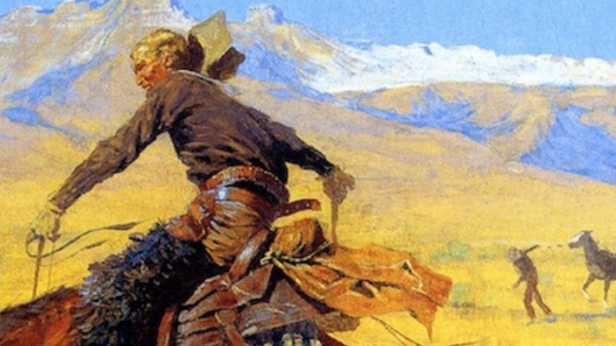
Read America's national epic of the West—& how history became legend.
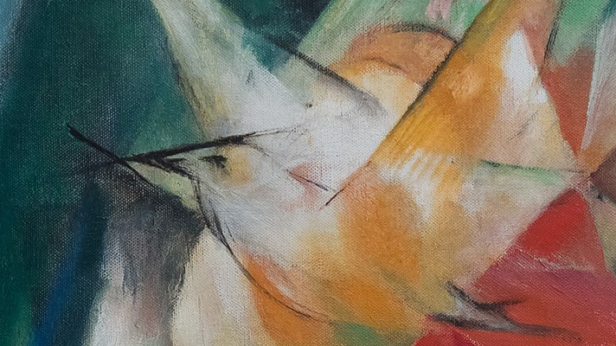
Explore memory, family, inheritance, myth, & freedom in Morrison’s acclaimed novel.

Follow one young man's education amid a Europe drifting toward the First World War.
Alexander Rosenthal Pubul
Alexander Rosenthal Pubul is an online lecturer in political thought at Johns Hopkins University’s Center for Data Analytics, Policy, and Government and teaches private courses on Udemy focused on classical and Christian thinkers. Among his books is The Theoretic Life: A Classical Ideal and its Modern Fate. He has a recent co-authored book, The Wisdom of Our Ancestors: Conservative Humanism and its Modern Fate. His work spans political philosophy, classical humanism, European intellectual history, religion and politics, and liberal democracy.
Daniel Mendelsohn
Daniel Mendelsohn is an author, critic, essayist, translator, Editor-at-Large of The New York Review of Books, and a teacher of literature at Bard College. Trained in Classics, he has written widely on Greek literature, memoir, theater, film, and contemporary culture.
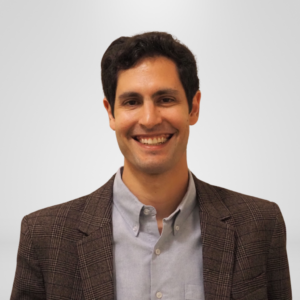
Daniel Schillinger
Daniel Schillinger is Lecturer in Political Science and Senior Fellow of the Center for Civic Thought at Yale University. He teaches in Directed Studies and works on Greek and early modern political philosophy, including Thucydides, Greek tragedy, Plato, and Hobbes.

Cheryl Miller
Cheryl Miller is executive director at the Hertog Foundation. Previously, she served as deputy director of research in the Office of Presidential Speechwriting and as research assistant to David Brooks at The New York Times. Her reviews and commentary have appeared in such publications as The Wall Street Journal, Commentary, and The Weekly Standard. She graduated from the University of Dallas with Bachelor of Arts degrees in English and Politics.
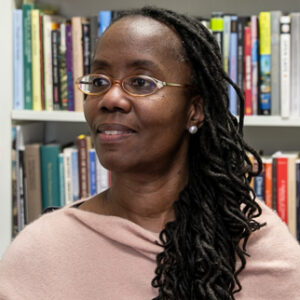
Angel Adams Parham
Angel Adams Parham is Associate Professor of Sociology and senior fellow at the Institute for Advanced Studies in Culture (IASC) at the University of Virginia. She is active in public-facing teaching and scholarship where she provides resources and training for K-12 educators who are looking to better integrate Black writers and Black history into their teaching.
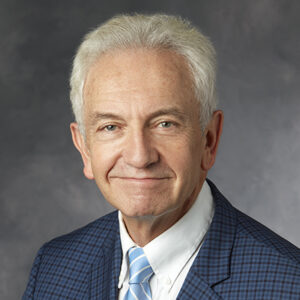
Russell A. Berman
Russell A. Berman is the Walter A. Haas Professor in the Humanities at Stanford University and a senior fellow at the Hoover Institution. His scholarship spans German and comparative literature, cultural theory, religion and culture, the Middle East, and international relations.