#/media/File:Arnold_B%C3%B6cklin_-_Odysseus_und_Polyphemus_(1896).jpg)
Herodotus’s Histories
Inquire into empire, freedom, & fate with Herodotus, the father of history.
Spring 2027
Online
There’s a reason the classics are classics—and it’s not because they have better agents than books that aren’t classics. The classics are classics because they pose the most basic questions about human experience in a way that is both lively and narratively interesting. The Greek and Roman classics are the foundation for our way of seeing the world. And therefore, we read them because they tell us something both true about us and true about life.
In the case of the Odyssey, we are talking about one of the great family dramas. It’s about homecoming, it’s about the meaning of home, it’s about how you know and how you prove your intimacy with members of your family. It’s about the bonds that connect family members over many years despite time and distance, grief and age.
Beyond that, it’s one of the greatest adventure stories and the forerunner of both fantasy literature and science-fiction. It envisions an adventurer who’s exposed to strange new civilizations—a Greek, and hence a representative of Western culture, traveling to the limits of the known world and being exposed to strange new cultures and civilizations. It is through the hero’s interactions with different models of civilization, from total barbarity to hyper-cultured behavior, that he comes to reflect on the nature and meaning of his own civilization, and to determine where on that spectrum it falls.
Hence Odysseus is, in a way, also the first anthropologist. His tale is one of someone motivated by curiosity as well as by the urgent need to return home, a man who’s very interested to see how other kinds of people live. And through Odysseus, we the readers get to reflect on just what it means to be civilized.
Image: Arnold Böcklin, Odysseus and Polyphemus, 1896
Prof. Mendelsohn discusses his translation of The Odyssey
This course is offered by Humanities at Hertog. It will take place weekly via Zoom; the meeting day and time will be announced. Fellows who complete the seminar in good standing, including full participation, timely completion of the response paper, and submission of the course evaluation, will receive a $150 Amazon gift card. Required course materials will be provided.
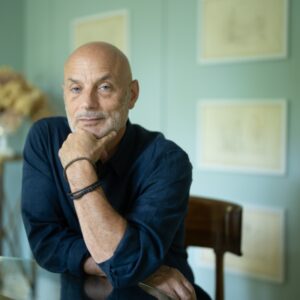
Daniel Mendelsohn is an author, critic, essayist, translator, Editor-at-Large of The New York Review of Books, and a teacher of literature at Bard College. Trained in Classics, he has written widely on Greek literature, memoir, theater, film, and contemporary culture.
Daniel Mendelsohn is an internationally bestselling author, critic, essayist, and translator, as well as Editor-at-Large of The New York Review of Books, director of the Robert B. Silvers Foundation, and a teacher of literature at Bard College. Trained in Classics at the University of Virginia and Princeton University, he has written widely on Greek literature, memoir, theater, film, and contemporary culture. His books include The Lost: A Search for Six of Six Million, winner of the National Book Critics Circle Award, National Jewish Book Award, and Prix Medicis; An Odyssey: A Father, a Son, and an Epic; Three Rings: A Tale of Exile, Narrative, and Fate; and Gender and the City in Euripides’ Political Plays. He has also translated the poetry of C. P. Cavafy. His translation of Homer’s Odyssey appeared from the University of Chicago Press in 2025. Mendelsohn’s honors include a Guggenheim Fellowship, the George Jean Nathan Prize for Drama Criticism, Princeton’s James Madison Medal, France’s Order of Arts and Letters, and Italy’s Premio Malaparte. He is a member of the American Academy of Arts and Sciences and the American Academy of Arts and Letters.
Meeting date, time, reading, and discussion details forthcoming.
Meeting date, time, reading, and discussion details forthcoming.
Meeting date, time, reading, and discussion details forthcoming.
Meeting date, time, reading, and discussion details forthcoming.
Meeting date, time, reading, and discussion details forthcoming.
Meeting date, time, reading, and discussion details forthcoming.
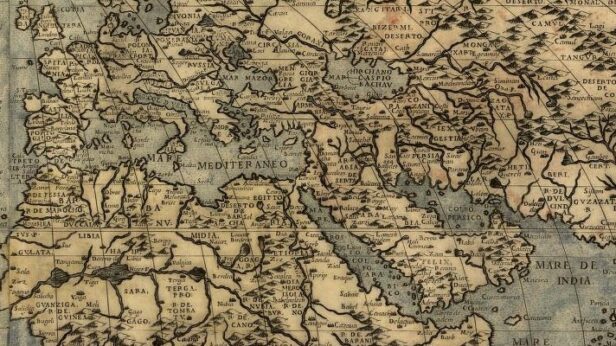
Inquire into empire, freedom, & fate with Herodotus, the father of history.
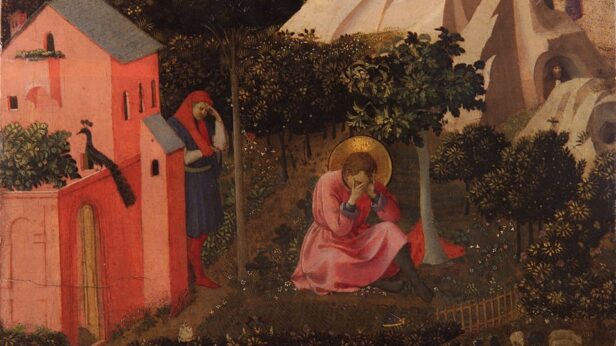
Read the first autobiography: Augustine's account of a soul fleeing, then seeking, its home.
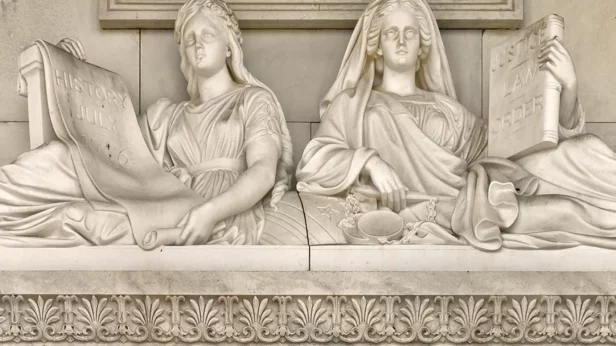
Trace liberal education's contested promise—from Plato & Aristotle to the modern American university.

Follow one young man's education amid a Europe drifting toward the First World War.
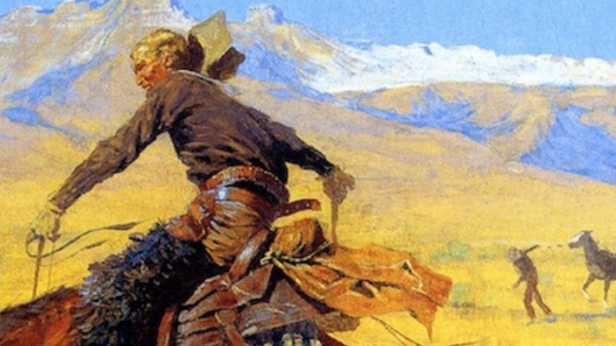
Read America's national epic of the West—& how history became legend.
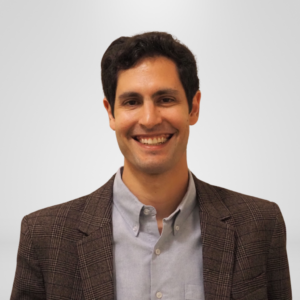
Daniel Schillinger
Daniel Schillinger is Lecturer in Political Science and Senior Fellow of the Center for Civic Thought at Yale University. He teaches in Directed Studies and works on Greek and early modern political philosophy, including Thucydides, Greek tragedy, Plato, and Hobbes.

Mary Elizabeth Halper
Mary Elizabeth Halper is Dean of the Humanities at Hertog program and a tutor at St. John’s College, Annapolis. Previously, she was Associate Director of the Hertog Foundation. She graduated with B.A.s in Philosophy and Classics from the University of Dallas and has since been devoted to liberal education in various forms.
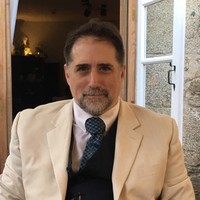
Alexander Rosenthal Pubul
Alexander Rosenthal Pubul is an online lecturer in political thought at Johns Hopkins University’s Center for Data Analytics, Policy, and Government and teaches private courses on Udemy focused on classical and Christian thinkers. Among his books is The Theoretic Life: A Classical Ideal and its Modern Fate. He has a recent co-authored book, The Wisdom of Our Ancestors: Conservative Humanism and its Modern Fate. His work spans political philosophy, classical humanism, European intellectual history, religion and politics, and liberal democracy.
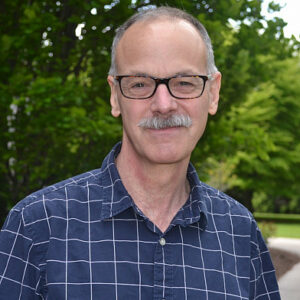
Paul Stern
Paul Stern is Professor of Politics Emeritus at Ursinus College and a scholar of classical political philosophy. His course connects great books teaching, institutional practice, and the enduring question of what liberal education is for.
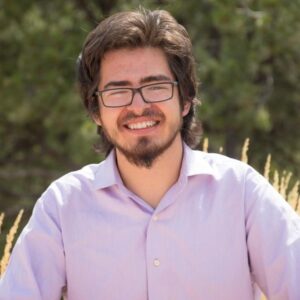
Nestor F. Aranibar Campero
Teaching Assistant
Nestor F. Aranibar Campero is an M.A. candidate in Political Theory and Democratic Culture at the Complutense University of Madrid. He studied philosophy and theology at KU Leuven and the Great Books at St. John’s College. Nestor has served as a teaching assistant for the Hertog Foundation and the Tikvah Fund and leads seminars for the Catherine Project. His research focuses on liberal education and Platonic political philosophy. He will serve as teaching assistant for Liberal Education in America.
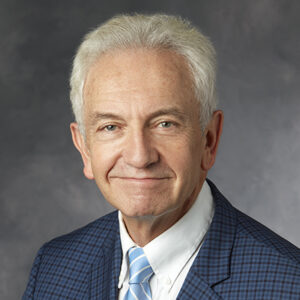
Russell A. Berman
Russell A. Berman is the Walter A. Haas Professor in the Humanities at Stanford University and a senior fellow at the Hoover Institution. His scholarship spans German and comparative literature, cultural theory, religion and culture, the Middle East, and international relations.
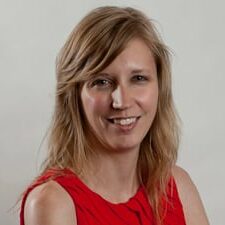
Cheryl Miller
Cheryl Miller is executive director at the Hertog Foundation. Previously, she served as deputy director of research in the Office of Presidential Speechwriting and as research assistant to David Brooks at The New York Times. Her reviews and commentary have appeared in such publications as The Wall Street Journal, Commentary, and The Weekly Standard. She graduated from the University of Dallas with Bachelor of Arts degrees in English and Politics.