America at 250
Mark America’s 250th by reading the words through which the republic has imagined, tested, & judged itself.
Wednesday | September 30 - November 4, 2026
Online
Liberal education has always been controversial. The controversy arises from its audacious and contestable claim that liberal education is that form of education most conducive to happiness. What does “happiness” mean in this context, and why is a liberal education most conducive to that end? Does it, in fact, make us better humans? Better citizens? Can it do both? These questions, raised at liberal education’s inception, remain hotly debated to this day.
Because liberal education has particularly deep roots in America, home of the small liberal arts college, it is appropriate to focus on how its attendant controversies have played out in this country. To set the stage for this discussion, we first consider the premises of liberal education articulated by Plato and Aristotle, as well as the challenges to those premises on behalf of an education that is, to use Descartes’s characterization, more useful.
We then examine the different arguments made during the era of the American founding as to whether a liberal education is most beneficial for the newly constituted republic. This will include consideration of the differing views expressed by Jefferson and Rush, Franklin and Tocqueville. Next, we review the arguments made in the 19th century by proponents of the modern university, who sought to supplant the liberal arts college as the dominant institution of higher education, along with an essay by Emerson that casts doubt on both. Twentieth-century efforts to find a place for liberal education within the large research university gave rise to similar debates, which we examine in the arguments of Robert Hutchins and John Dewey concerning whether the Great Books can contribute to those efforts.
Finally, to help us judge whether liberal education has any role in confronting our contemporary dilemmas, political and scientific-technological, we consider essays by Leo Strauss, Allan Bloom, and Richard Rorty that re-examine the premises of liberal education.
Paul Stern describes the shape of his "Liberal Education in America" seminar with Humanities at Hertog
This course is offered by Humanities at Hertog. It takes place weekly on Wednesday, via Zoom, from 6 PM to 8 PM ET. Fellows who complete the seminar in good standing, including full participation, timely completion of the response paper, and submission of the course evaluation, will receive a $150 Amazon gift card. Required course materials will be provided.
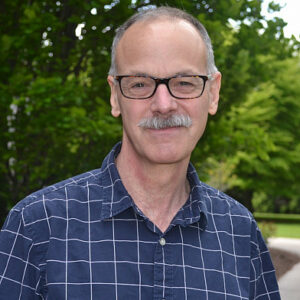
Paul Stern is Professor of Politics Emeritus at Ursinus College and a scholar of classical political philosophy. His course connects great books teaching, institutional practice, and the enduring question of what liberal education is for.
Paul Stern is Professor of Politics Emeritus at Ursinus College, where he teaches in politics and international relations and in the college’s common intellectual curriculum. His scholarship focuses on classical political philosophy, especially Plato, and he has written on Socratic rationalism, knowledge, and political life. Stern has also participated in public discussions about the shape and future of liberal education. For Liberal Education in America, he would connect institutional practice, great books teaching, and the enduring question of what a college education is for.
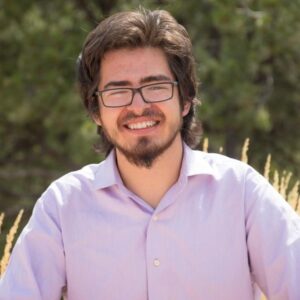
Teaching Assistant
Nestor F. Aranibar Campero is an M.A. candidate in Political Theory and Democratic Culture at the Complutense University of Madrid. He studied philosophy and theology at KU Leuven and the Great Books at St. John’s College. Nestor has served as a teaching assistant for the Hertog Foundation and the Tikvah Fund and leads seminars for the Catherine Project. His research focuses on liberal education and Platonic political philosophy. He will serve as teaching assistant for Liberal Education in America.
Readings:
Discussion Questions:
Readings:
Discussion Questions:
Readings:
Discussion Questions:
Readings:
Discussion Questions:
Readings:
Discussion Questions:
Readings:
Discussion Questions:
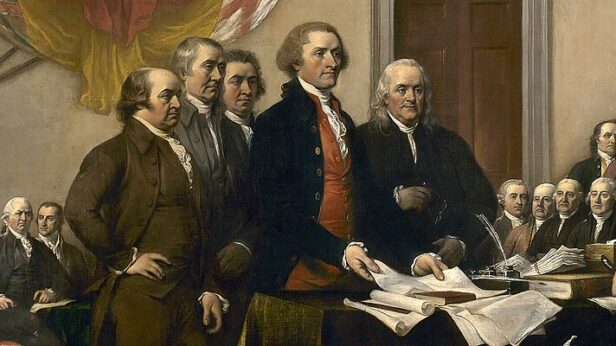
Mark America’s 250th by reading the words through which the republic has imagined, tested, & judged itself.

Read Faulkner's demanding Southern epic as a meditation on memory, inheritance, loyalty, & moral judgment.

Explore the fundamental human question of the nature and existence of God with Melville's great American novel.
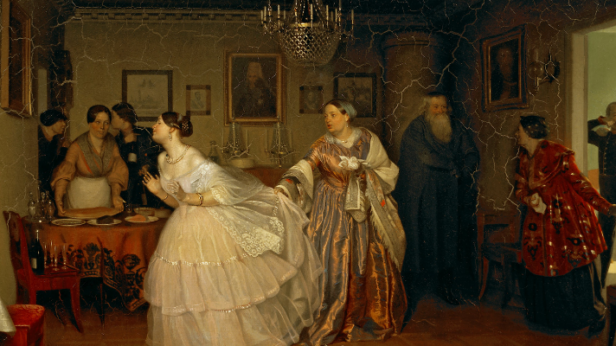
Read Tolstoy's classic novel as a moral laboratory of judgment, desire, guilt, freedom, & forgiveness.

Follow one young man's education amid a Europe drifting toward the First World War.
Explore memory, family, inheritance, myth, & freedom in Morrison’s acclaimed novel.
Yuval Levin
Yuval Levin is a Resident Scholar and Director of Social, Cultural, and Constitutional Studies at the American Enterprise Institute and the Editor of National Affairs magazine. Mr. Levin served on the White House domestic policy staff under President George W. Bush.
Ryan P. Hanley
Ryan Patrick Hanley is Professor of Political Science at Boston College. His research in the history of political philosophy focuses on the Enlightenment. He is the author of Our Great Purpose: Adam Smith on Living a Better Life and Love’s Enlightenment: Rethinking Charity in Modernity.
Christopher Scalia
Christopher J. Scalia is a senior fellow in the Social, Cultural, and Constitutional Studies department at the American Enterprise Institute, where he focuses on literature, culture, and higher education. Prior to his role at AEI, Dr. Scalia was an English professor with a specialty in 18th-century and early 19th-century British literature.
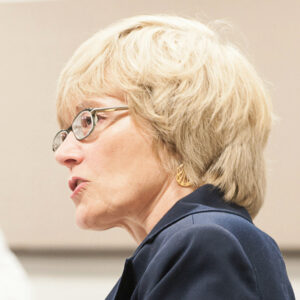
Diana Schaub
Diana Schaub is a nonresident senior fellow at the American Enterprise Institute (AEI), where her work is focused on American political thought and history, particularly Abraham Lincoln, Frederick Douglass, African American political thought, Montesquieu, and the relevance of core American ideals to contemporary challenges and debates. Concurrently, she is Professor Emerita of Political Science at Loyola University Maryland, where she taught for almost three decades.
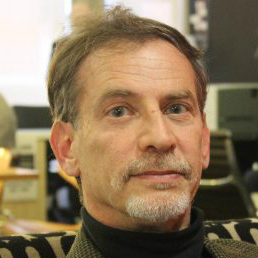
Darren Staloff
Darren Staloff is a retired Professor of History from the City College of New York and the Graduate Center of CUNY. Professor Staloff has published numerous papers and reviews on the subject of early American history.
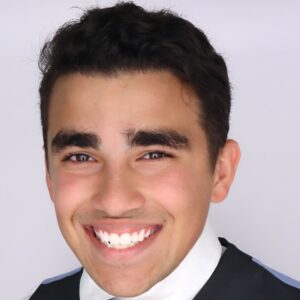
Jacob Dowd
Teaching Assistant
Jacob Dowd is a junior at Purdue University, where he studies physics and philosophy and minors in classics and music. He has served as an undergraduate preceptor in philosophy and a teaching assistant in physics, and his research has included biophysics and NASA mission-design work. A Hertog alumnus, Jacob has also been a Civics Research Fellow with Purdue’s Program on American Institutional Renewal and a legislative intern for Senator Todd Young. He will serve as teaching assistant for America’s 250th.
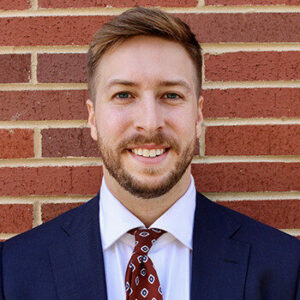
Sam Postell
Samuel Postell is Assistant Director of the Lyceum Scholars Program at Clemson University’s Snow Institute for the Study of Capitalism. He holds a Ph.D. in Politics from the University of Dallas, with a dissertation on Henry Clay, union, and legislative statesmanship. His teaching and research span American political thought, capitalism, politics and literature, and antebellum political life. He has a forthcoming book on Melville’s Moby-Dick entitled American Epic: Philosophy, Power, and Impiety in Melville’s Moby-Dick.
Lillian Law
Teaching Assistant
Lillian Law is pursuing an M.A. in English at The Catholic University of America and holds a B.A. in Political Science and French from Hillsdale College. Her background includes editorial and content-management work, and she studied William Faulkner’s Absalom, Absalom! in graduate school. A Hertog alumna, she will serve as teaching assistant for the Fall 2026 seminar on Faulkner’s novel.
Robert C. Bartlett
Robert C. Bartlett is the Behrakis Professor of Hellenic Political Studies at Boston College. His principal area of research is classical political philosophy, with particular attention to the thinkers of ancient Hellas, including Thucydides, Plato, and Aristotle. He is the co-translator of a new edition of Aristotle’s Nicomachean Ethics.

Anna Bonta Moreland
Anna Bonta Moreland is Professor of Theology in Villanova University’s Department of Humanities and director of the University Honors Program. Her teaching and scholarship range across theology, interreligious dialogue, Thomas Aquinas, comparative theology, and questions of human flourishing.
Russell A. Berman
Russell A. Berman is the Walter A. Haas Professor in the Humanities at Stanford University and a senior fellow at the Hoover Institution. His scholarship spans German and comparative literature, cultural theory, religion and culture, the Middle East, and international relations.
Angel Adams Parham
Angel Adams Parham is Associate Professor of Sociology and senior fellow at the Institute for Advanced Studies in Culture (IASC) at the University of Virginia. She is active in public-facing teaching and scholarship where she provides resources and training for K-12 educators who are looking to better integrate Black writers and Black history into their teaching.