Mark Twain’s Tom Sawyer & Huckleberry Finn
Read two great American novels that launched a literary & cultural revolution.
Thursdays | October 8 - October 29, 2026
Online
William Faulkner’s Absalom, Absalom! is the American epic of the South, yet it remains relatively neglected. This is because it is a demanding work of fiction. The great Faulkner scholar Cleanth Brooks considered it Faulkner’s best work; others find it impenetrable. Both evaluations capture something essential about the novel and about Faulkner as a writer.
In Absalom, Absalom!, Faulkner integrates themes from antiquity and modernity—Rome, Greece, Christendom, and the American South—into a sweeping account of memory, inheritance, and moral judgment. America, the American South, and the leading families of Faulkner’s fictional Yoknapatawpha County rise to epic proportions; their actions define the South’s future, and their choices help explain the South’s fate in the Civil War.
At the center of the novel stands Thomas Sutpen, described at the outset as a “man-horse-demon.” Faulkner gives us competing storytellers of Sutpen’s life, some treating him as protagonist and others as antagonist. Quentin Compson must reckon with his own heritage and hometown history through the tension between loyalty and morality, legend and truth.
Faulkner was often called the American Shakespeare. His prose is as beautiful and demanding as the story itself. The novel evokes the feeling of sitting on a Southern porch after the Civil War, reckoning with the old South and its fate, while also taking on the dimensions of epic poetry. Fellows will consider what Faulkner reveals about the American South, the human soul, and the costs of inherited loyalties.
Dr. Postell discusses how Faulkner reveals the Southern soul
This course is offered by Humanities at Hertog. It takes place weekly on Thursday, via Zoom, from 8 PM to 10 PM ET. Fellows who complete the seminar in good standing, including full participation, timely completion of the response paper, and submission of the course evaluation, will receive a $150 Amazon gift card. Required course materials will be provided.

Samuel Postell is Assistant Director of the Lyceum Scholars Program at Clemson University’s Snow Institute for the Study of Capitalism. He holds a Ph.D. in Politics from the University of Dallas, with a dissertation on Henry Clay, union, and legislative statesmanship. His teaching and research span American political thought, capitalism, politics and literature, and antebellum political life. He has a forthcoming book on Melville’s Moby-Dick entitled American Epic: Philosophy, Power, and Impiety in Melville’s Moby-Dick.
Samuel Postell is Assistant Director of the Lyceum Scholars Program at Clemson University’s Snow Institute for the Study of Capitalism. He holds a Ph.D. in Politics from the University of Dallas, with a dissertation on Henry Clay, union, and legislative statesmanship. His teaching and research span American political thought, capitalism, politics and literature, and antebellum political life. He has a forthcoming book on Melville’s Moby-Dick entitled American Epic: Philosophy, Power, and Impiety in Melville’s Moby-Dick.
Teaching Assistant
Lillian Law is pursuing an M.A. in English at The Catholic University of America and holds a B.A. in Political Science and French from Hillsdale College. Her background includes editorial and content-management work, and she studied William Faulkner’s Absalom, Absalom! in graduate school. A Hertog alumna, she will serve as teaching assistant for the Fall 2026 seminar on Faulkner’s novel.
Readings:
Viewing & Listening:
Discussion Questions:
Overarching Questions
Chapter 1
Chapter 2
Chapter 3
Chapter 4
Readings:
Viewing & Listening:
Discussion Questions:
Overarching Questions
Chapter 5
Chapter 6
Readings:
Viewing & Listening:
Discussion Questions:
Overarching Questions
Chapter 7
Readings:
Viewing & Listening:
Discussion Questions:
Overarching Questions
Chapter 8
Chapter 9
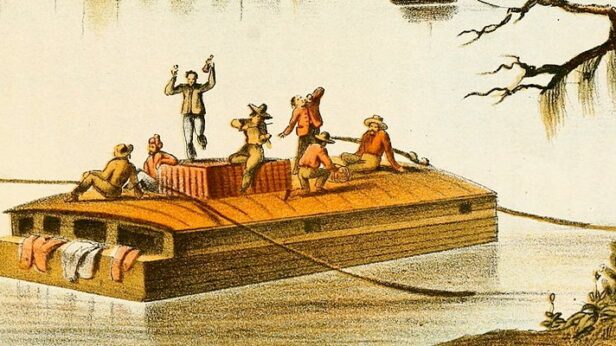
Read two great American novels that launched a literary & cultural revolution.
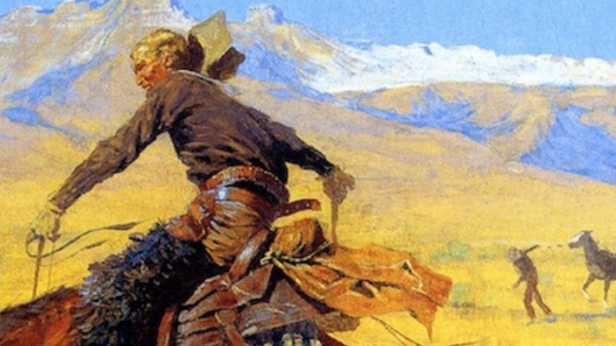
Read America's national epic of the West—& how history became legend.
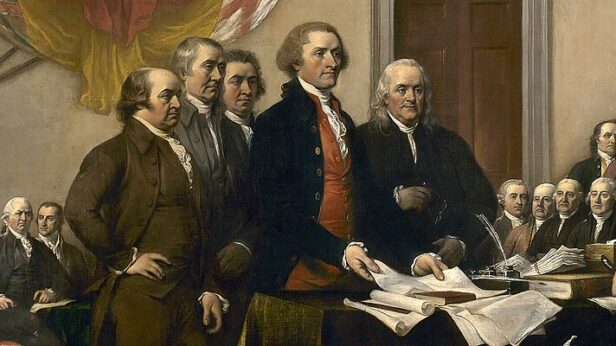
Mark America’s 250th by reading the words through which the republic has imagined, tested, & judged itself.

Explore the fundamental human question of the nature and existence of God with Melville's great American novel.
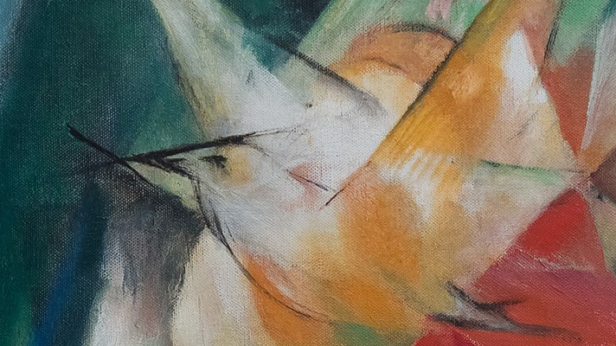
Explore memory, family, inheritance, myth, & freedom in Morrison’s acclaimed novel.
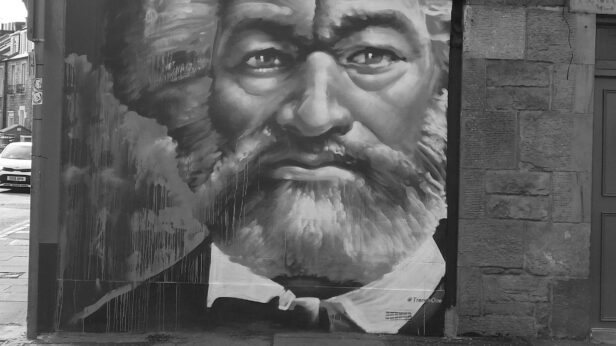
Learn how the political tradition of Black Americans has made an indelible impression on American history.
Dorothea Wolfson
Dorothea Israel Wolfson is Managing Director of the Hertog Foundation. Previously, she was Director of the Master of Arts in Government Program at Johns Hopkins University. Her research and teaching interests center on democracy and civic engagement, American political thought, American politics, and family policy. She has published articles on Alexis de Tocqueville, Thomas Jefferson, Abigail Adams, and on John Locke and children’s literature.

Cheryl Miller
Cheryl Miller is executive director at the Hertog Foundation. Previously, she served as deputy director of research in the Office of Presidential Speechwriting and as research assistant to David Brooks at The New York Times. Her reviews and commentary have appeared in such publications as The Wall Street Journal, Commentary, and The Weekly Standard. She graduated from the University of Dallas with Bachelor of Arts degrees in English and Politics.

Yuval Levin
Yuval Levin is a Resident Scholar and Director of Social, Cultural, and Constitutional Studies at the American Enterprise Institute and the Editor of National Affairs magazine. Mr. Levin served on the White House domestic policy staff under President George W. Bush.
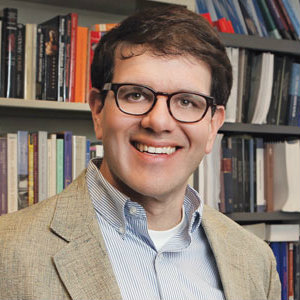
Ryan P. Hanley
Ryan Patrick Hanley is Professor of Political Science at Boston College. His research in the history of political philosophy focuses on the Enlightenment. He is the author of Our Great Purpose: Adam Smith on Living a Better Life and Love’s Enlightenment: Rethinking Charity in Modernity.

Christopher Scalia
Christopher J. Scalia is a senior fellow in the Social, Cultural, and Constitutional Studies department at the American Enterprise Institute, where he focuses on literature, culture, and higher education. Prior to his role at AEI, Dr. Scalia was an English professor with a specialty in 18th-century and early 19th-century British literature.
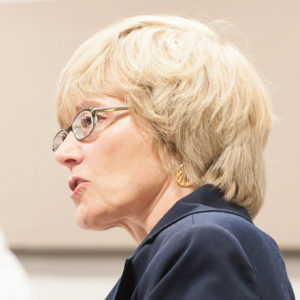
Diana Schaub
Diana Schaub is a nonresident senior fellow at the American Enterprise Institute (AEI), where her work is focused on American political thought and history, particularly Abraham Lincoln, Frederick Douglass, African American political thought, Montesquieu, and the relevance of core American ideals to contemporary challenges and debates. Concurrently, she is Professor Emerita of Political Science at Loyola University Maryland, where she taught for almost three decades.
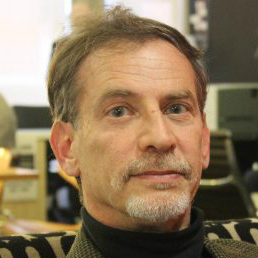
Darren Staloff
Darren Staloff is a retired Professor of History from the City College of New York and the Graduate Center of CUNY. Professor Staloff has published numerous papers and reviews on the subject of early American history.

Jacob Dowd
Teaching Assistant
Jacob Dowd is a junior at Purdue University, where he studies physics and philosophy and minors in classics and music. He has served as an undergraduate preceptor in philosophy and a teaching assistant in physics, and his research has included biophysics and NASA mission-design work. A Hertog alumnus, Jacob has also been a Civics Research Fellow with Purdue’s Program on American Institutional Renewal and a legislative intern for Senator Todd Young. He will serve as teaching assistant for America’s 250th.

Robert C. Bartlett
Robert C. Bartlett is the Behrakis Professor of Hellenic Political Studies at Boston College. His principal area of research is classical political philosophy, with particular attention to the thinkers of ancient Hellas, including Thucydides, Plato, and Aristotle. He is the co-translator of a new edition of Aristotle’s Nicomachean Ethics.
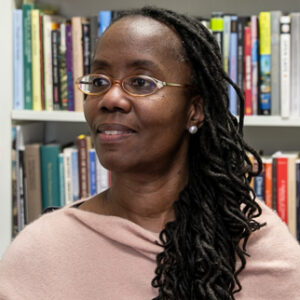
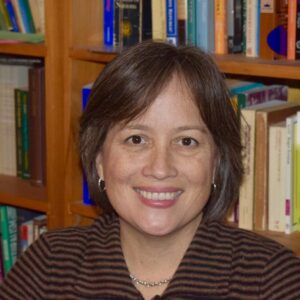
Angel Adams Parham
Angel Adams Parham is Associate Professor of Sociology and senior fellow at the Institute for Advanced Studies in Culture (IASC) at the University of Virginia. She is active in public-facing teaching and scholarship where she provides resources and training for K-12 educators who are looking to better integrate Black writers and Black history into their teaching.