
Mark Twain’s Tom Sawyer & Huckleberry Finn
Read two great American novels that launched a literary & cultural revolution.
Wednesdays | January 6 – February 10, 2027
Online
The Western is the story of the American Founding once removed: how a collection of newly independent states on the East Coast sent its people into the wilderness and built a country. Larry McMurtry’s Lonesome Dove (1985), winner of the Pulitzer Prize, may be the closest thing the United States has to a national epic, an “American Arthuriad,” in McMurtry’s own phrase. Though he hoped the novel would “demythologize” the West, he later concluded that it instead reaffirmed the enduring core of the Western myth: “that cowboys are brave and cowboys are free.”
Its unforgettable heroes, former Texas Rangers Woodrow Call and Augustus McCrae, set out on a cattle drive from South Texas to the Montana Territory in search of one last adventure. Along the trail, the novel confronts enduring questions of friendship and loyalty, courage and imagination, violence and death, law and order, civilization and wilderness.
“The winning of the West was in large measure an imaginative act,” McMurtry wrote. Taking that insight as our guide, this course will examine how the American West was both settled and imagined, how history became legend, and how the legend continues to shape our understanding of America.
Image: Frederic Remington, A Cold Morning on the Range, 1904
Cheryl Miller explains why Lonesome Dove is the American epic
This course is offered by Humanities at Hertog. It takes place weekly on Wednesday, via Zoom, from 6 PM to 8 PM ET. Fellows who complete the seminar in good standing, including full participation, timely completion of the response paper, and submission of the course evaluation, will receive a $150 Amazon gift card. Required course materials will be provided.

Cheryl Miller is executive director at the Hertog Foundation. Previously, she served as deputy director of research in the Office of Presidential Speechwriting and as research assistant to David Brooks at The New York Times. Her reviews and commentary have appeared in such publications as The Wall Street Journal, Commentary, and The Weekly Standard. She graduated from the University of Dallas with Bachelor of Arts degrees in English and Politics.
Cheryl Miller is executive director at the Hertog Foundation. Previously, she served as deputy director of research in the Office of Presidential Speechwriting and as research assistant to David Brooks at The New York Times. Her reviews and commentary have appeared in such publications as The Wall Street Journal, Commentary, and The Weekly Standard. She graduated from the University of Dallas with Bachelor of Arts degrees in English and Politics.
Readings:
Topics:
Discussion Questions:
Readings:
Topics:
Discussion Questions:
Readings:
Topics:
Discussion Questions:
Readings:
Topics:
Discussion Questions:
Readings:
Topics:
Discussion Questions:
Readings:
Topics:
Discussion Questions:
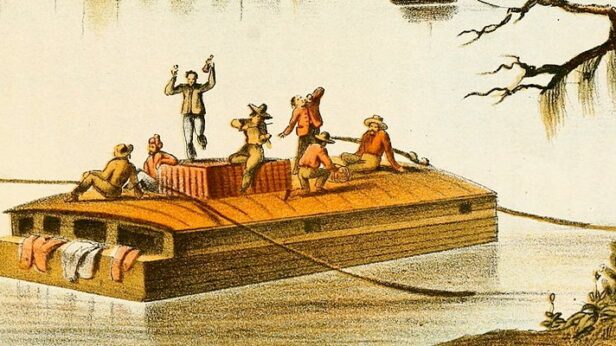
Read two great American novels that launched a literary & cultural revolution.
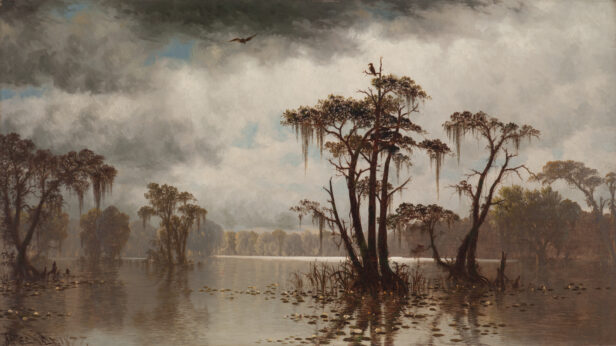
Read Faulkner's demanding Southern epic as a meditation on memory, inheritance, loyalty, & moral judgment.
Explore memory, family, inheritance, myth, & freedom in Morrison’s acclaimed novel.

Follow the transatlantic adventures of a social-climbing American in this classic novel.

Examine the political, religious, and social character of American democracy.

Study the thought of the two major figures in American Transcendentalism.
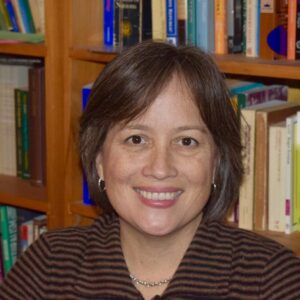
Dorothea Wolfson
Dorothea Israel Wolfson is Managing Director of the Hertog Foundation. Previously, she was Director of the Master of Arts in Government Program at Johns Hopkins University. Her research and teaching interests center on democracy and civic engagement, American political thought, American politics, and family policy. She has published articles on Alexis de Tocqueville, Thomas Jefferson, Abigail Adams, and on John Locke and children’s literature.
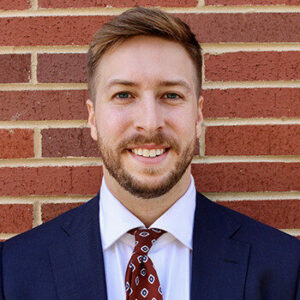
Sam Postell
Samuel Postell is Assistant Director of the Lyceum Scholars Program at Clemson University’s Snow Institute for the Study of Capitalism. He holds a Ph.D. in Politics from the University of Dallas, with a dissertation on Henry Clay, union, and legislative statesmanship. His teaching and research span American political thought, capitalism, politics and literature, and antebellum political life. He has a forthcoming book on Melville’s Moby-Dick entitled American Epic: Philosophy, Power, and Impiety in Melville’s Moby-Dick.
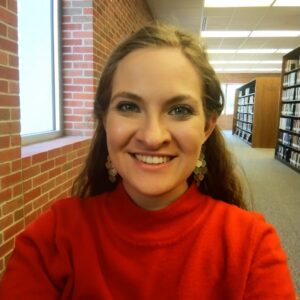
Lillian Law
Teaching Assistant
Lillian Law is pursuing an M.A. in English at The Catholic University of America and holds a B.A. in Political Science and French from Hillsdale College. Her background includes editorial and content-management work, and she studied William Faulkner’s Absalom, Absalom! in graduate school. A Hertog alumna, she will serve as teaching assistant for the Fall 2026 seminar on Faulkner’s novel.
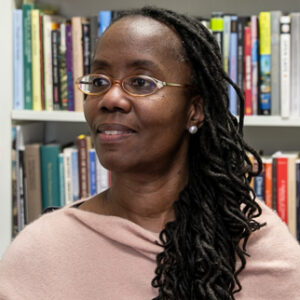
Angel Adams Parham
Angel Adams Parham is Associate Professor of Sociology and senior fellow at the Institute for Advanced Studies in Culture (IASC) at the University of Virginia. She is active in public-facing teaching and scholarship where she provides resources and training for K-12 educators who are looking to better integrate Black writers and Black history into their teaching.
Cheryl Miller
Cheryl Miller is executive director at the Hertog Foundation. Previously, she served as deputy director of research in the Office of Presidential Speechwriting and as research assistant to David Brooks at The New York Times. Her reviews and commentary have appeared in such publications as The Wall Street Journal, Commentary, and The Weekly Standard. She graduated from the University of Dallas with Bachelor of Arts degrees in English and Politics.

Jenna Silber Storey
Jenna Silber Storey is a senior fellow in the Social, Cultural, and Constitutional Studies department at the American Enterprise Institute (AEI), and co-director of AEI’s Center for the Future of the American University. She is concurrently an SNF Agora Fellow at Johns Hopkins University, and a research fellow at the Civitas Institute at the University of Texas at Austin. She also serves on the executive committee of the Alliance for Civics in the Academy.
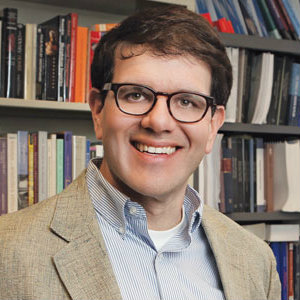
Ryan P. Hanley
Ryan Patrick Hanley is Professor of Political Science at Boston College. His research in the history of political philosophy focuses on the Enlightenment. He is the author of Our Great Purpose: Adam Smith on Living a Better Life and Love’s Enlightenment: Rethinking Charity in Modernity.