,_by_John_Trumbull.jpg)
The Words That Made Us
Revisit key constitutional questions through the lens of history and law.
Tuesdays | October 6 - November 3, 2026
Online
In 1776, the Declaration of Independence announced a new political order founded on equality, natural rights, consent, and self-government. It began a spirited conversation about liberty and equality, commerce and virtue, union and slavery, memory and hope; it did not settle the meaning of America.
Marking the 250th anniversary of the United States, this seminar brings together five distinguished teachers for five concentrated encounters with texts that have shaped, challenged, and deepened the American experiment. Fellows will study The Declaration of Independence with Yuval Levin, Adam Smith’s The Wealth of Nations with Ryan Hanley, George Washington’s Farewell Address and Federalist Papers 10 & 51 with Darren Staloff, Nathaniel Hawthorne’s Earth’s Holocaust and Robert Frost’s Mending Wall with Christopher Scalia, and Lincoln’s Gettysburg Address with Diana Schaub.
Taken together, these five sessions ask what America has claimed for itself and what kind of people a free republic requires. The course treats the anniversary as an occasion for reflection and judgment.
Watch the America at 250 course trailer.
This course is offered by Humanities at Hertog. It takes place weekly on Tuesday, via Zoom, from 6 PM to 8 PM ET. Fellows who complete the seminar in good standing, including full participation, timely completion of the response paper, and submission of the course evaluation, will receive a $150 Amazon gift card. Required course materials will be provided.
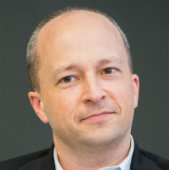
Yuval Levin is a Resident Scholar and Director of Social, Cultural, and Constitutional Studies at the American Enterprise Institute and the Editor of National Affairs magazine. Mr. Levin served on the White House domestic policy staff under President George W. Bush.
Yuval Levin is a Resident Scholar and Director of Social, Cultural, and Constitutional Studies at the American Enterprise Institute (AEI) and the founding Editor of National Affairs magazine. Prior to joining AEI, he was Vice President of the Ethics and Public Policy Center and EPPC’s Hertog Fellow.
He is a Contributing Editor of National Review and The Weekly Standard and a Senior Editor of EPPC’s journal The New Atlantis. Author and editor of numerous books, including The Great Debate: Edmund Burke, Thomas Paine, and the Birth of Right and Left (2013), The Fractured Republic: Renewing America’s Social Contract in the Age of Individualism (2016), and he most recently published A Time to Build: From Family and Community to Congress and the Campus, How Recommitting to Our Institutions Can Revive the American Dream (2020). His essays and articles have appeared in numerous publications including The New York Times, The Washington Post, The Wall Street Journal, Commentary, and others.
Before joining EPPC, Mr. Levin served on the White House domestic policy staff under President George W. Bush. He has also been Executive Director of the President’s Council on Bioethics and a congressional staffer. He holds a B.A. from American University and a Ph.D. from the University of Chicago. He is a recipient of a 2013 Bradley Prize for intellectual achievement.
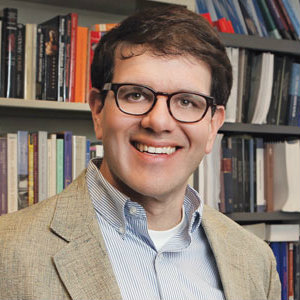
Ryan Patrick Hanley is Professor of Political Science at Boston College. His research in the history of political philosophy focuses on the Enlightenment. He is the author of Our Great Purpose: Adam Smith on Living a Better Life and Love’s Enlightenment: Rethinking Charity in Modernity.
Ryan Patrick Hanley is Professor of Political Science at Boston College. Previously, he was the Mellon Distinguished Professor of Political Science at Marquette University. His research in the history of political philosophy focuses on the Enlightenment.
He is the author of Our Great Purpose: Adam Smith on Living a Better Life (Princeton University Press, 2019), Love’s Enlightenment: Rethinking Charity in Modernity (Cambridge University Press, 2016), and Adam Smith and the Character of Virtue (Cambridge University Press, 2009). His edited volumes include Adam Smith: His Life, Thought, and Legacy (Princeton University Press, 2016), the Penguin Classics edition of Adam Smith’s Theory of Moral Sentiments (Penguin, 2010), and with Darrin M. McMahon, The Enlightenment: Critical Concepts in History, 5 vols. (Routledge, 2010).
His articles have appeared or are forthcoming in American Political Science Review, American Journal of Political Science, Journal of Politics, European Journal of Political Theory, Review of Politics, Social Philosophy & Policy, History of Political Thought, Journal of the History of Philosophy, Revue internationale de philosophie, and Archiv für Geschichte der Philosophie.
Professor Hanley received his B.A. from the University of Pennsylvania, his M.Phil. from Cambridge University, and his Ph.D. from the Committee on Social Thought at the University of Chicago. Prior to Marquette, he was a Mellon Postdoctoral Fellow at Yale University’s Whitney Humanities Center.
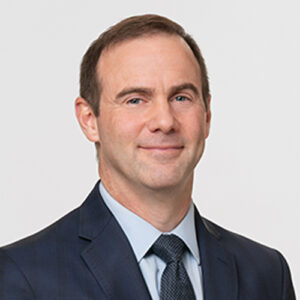
Christopher J. Scalia is a senior fellow in the Social, Cultural, and Constitutional Studies department at the American Enterprise Institute, where he focuses on literature, culture, and higher education. Prior to his role at AEI, Dr. Scalia was an English professor with a specialty in 18th-century and early 19th-century British literature.
Christopher J. Scalia is a senior fellow in the Social, Cultural, and Constitutional Studies department at the American Enterprise Institute, where he focuses on literature, culture, and higher education.
A former English professor, Dr. Scalia specialized in 18th-century and early 19th-century British literature. He also spent three years as director of AEI’s Academic Programs department, where he led educational and professional-development programs and events for college students around the country. His articles, essays, and reviews on literature, music, higher education, and other topics have appeared in the Wall Street Journal, the Washington Post, USA Today, Commentary, National Review, First Things, the Washington Free Beacon, the Times Literary Supplement, the Spectator World, and FoxNews.com, among other outlets.
Dr. Scalia is the coeditor of On Faith: Lessons from an American Believer (Crown Forum, 2019), and Scalia Speaks: Reflections on Law, Faith, and Life Well Lived (Crown Forum, 2017). His forthcoming book, Eleven Conservative Novels You Must Read . . . but Probably Haven’t, will be published by Regnery Publishing in 2024.
Dr. Scalia has a PhD and MA in English from the University of Wisconsin–Madison. He has a BA in English with a minor in history from the College of William & Mary.
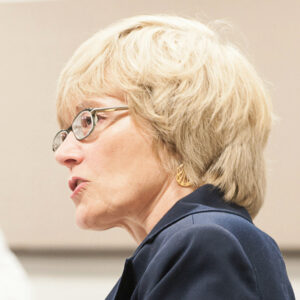
Diana Schaub is a nonresident senior fellow at the American Enterprise Institute (AEI), where her work is focused on American political thought and history, particularly Abraham Lincoln, Frederick Douglass, African American political thought, Montesquieu, and the relevance of core American ideals to contemporary challenges and debates. Concurrently, she is Professor Emerita of Political Science at Loyola University Maryland, where she taught for almost three decades.
Diana Schaub is a nonresident senior fellow at the American Enterprise Institute (AEI), where her work is focused on American political thought and history, particularly Abraham Lincoln, Frederick Douglass, African American political thought, Montesquieu, and the relevance of core American ideals to contemporary challenges and debates. Concurrently, she is Professor Emerita of Political Science at Loyola University Maryland, where she taught for almost three decades.
An expert in political philosophy, Dr. Schaub has lectured on a variety of topics and participated in conferences around the country. She has contributed chapters to multiple books on Shakespeare, liberal education, women, and religion, and she is the author of three books: His Greatest Speeches: How Lincoln Moved the Nation (St. Martin’s Press, 2021); What So Proudly We Hail: The American Soul in Story, Speech, and Song, coedited with Amy and Leon Kass (ISI Books, 2011); and Erotic Liberalism: Women and Revolution in Montesquieu’s “Persian Letters” (Rowman & Littlefield, 1995). Her monograph Emancipating the Mind: Lincoln, the Founders, and Scientific Progress (AEI, 2018) is based on her remarks at the 2018 Walter Berns Constitution Day Lecture.
Dr. Schaub has also been published in the popular press, including in the Baltimore Sun, the Claremont Review of Books, Commentary, and the Wall Street Journal.
Dr. Schaub has a PhD and an MA in political science from the University of Chicago. Her BA in political science is from Kenyon College.

Darren Staloff is a retired Professor of History from the City College of New York and the Graduate Center of CUNY. Professor Staloff has published numerous papers and reviews on the subject of early American history.
Darren Staloff is a retired Professor of History from the City College of New York and the Graduate Center of CUNY.
Professor Staloff has published numerous papers and reviews on the subject of early American history and is the author of The Making of an American Thinking Class: Intellectuals and Intelligentsia in Puritan Massachusetts (1998) and Hamilton, Adams, Jefferson: The Politics of Enlightenment and the American Founding (2005).
He has recorded dozens of audio and video tapes (nationally distributed) on U.S. and world history and major philosophers. He has received many fellowships, including The James Madison Program in American Ideals and Institutions at Princeton University as well as an NEH grant and a post-doctoral fellowship from the Omahundro Institute of Early American History and Culture. He earned his B.A. from Columbia College and his M.A., M.Phil., and Ph.D. from Columbia University.
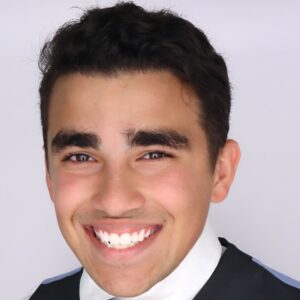
Teaching Assistant
Jacob Dowd is a junior at Purdue University, where he studies physics and philosophy and minors in classics and music. He has served as an undergraduate preceptor in philosophy and a teaching assistant in physics, and his research has included biophysics and NASA mission-design work. A Hertog alumnus, Jacob has also been a Civics Research Fellow with Purdue’s Program on American Institutional Renewal and a legislative intern for Senator Todd Young. He will serve as teaching assistant for America’s 250th.
Readings:
Discussion Questions:
Readings:
Discussion Questions:
Readings:
Discussion Questions:
Readings:
Discussion Questions:
Nathaniel Hawthorne, “Earth’s Holocaust”
Robert Frost, “Mending Wall”
Readings:
Discussion Questions:
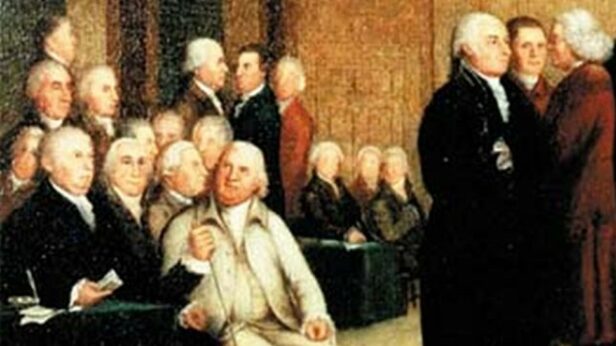
Revisit key constitutional questions through the lens of history and law.

Read Faulkner's demanding Southern epic as a meditation on memory, inheritance, loyalty, & moral judgment.

Examine the political, religious, and social character of American democracy.
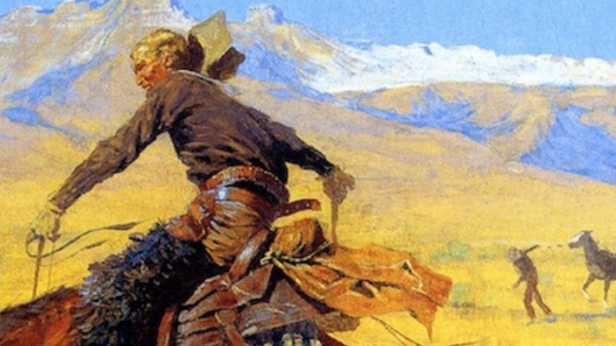
Read America's national epic of the West—& how history became legend.
Explore memory, family, inheritance, myth, & freedom in Morrison’s acclaimed novel.
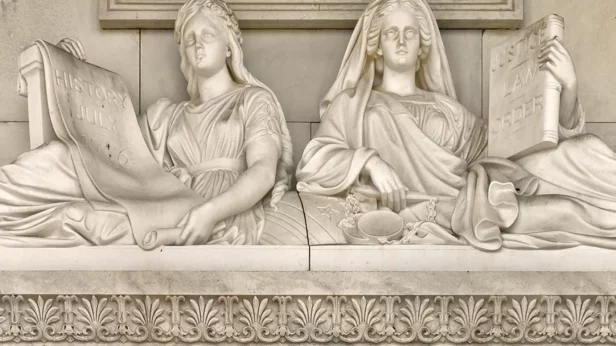
Trace liberal education's contested promise—from Plato & Aristotle to the modern American university.
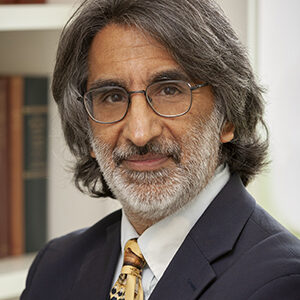
Akhil Reed Amar
Akhil Reed Amar is Sterling Professor of Law and Political Science at Yale University, where he teaches constitutional law in both Yale College and Yale Law School. He is Yale’s only currently active professor to have won the University’s unofficial triple crown — the Sterling Chair for scholarship, the DeVane Medal for teaching, and the Lamar Award for alumni service. He hosts a weekly podcast, Amarica’s Constitution.
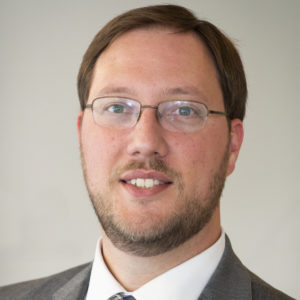
Adam J. White
Adam J. White is the Laurence H. Silberman Chair in Constitutional Governance and senior fellow at the American Enterprise Institute, where he focuses on the Supreme Court and the administrative state. Concurrently, he codirects the Antonin Scalia Law School’s C. Boyden Gray Center for the Study of the Administrative State.
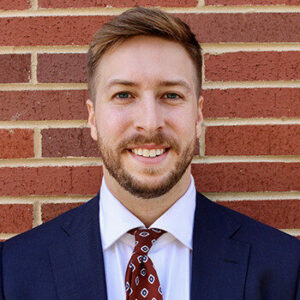
Sam Postell
Samuel Postell is Assistant Director of the Lyceum Scholars Program at Clemson University’s Snow Institute for the Study of Capitalism. He holds a Ph.D. in Politics from the University of Dallas, with a dissertation on Henry Clay, union, and legislative statesmanship. His teaching and research span American political thought, capitalism, politics and literature, and antebellum political life. He has a forthcoming book on Melville’s Moby-Dick entitled American Epic: Philosophy, Power, and Impiety in Melville’s Moby-Dick.
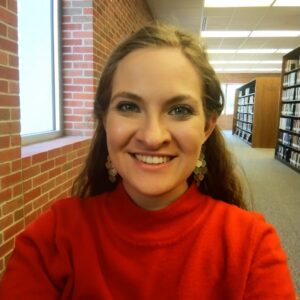
Lillian Law
Teaching Assistant
Lillian Law is pursuing an M.A. in English at The Catholic University of America and holds a B.A. in Political Science and French from Hillsdale College. Her background includes editorial and content-management work, and she studied William Faulkner’s Absalom, Absalom! in graduate school. A Hertog alumna, she will serve as teaching assistant for the Fall 2026 seminar on Faulkner’s novel.

Jenna Silber Storey
Jenna Silber Storey is a senior fellow in the Social, Cultural, and Constitutional Studies department at the American Enterprise Institute (AEI), and co-director of AEI’s Center for the Future of the American University. She is concurrently an SNF Agora Fellow at Johns Hopkins University, and a research fellow at the Civitas Institute at the University of Texas at Austin. She also serves on the executive committee of the Alliance for Civics in the Academy.

Cheryl Miller
Cheryl Miller is executive director at the Hertog Foundation. Previously, she served as deputy director of research in the Office of Presidential Speechwriting and as research assistant to David Brooks at The New York Times. Her reviews and commentary have appeared in such publications as The Wall Street Journal, Commentary, and The Weekly Standard. She graduated from the University of Dallas with Bachelor of Arts degrees in English and Politics.
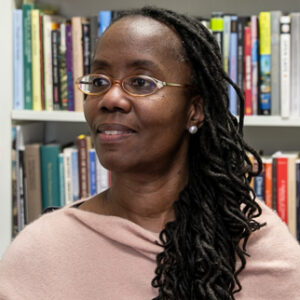
Angel Adams Parham
Angel Adams Parham is Associate Professor of Sociology and senior fellow at the Institute for Advanced Studies in Culture (IASC) at the University of Virginia. She is active in public-facing teaching and scholarship where she provides resources and training for K-12 educators who are looking to better integrate Black writers and Black history into their teaching.
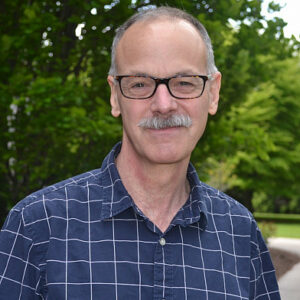
Paul Stern
Paul Stern is Professor of Politics Emeritus at Ursinus College and a scholar of classical political philosophy. His course connects great books teaching, institutional practice, and the enduring question of what liberal education is for.
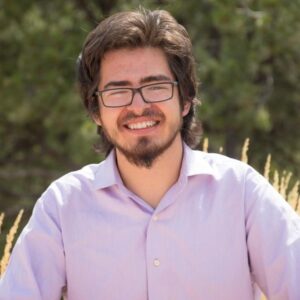
Nestor F. Aranibar Campero
Teaching Assistant
Nestor F. Aranibar Campero is an M.A. candidate in Political Theory and Democratic Culture at the Complutense University of Madrid. He studied philosophy and theology at KU Leuven and the Great Books at St. John’s College. Nestor has served as a teaching assistant for the Hertog Foundation and the Tikvah Fund and leads seminars for the Catherine Project. His research focuses on liberal education and Platonic political philosophy. He will serve as teaching assistant for Liberal Education in America.