Homer’s Odyssey
Read Homer's great drama of homecoming with a celebrated translator & critic.
Spring 2027
Online
Often dubbed “the father of history,” Herodotus of Halicarnassus would likely be perplexed by the contemporary scope of the word “history.” For Herodotus, the Greek historia means something closer to “what is learnt by inquiry.” The first written so-called history of Western civilization is the learning of a man who inquired and published so that “what has happened may not be wiped out by time from among men, and that the great and wonderous deeds, some performed by the Greeks and others by the Barbarians. . . may not lose their glory.”
Although the term “history” has taken on new senses that would be strange to Herodotus, his stated two-fold purpose of publishing his inquiries is not far from what motivates a study of history even today: to preserve from time and to preserve for glory. Reading Herodotus’s account of the Persian War provides us the opportunity to ask: How might these purposes pull against one another? How do they structure the inquiry or determine its boundaries? What is to be learnt from an inquiry into such deeds, events, characters, and causes?
These and other questions will guide our own inquiry though Herodotus’s Histories.
Image: Vniversale descrittione di tvtta la terra conoscivta fin qvi, 1565
Prof. Schillinger on Luck (and Lucklessness) in Ancient Greek Thought
This course is offered by Humanities at Hertog. It will take place weekly via Zoom; the meeting day and time will be announced. Fellows who complete the seminar in good standing, including full participation, timely completion of the response paper, and submission of the course evaluation, will receive a $150 Amazon gift card. Required course materials will be provided.
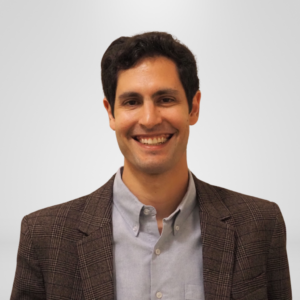
Daniel Schillinger is Lecturer in Political Science and Senior Fellow of the Center for Civic Thought at Yale University. He teaches in Directed Studies and works on Greek and early modern political philosophy, including Thucydides, Greek tragedy, Plato, and Hobbes.
Daniel Schillinger is Lecturer in Political Science and Senior Fellow of the Center for Civic Thought at Yale University. He teaches regularly in Directed Studies, Yale’s great-books program, and coordinates its track in historical and political thought. His courses range across Greek and early modern political philosophy, including Thucydides, Greek tragedy, Plato, and Hobbes. Schillinger is the author of Luckless: The Idea of Luck in Ancient Greek Thought, published by Oxford University Press in 2026. His articles have appeared in Political Research Quarterly, History of Political Thought, The Review of Metaphysics, The Washington Post, and The Point. He previously served as a postdoctoral associate and lecturer in Humanities at Yale and as a fellow of the Whitney Humanities Center. In 2025, he received the Lux et Veritas Faculty Prize. He also teaches summer seminars as a visiting professor at Deep Springs College.
Meeting date, time, reading, and discussion details forthcoming.
Meeting date, time, reading, and discussion details forthcoming.
Meeting date, time, reading, and discussion details forthcoming.
Meeting date, time, reading, and discussion details forthcoming.
Meeting date, time, reading, and discussion details forthcoming.

Read Homer's great drama of homecoming with a celebrated translator & critic.
Consider the relationship of virtue to political power.

Follow one young man's education amid a Europe drifting toward the First World War.

Read the first autobiography: Augustine's account of a soul fleeing, then seeking, its home.
Reflect on the founding of the United States & its perpetuation.

Daniel Mendelsohn
Daniel Mendelsohn is an author, critic, essayist, translator, Editor-at-Large of The New York Review of Books, and a teacher of literature at Bard College. Trained in Classics, he has written widely on Greek literature, memoir, theater, film, and contemporary culture.

Mary Elizabeth Halper
Mary Elizabeth Halper is Dean of the Humanities at Hertog program and a tutor at St. John’s College, Annapolis. Previously, she was Associate Director of the Hertog Foundation. She graduated with B.A.s in Philosophy and Classics from the University of Dallas and has since been devoted to liberal education in various forms.

Bryan Garsten
Bryan Garsten is Professor of Political Science at Yale University. He writes on questions about political rhetoric and deliberation, the meaning of representative government, the relationship of politics and religion, and the place of emotions in political life.
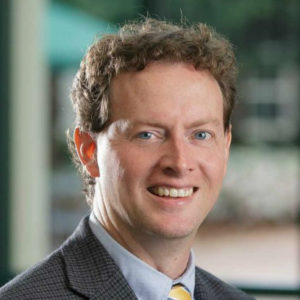
Benjamin Storey
Benjamin Storey is a senior fellow in Social, Cultural, and Constitutional Studies at the American Enterprise Institute (AEI), and co-director of AEI’s Center for the Future of the American University. He is concurrently an SNF Agora Fellow at Johns Hopkins University and a research fellow at the Civitas Institute at the University of Texas at Austin.
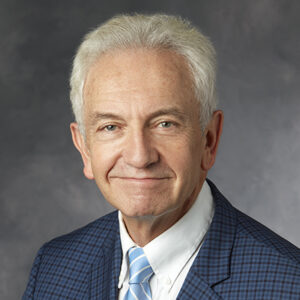
Russell A. Berman
Russell A. Berman is the Walter A. Haas Professor in the Humanities at Stanford University and a senior fellow at the Hoover Institution. His scholarship spans German and comparative literature, cultural theory, religion and culture, the Middle East, and international relations.

Alexander Rosenthal Pubul
Alexander Rosenthal Pubul is an online lecturer in political thought at Johns Hopkins University’s Center for Data Analytics, Policy, and Government and teaches private courses on Udemy focused on classical and Christian thinkers. Among his books is The Theoretic Life: A Classical Ideal and its Modern Fate. He has a recent co-authored book, The Wisdom of Our Ancestors: Conservative Humanism and its Modern Fate. His work spans political philosophy, classical humanism, European intellectual history, religion and politics, and liberal democracy.
Jenna Silber Storey
Jenna Silber Storey is a senior fellow in the Social, Cultural, and Constitutional Studies department at the American Enterprise Institute (AEI), and co-director of AEI’s Center for the Future of the American University. She is concurrently an SNF Agora Fellow at Johns Hopkins University, and a research fellow at the Civitas Institute at the University of Texas at Austin. She also serves on the executive committee of the Alliance for Civics in the Academy.
Dorothea Wolfson
Dorothea Israel Wolfson is Managing Director of the Hertog Foundation. Previously, she was Director of the Master of Arts in Government Program at Johns Hopkins University. Her research and teaching interests center on democracy and civic engagement, American political thought, American politics, and family policy. She has published articles on Alexis de Tocqueville, Thomas Jefferson, Abigail Adams, and on John Locke and children’s literature.
Meir Y. Soloveichik
Rabbi Dr. Meir Y. Soloveichik is one of the world’s preeminent Jewish thinkers and educators, and he’s one of America’s most influential religious leaders. He is the senior rabbi of Congregation Shearith Israel in Manhattan, the oldest Jewish congregation in the United States. He is also director of the Zahava and Moshael Straus Center for Torah and Western Thought at Yeshiva University. Rabbi Soloveichik has lectured internationally to Jewish and non-Jewish audiences on topics relating to faith in America, the Hebraic roots of the American founding, Jewish theology, bioethics, wartime ethics, Jewish-Christian relations, and more.