Equality & The American Promise
Consider the promise of equality at the heart of the Declaration of Independence.
June 29–July 3, 2026
Washington, DC
The third week of Political Studies will focus on the founding of the United States and its perpetuation.
The first section invites fellows to explore the question of American character through a close reading of Alexis de Tocqueville’s Democracy in America, often described as the “best book about democracy, and the best book about America.” Tocqueville’s insights, which have remained relevant for nearly 200 years, form a uniquely good guide for thinking about the way the presuppositions of a democratic society structure our thinking about political engagement, religion, career, and personal life, for both better and worse. Tocqueville sees what is best about American democracy: its constant efforts to bring about an egalitarian sense of justice, its energetic entrepreneurship, and the diversity of ways it offers to get involved in political life. He also sees how citizens of such a society can feel especially lonely and rootless, and how that unease can undermine both our personal quests for happiness and the stability of our political order. Fellows will consider how Tocqueville’s insights might help us understand better the unique society we live in, and more thoughtfully approach the particular personal and political challenges of an American life.
The second section turns to the exceptional nature of the American story by studying some of the most famous works of art in our country’s history. In this seminar, fellows will join their time in class with visiting many of the works studied: in the Capitol Rotunda, the National Gallery, the National Portrait Gallery, and the monuments in the capital. Fellows will consider how these art works celebrate the history and meaning of America’s constitutional republic, and they will engage the question: What does art teach us about the way America remembers its past?
Dr. Storey on restlessness & the modern soul
This course is part of our residential Political Studies Program. Fellows participate in morning seminars and meet prominent men and women in public life over afternoon and evening sessions. Up to 32 fellows will be selected.
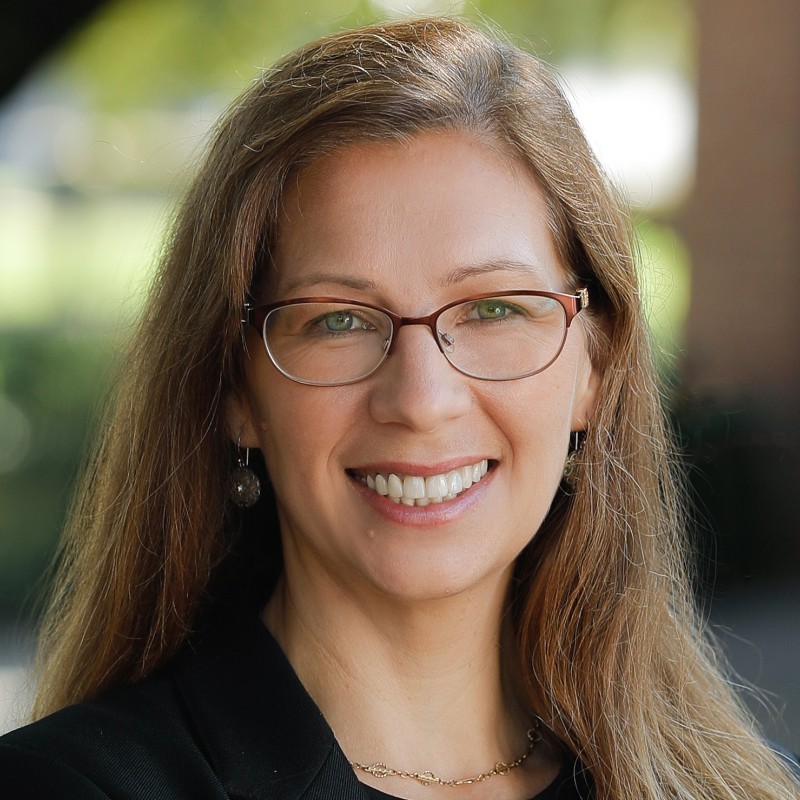
Jenna Silber Storey is a senior fellow in the Social, Cultural, and Constitutional Studies department at the American Enterprise Institute (AEI), and co-director of AEI’s Center for the Future of the American University. She is concurrently an SNF Agora Fellow at Johns Hopkins University, and a research fellow at the Civitas Institute at the University of Texas at Austin. She also serves on the executive committee of the Alliance for Civics in the Academy.
Jenna Silber Storey is a senior fellow in the Social, Cultural, and Constitutional Studies department at the American Enterprise Institute (AEI), and co-director of AEI’s Center for the Future of the American University. She is concurrently an SNF Agora Fellow at Johns Hopkins University, and a research fellow at the Civitas Institute at the University of Texas at Austin. She also serves on the executive committee of the Alliance for Civics in the Academy.
Dr. Storey’s work concentrates on liberal education, civic thought, and the relationship between the university and society. She has developed a series of initiatives in partnership with Johns Hopkins University to provide pathways for collaboration between JHU faculty and AEI scholars, to support ideologically heterodox students who aspire to careers in academia, and to host discussions to explore the emerging academic field of civic thought and practice.
Previously, Dr. Storey was assistant professor in politics and international affairs and the executive director of the Tocqueville Program at Furman University. In addition to Furman University, she has taught at the University of Chicago; the Buckley Program at Yale University; the Hertog Summer Studies Program in Washington, DC; and the Tikvah Fund in Princeton, New Jersey. Earlier she worked as executive assistant to the superintendent for the Boston University–Chelsea Schools partnership. She served as a board member of Veritas Preparatory School in Greenville, South Carolina, from 2019 to 2021, and now serves as a board member of the St. Jerome Institute in Washington, DC, the Center for Constitutional Liberty at Benedictine College, and the Honors College at Tulsa University.
Dr. Storey is the coauthor, with her husband, Benjamin Storey, of Why We Are Restless: On the Modern Quest for Contentment (Princeton University Press, 2021). Together, the Storeys are working on a book titled The Art of Choosing: How Liberal Education Should Prepare You for Life.
Dr. Storey’s work has been published in media outlets such as the New York Times, the Wall Street Journal, the Washington Post, National Affairs, Humanities, the Boston Globe, National Review, the Chronicle of Higher Education, Inside Higher Ed, American Purpose, Society, the New Atlantis, City Journal, the Claremont Review of Books, and First Things. She has lectured at institutions such as Oxford University, West Point, the City College of New York, American University, the University of Notre Dame, the Institute for Classical Education, and the American Council of Trustees and Alumni. She has also delivered papers at the American Political Science Association conference and other disciplinary conferences.
Dr. Storey has a PhD from the University of Chicago’s Committee on Social Thought and a BA from the University Professors Program at Boston University. She spent time in Germany as a visiting student at the University of Tübingen and as an exchange student at Dresden University.
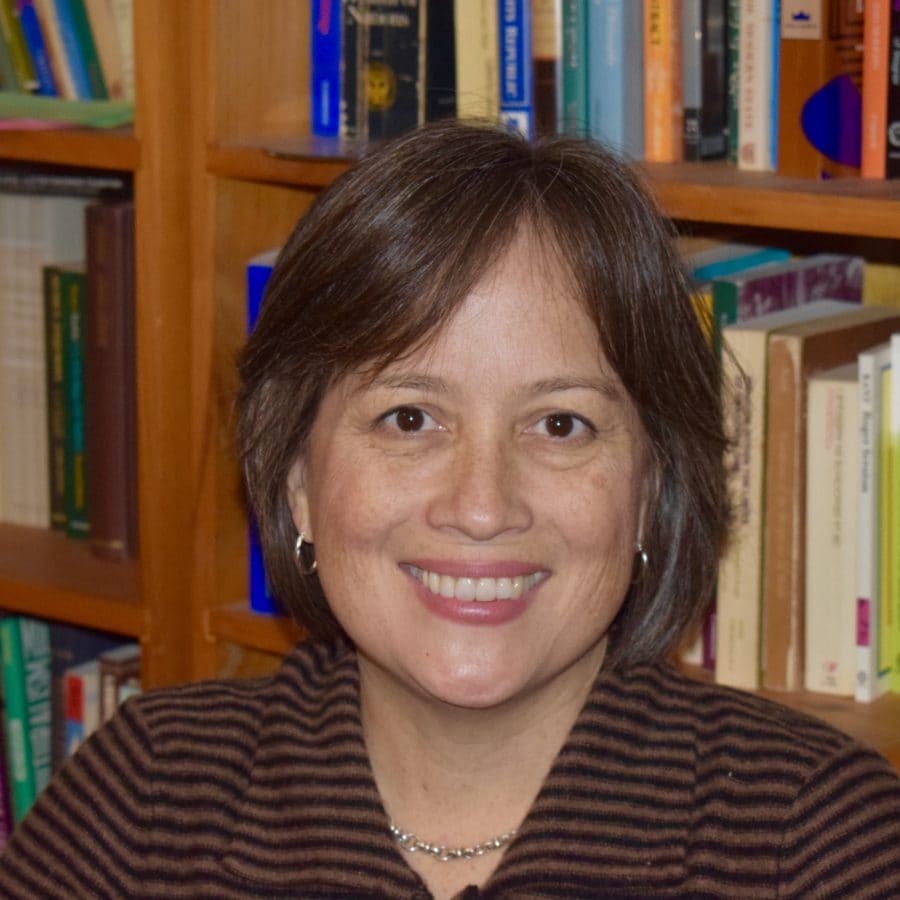
Dorothea Israel Wolfson is Managing Director of the Hertog Foundation. Previously, she was Director of the Master of Arts in Government Program at Johns Hopkins University. Her research and teaching interests center on democracy and civic engagement, American political thought, American politics, and family policy. She has published articles on Alexis de Tocqueville, Thomas Jefferson, Abigail Adams, and on John Locke and children’s literature.
Dorothea Israel Wolfson is Managing Director of the Hertog Foundation. Previously, she was Director of the Master of Arts in Government Program at Johns Hopkins University. Her research and teaching interests center on democracy and civic engagement, American political thought, American politics, and family policy. She has published articles on Alexis de Tocqueville, Thomas Jefferson, Abigail Adams, and on John Locke and children’s literature. She has collaborated on a book, Our Sacred Honor, with William J. Bennett, and her essays and reviews have appeared in The Claremont Review of Books, The American Interest, and Perspectives on Political Science. Before joining the Johns Hopkins program, she was a Policy Analyst at Empower America. She holds an A.B. from the University of Chicago in “Fundamentals: Issues and Texts” and a Ph.D. in Government from Cornell University. She lives in Kensington, Maryland, with her husband, Adam, and four children. In her free time, she likes to play tennis and do crossword puzzles.
Rabbi Dr. Meir Y. Soloveichik is one of the world’s preeminent Jewish thinkers and educators, and he’s one of America’s most influential religious leaders. He is the senior rabbi of Congregation Shearith Israel in Manhattan, the oldest Jewish congregation in the United States. He is also director of the Zahava and Moshael Straus Center for Torah and Western Thought at Yeshiva University. Rabbi Soloveichik has lectured internationally to Jewish and non-Jewish audiences on topics relating to faith in America, the Hebraic roots of the American founding, Jewish theology, bioethics, wartime ethics, Jewish-Christian relations, and more.
Rabbi Dr. Meir Y. Soloveichik is one of the world’s preeminent Jewish thinkers and educators, and he’s one of America’s most influential religious leaders. He is the senior rabbi of Congregation Shearith Israel in Manhattan, the oldest Jewish congregation in the United States. He is also director of the Zahava and Moshael Straus Center for Torah and Western Thought at Yeshiva University. Rabbi Soloveichik has lectured internationally to Jewish and non-Jewish audiences on topics relating to faith in America, the Hebraic roots of the American founding, Jewish theology, bioethics, wartime ethics, Jewish-Christian relations, and more. He writes a monthly column in Commentary magazine, and his writing has appeared in the Wall Street Journal, the New York Times, Mosaic, First Things, Azure, Tradition, the Jewish Review of Books, and many other outlets. Rabbi Soloveichik is a descendant of one of the Jewish world’s great rabbinic dynasties. He graduated summa cum laude from Yeshiva University, received his rabbinic ordination from the Rabbi Isaac Elchanan Theological Seminary, and studied at its Beren Kollel Elyon. He has also studied at Yale Divinity School, and in 2010 received his doctorate in religion from Princeton University.
Preparing for the course:
This course will be run as a seminar, at the center of which is a conversation that depends on efforts of all participants. You should plan to read each of these selections carefully, at least once, before coming to class. Take notes; mark up the book. Above all, keep track of the questions the reading raises in your mind.
“A question is a form of desire,” Leon Kass says. A good question gives shape to what it is you want to know. After you read the selection for the day, write down the questions it brings to your mind. What intrigues you? Inspires or confuses? Causes you to embrace the book ecstatically? Or throw it across the room in frustration? Start there. And articulate your reaction as a question that you can pose to the author.
Then, look for the response the author might give. What parts of the text address your thoughts or concerns? Identify one or two, and bring your questions and passages to class. Each day, I’ll ask several of you to present your questions and passages.
Readings:
Readings:
Readings:
Readings:
Readings:
When John Trumbull wrote to John Adams about his intention to create a series of paintings for the Capitol Rotunda, the former president cautioned the artist that images of historical events could mislead, as a visual medium could never capture the complex series of events that brought America into being. Jefferson, in contrast, encouraged Trumbull, and stressed that creativity was an essential aspect of artistic depiction. Can Adams’ and Jefferson’s views be reconciled? How do we celebrate artistic license while judging a work of American art regarding the way in which it captures the meaning of this country’s story, and how it inspires us as Americans?
Artwork:
Readings:
A striking feature of American art is the fact that even as the country’s military history is replete with victories, many of its most famous artistic creations center around those that fell in battle, both in victory and defeat. Moreover, the most well-known artist of the Civil War, Winslow Homer, and the most well-known photograph of America at war, the image of the raising of the flag at Iwo Jima, focus not on leaders in battle, but rather simple soldiers. What does this teach us about the nature of war in general, and about the way in which America remembers?
Artwork:
Readings:
It is striking that while there are several famous images of the Founding, there are not really well-known words of art celebrating the practice of American politics. Why is this so? How can one utilize art to celebrate the nature of a constitutional republic, which is so central to the meaning of America?
Artwork:
Readings:
One of the most illustrative aspects of the unique way in which America celebrates its leaders is the fact that one of its most famous artistic images is of a leader giving up power, rather than attaining it. The most celebrated paintings of Lincoln emphasize his signing the Emancipation Proclamation, and his preserving the union. Can we deduce from these works of art that there is a unique version of American leadership, distinct from the way statesmanship is celebrated in Europe?
Artwork:
Readings:
With Dr. Dorothea Israel Washington

Consider the promise of equality at the heart of the Declaration of Independence.

Read two great American novels that launched a literary & cultural revolution.

Consider The Federalist Papers anew through the lens of current events.
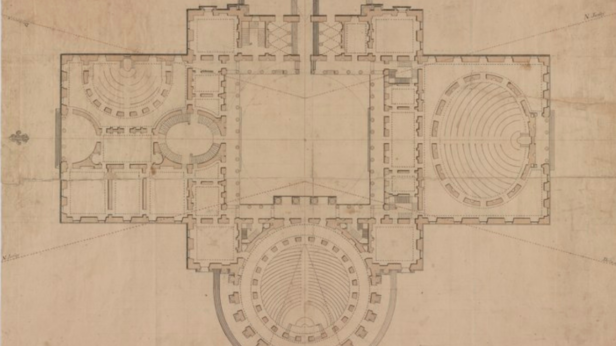
Gain a deeper understanding of our Constitution by studying the political debates surrounding its founding.
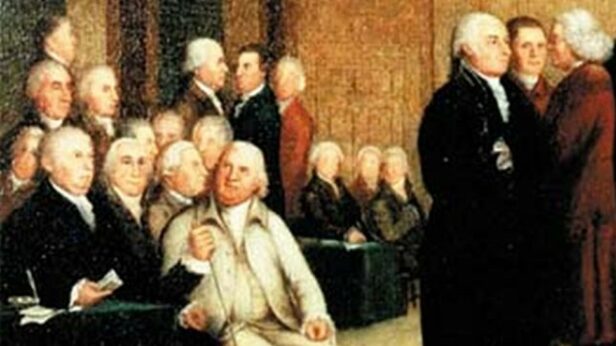
Revisit key constitutional questions through the lens of history and law.
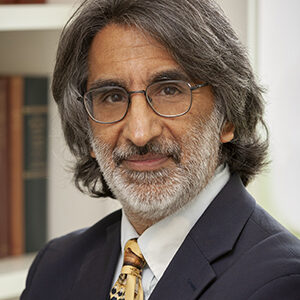
Akhil Reed Amar
Akhil Reed Amar is Sterling Professor of Law and Political Science at Yale University, where he teaches constitutional law in both Yale College and Yale Law School. He is Yale’s only currently active professor to have won the University’s unofficial triple crown — the Sterling Chair for scholarship, the DeVane Medal for teaching, and the Lamar Award for alumni service. He hosts a weekly podcast, Amarica’s Constitution.
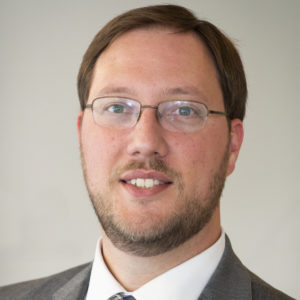
Adam J. White
Adam J. White is the Laurence H. Silberman Chair in Constitutional Governance and senior fellow at the American Enterprise Institute, where he focuses on the Supreme Court and the administrative state. Concurrently, he codirects the Antonin Scalia Law School’s C. Boyden Gray Center for the Study of the Administrative State.
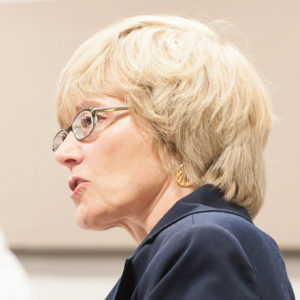
Diana Schaub
Diana Schaub is a nonresident senior fellow at the American Enterprise Institute (AEI), where her work is focused on American political thought and history, particularly Abraham Lincoln, Frederick Douglass, African American political thought, Montesquieu, and the relevance of core American ideals to contemporary challenges and debates. Concurrently, she is Professor Emerita of Political Science at Loyola University Maryland, where she taught for almost three decades.
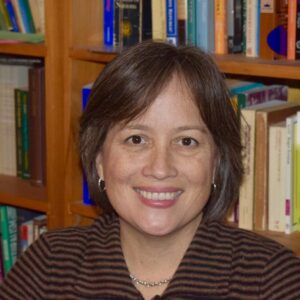
Dorothea Wolfson
Dorothea Israel Wolfson is Managing Director of the Hertog Foundation. Previously, she was Director of the Master of Arts in Government Program at Johns Hopkins University. Her research and teaching interests center on democracy and civic engagement, American political thought, American politics, and family policy. She has published articles on Alexis de Tocqueville, Thomas Jefferson, Abigail Adams, and on John Locke and children’s literature.
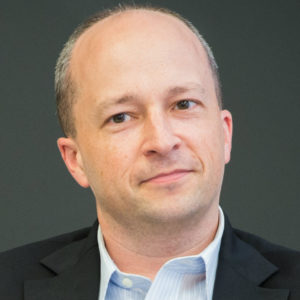
Yuval Levin
Yuval Levin is a Resident Scholar and Director of Social, Cultural, and Constitutional Studies at the American Enterprise Institute and the Editor of National Affairs magazine. Mr. Levin served on the White House domestic policy staff under President George W. Bush.
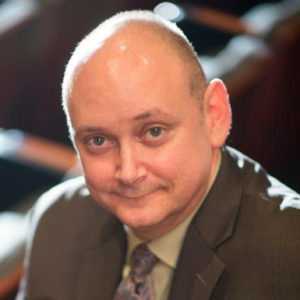
Greg Weiner
Greg Weiner is President of Assumption University and founding director of the Daniel Patrick Moynihan Center for Scholarship and Statesmanship. He is the author of American Burke: The Uncommon Liberalism of Daniel Patrick Moynihan and Old Whigs: Burke, Lincoln and the Politics of Prudence.
Gary J. Schmitt
Gary J. Schmitt is a senior fellow in the Social, Cultural, and Constitutional Studies program at the American Enterprise Institute (AEI), where he studies issues related to the American presidency, the U.S. constitution and its principles, and American civic life.
Vincent Phillip Muñoz
Vincent Phillip Muñoz is the Tocqueville Professor of Political Science and Concurrent Professor of Law at the University of Notre Dame.