_(1914).jpg)
William Faulkner’s Absalom! Absalom!
Read Faulkner's demanding Southern epic as a meditation on memory, inheritance, loyalty, & moral judgment.
Thursdays | January 7 – 28, 2027
Online
What is the meaning of “home”? How do memory and forgetting, failure and aspiration shape our understanding of who we are and where we come from?
These are some of the questions at the heart of Toni Morrison’s stirring 1977 novel Song of Solomon. Filled with history and magic, classic Greek mythology and African culture—Morrison’s novel is a taut masterpiece.
Students are invited to spend four weeks together plumbing the depths of this beautiful and complex work.
Image: Franz Marc, Birds, 1914
Prof. Parham introduces Toni Morrison's "Song of Solomon."
This course is offered by Humanities at Hertog. It will take place weekly on Thursdays, via Zoom, from 6 PM to 8 PM ET. Fellows who complete the seminar in good standing, including full participation, timely completion of the response paper, and submission of the course evaluation, will receive a $150 Amazon gift card. Required course materials will be provided.
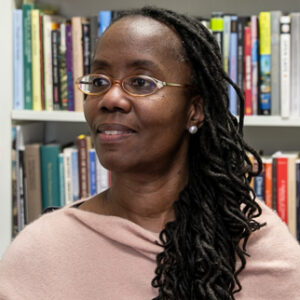
Angel Adams Parham is Associate Professor of Sociology and senior fellow at the Institute for Advanced Studies in Culture (IASC) at the University of Virginia. She is active in public-facing teaching and scholarship where she provides resources and training for K-12 educators who are looking to better integrate Black writers and Black history into their teaching.
Angel Adams Parham is Associate Professor of Sociology and senior fellow at the Institute for Advanced Studies in Culture at the University of Virginia. She works in the area of historical sociology, engaging in research and writing that examine the past in order to better understand how to live well in the present and envision wisely for the future. This research focus is rooted in her interest in re-connecting sociology to its classical roots so that sociology is understood to be a kind of public philosophy animated by questions such as: What is a good society? and What kinds of social arrangements are most conducive to human flourishing?
She is the author of American Routes: Racial Palimpsests and the Transformation of Race (Oxford, 2017), which was co-winner of the Social Science History Association’s Allan Sharlin Memorial book award (2018) and co-winner of the American Sociological Association’s Barrington Moore award in comparative-historical sociology (2018). In addition to this research, she is active in public-facing teaching and scholarship where she provides resources and training for K-12 educators who are looking to better integrate Black writers and Black history into their teaching. A book related to this work was published in the summer of 2022 and is entitled The Black Intellectual Tradition: Reading Freedom in Classical Literature. Parham’s public-facing work has also led her to become the co-founder and executive director of Nyansa Classical Community, an educational organization which provides curricula and programming designed to connect with students from diverse backgrounds, inviting them to take part in the Great Conversation, cultivate the moral imagination, and pursue truth, goodness, and beauty. She has been a member of the School of Social Science at the Institute for Advanced Study in Princeton, as well as the recipient of a Fulbright grant. She received her bachelor’s degree from Yale University and completed her doctoral work at the University of Wisconsin-Madison.
Reading:
Reading:
Reading:
Reading:

Read Faulkner's demanding Southern epic as a meditation on memory, inheritance, loyalty, & moral judgment.

Study this monumental work on race, identity, and citizenship in America.
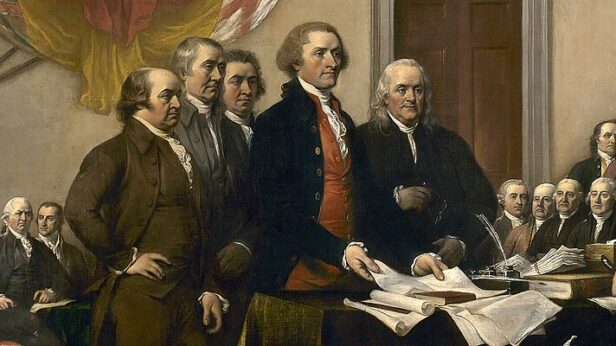
Mark America’s 250th by reading the words through which the republic has imagined, tested, & judged itself.

Follow one young man's education amid a Europe drifting toward the First World War.
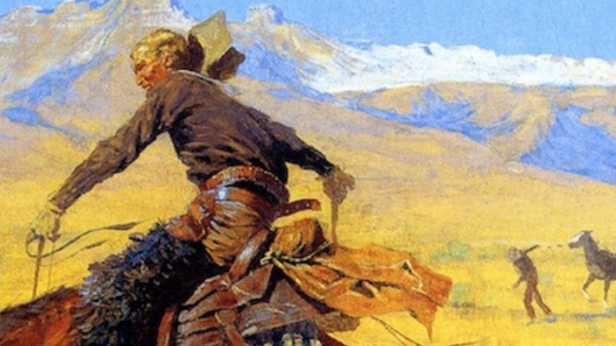
Read America's national epic of the West—& how history became legend.
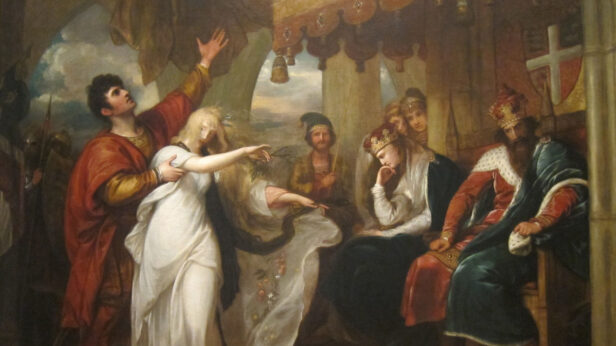

Sam Postell
Samuel Postell is Assistant Director of the Lyceum Scholars Program at Clemson University’s Snow Institute for the Study of Capitalism. He holds a Ph.D. in Politics from the University of Dallas, with a dissertation on Henry Clay, union, and legislative statesmanship. His teaching and research span American political thought, capitalism, politics and literature, and antebellum political life. He has a forthcoming book on Melville’s Moby-Dick entitled American Epic: Philosophy, Power, and Impiety in Melville’s Moby-Dick.

Lillian Law
Teaching Assistant
Lillian Law is pursuing an M.A. in English at The Catholic University of America and holds a B.A. in Political Science and French from Hillsdale College. Her background includes editorial and content-management work, and she studied William Faulkner’s Absalom, Absalom! in graduate school. A Hertog alumna, she will serve as teaching assistant for the Fall 2026 seminar on Faulkner’s novel.
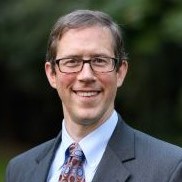
Thomas Merrill
Thomas Merrill is an associate professor in the School of Public Affairs at American University. He is the author of Hume and the Politics of Enlightenment. He is also the co-editor of three edited volumes, including The Political Thought of the Civil War.

Yuval Levin
Yuval Levin is a Resident Scholar and Director of Social, Cultural, and Constitutional Studies at the American Enterprise Institute and the Editor of National Affairs magazine. Mr. Levin served on the White House domestic policy staff under President George W. Bush.
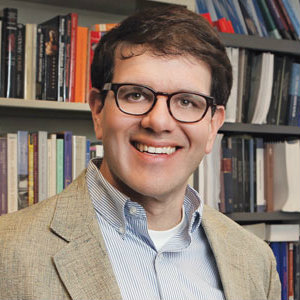
Ryan P. Hanley
Ryan Patrick Hanley is Professor of Political Science at Boston College. His research in the history of political philosophy focuses on the Enlightenment. He is the author of Our Great Purpose: Adam Smith on Living a Better Life and Love’s Enlightenment: Rethinking Charity in Modernity.

Christopher Scalia
Christopher J. Scalia is a senior fellow in the Social, Cultural, and Constitutional Studies department at the American Enterprise Institute, where he focuses on literature, culture, and higher education. Prior to his role at AEI, Dr. Scalia was an English professor with a specialty in 18th-century and early 19th-century British literature.
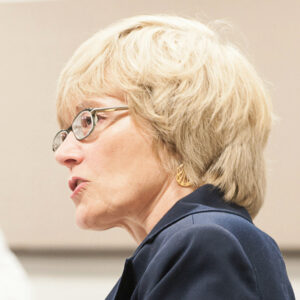
Diana Schaub
Diana Schaub is a nonresident senior fellow at the American Enterprise Institute (AEI), where her work is focused on American political thought and history, particularly Abraham Lincoln, Frederick Douglass, African American political thought, Montesquieu, and the relevance of core American ideals to contemporary challenges and debates. Concurrently, she is Professor Emerita of Political Science at Loyola University Maryland, where she taught for almost three decades.

Darren Staloff
Darren Staloff is a retired Professor of History from the City College of New York and the Graduate Center of CUNY. Professor Staloff has published numerous papers and reviews on the subject of early American history.

Jacob Dowd
Teaching Assistant
Jacob Dowd is a junior at Purdue University, where he studies physics and philosophy and minors in classics and music. He has served as an undergraduate preceptor in philosophy and a teaching assistant in physics, and his research has included biophysics and NASA mission-design work. A Hertog alumnus, Jacob has also been a Civics Research Fellow with Purdue’s Program on American Institutional Renewal and a legislative intern for Senator Todd Young. He will serve as teaching assistant for America’s 250th.
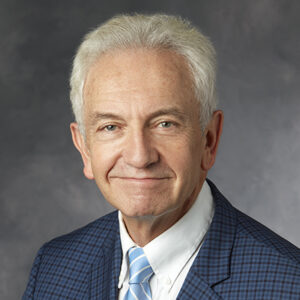
Russell A. Berman
Russell A. Berman is the Walter A. Haas Professor in the Humanities at Stanford University and a senior fellow at the Hoover Institution. His scholarship spans German and comparative literature, cultural theory, religion and culture, the Middle East, and international relations.

Cheryl Miller
Cheryl Miller is executive director at the Hertog Foundation. Previously, she served as deputy director of research in the Office of Presidential Speechwriting and as research assistant to David Brooks at The New York Times. Her reviews and commentary have appeared in such publications as The Wall Street Journal, Commentary, and The Weekly Standard. She graduated from the University of Dallas with Bachelor of Arts degrees in English and Politics.
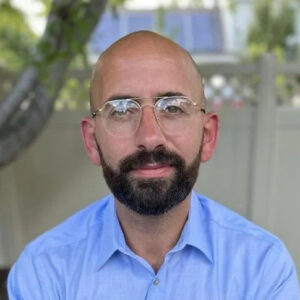
Alex Priou
Alex Priou is an Associate Professor of Political Theory at UATX. His research and teaching both focus on the history of political philosophy, with specialization in Plato and the Pre-Socratic poets and philosophers. He often writes for a broader audience on his Substack and Public Discourse and is the co-host of a weekly podcast The New Thinkery where he discusses a broad array of texts philosophical, historical, political, and literary.