Fear and Trembling (1843) is the most well-known book of Søren Kierkegaard, a Christian Socrates (and Plato) whose poetic and philosophical imagination birthed no fewer than 21 different pseudonymous authors and their writings: fresh experiments in cultural criticism, psychological exploration, metaphysical inquiry, ethical and religious exhortation, and existential drama, composed in the registers of comedy, pathos, humor, and irony.

Fear and Trembling, by Johannes de Silentio (John of Silence), is a sustained reflection on the binding of Isaac in Genesis 22. The book illuminates the nature of faith, the foundations of ethics, and the limits of language; what is more, it is an accessible, yet inexhaustibly profound, introduction to Kierkegaard’s thought as a whole. This seminar will undertake a close reading of Silentio’s book, with attention to its literary characteristics and the ways it anticipates the main themes of Kierkegaard’s authorship.

Image: Caravaggio, Sacrifice of Isaac, 1603

A Hertog Conversation with Jacob Howland on Kierkegaard's Fear & Trembling.

Faculty

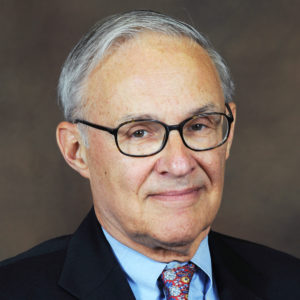
Jacob Howland

Jacob Howland has published five books and roughly 60 scholarly articles and review essays on the thought of Plato, Aristotle, Xenophon, Kierkegaard, the Talmud, the Holocaust, ideological tyranny, and other subjects. His most recent book is Glaucon’s Fate: History, Myth, and Character in Plato’s Republic.

Preview the Syllabus by Week/Session

Readings:

  • Genesis 12-22
  • Livy, 1.54 and Herodotus 5.92.ζ
  • Fear and Trembling, pp. 1-20 (Title Page, Epigraph, Preface, “Tuning Up,” “A Tribute to Abraham”)

Discussion Questions:

  1. Gen. 12-22: What does the story of Abraham tell us about what his faith is and how he comes by it? Does Abraham enjoy advantages with respect to the acquisition of faith that we readers of the Bible do not? Do we enjoy advantages he lacks? What are the implications of your answers?
  2. How might the epigraph of Fear and Trembling suit its content? Is the repetition and variation of the story in Herodotus and Livy relevant to interpreting the epigraph? Might the book concern, and perhaps in a sense enact, something like proudly and tyrannically cutting down the tallest ears of wheat or “beheading” the tallest poppies? Does the Preface contain any suggestions of similarly disturbing or violent action?
  3. *Preface: What are the characteristics of “our age,” and how does it go wrong with respect to both doubt and faith? What connections between doubt and faith does Silentio want us to draw? How and why might Descartes be a model for him? What, in Silentio’s view, is wrong with the System?
  4. * Tuning: How does this chapter attune us to what is to come? Why is the anonymous man obsessed with Abraham? How does each vignette present a concrete variation on the same ethical and religious incongruities? What might the omissions of the “conflated rendering” of Gen. 22:1-2 suggest about Silentio’s sense of our human condition?
  5. * Tribute: Silentio is the poet to the hero Abraham. How does the poet differ from the hero? How does the hero of faith differ from all other heroes? Can a purely esthetic perspective do justice to the phenomenon of Abraham’s faith? How can such a supremely exalted hero be “the father of faith” for later generations?
  6. Tribute: What does it mean for Abraham to be “chosen” by God? What is faith, according to Silentio? How do other sorts of “faith” pale in comparison with Abraham’s?

Readings:

  • Fear and Trembling, pp. 21-46 (“A Preliminary Outpouring from the Heart”)

Discussion Questions:

  1. * If only “the one who is willing to work gives birth to his own father,” in what sense can Abraham be the father of faith? How are love, anxiety, and courage woven into the “dialectical struggles”—the work—needed to get bread in the “world of spirit”? What does it mean that the tragic listener is closer to faith than the comic pastor, philosophers, and theologians?
  2. * Why can’t Silentio think himself into Abraham? How far can he go in making the “movements” of faith? Is he limited by his conviction that God’s love for man, and vice-versa, “is incommensurable with the whole of actuality”? Should we trust his claim that faith involves a plunge into the absurd? What does he mean by “absurd”?
  3. * Why does Silentio speak of “knights” of infinite resignation and of faith? What are the essential characteristics of the knight of faith? Does Silentio’s description of the knight of faith undercut the estheticizing impulse that is reflected in his poetic language?
  4. Is the knight of infinite resignation’s (quasi-Cartesian) self-sufficiency “even in loving another person” an advantage or a defect? This knight is reconciled with actuality by loving the eternal ideal of the princess: to what extent are philosophy and poetry rooted in disappointment with actuality? Does reflecting on these questions help to make sense of the pathologies of the present age?

Readings:

  • Fear and Trembling, pp. 46-59 (“Problem I”)
  • Merold Westphal, “Kierkegaard and Hegel”

Discussion Questions:

  1. * How does Hegel’s view that the highest telos of human existence is surrendering oneself to the ethical universal revise religious understandings of sin, temptation, evil, repentance, and eternal salvation? Is this revision open to criticism? Silentio writes that, if it is impossible for the single individual to be superior to the universal, “faith has never existed just because it has always existed.” What does this mean?
  2. What does Silentio mean by a “teleological suspension of the ethical”? If there is no such suspension, what problems arise with respect to Abraham? If there is such a suspension, how does Abraham’s education (cf. 39: “the curriculum [lit. ‘course’] the individual runs through to catch up with himself”) correct Hegel’s conception of the education by which human beings reach their telos?
  3. * What kind of paradox is faith? What does Silentio mean when he says this paradox cannot be mediated? How does Abraham’s suspension of the ethical differ from that of the tragic hero, and why is only the latter intelligible to Silentio? What consolations available to the tragic hero and his audience are unavailable to Abraham or his admirers in his choice to sacrifice Isaac (see pp. 100-101 for further discussion)?
  4. * Why does Silentio suggest that Hegel “level[s] all existence to the idea of the state or the idea of society” (54)? What does this mean, and is it a problem for us today? Does Silentio’s critique of arrogant and wretched “associate professors” who “judge by the outcome” apply to our professors, and perhaps our age? What of his own leveling in Problem I, cutting Hegelianism down to size? Are these simply two opposed expressions of Tarquinesque pride?

Readings:

  • Fear and Trembling, pp. 59-87 (“Problem II” and “Problem III,” first part)

Discussion Questions:

  1. Problem II. How does Silentio’s conclusion that there is an absolute duty to God correct Hegel’s understanding of the ultimacy of the ethical sphere, incommensurability in human life, ethical duty, and the transition from childhood to adulthood? How does Socrates stand closer to faith than Hegel? How does his philosophical passion make him a “single individual”? To what extent does he exemplify the higher egoism of a devotion to God that transcends the ethical?
  2. * Problem II. Why, according to Silentio, is Luke 14:26 generally misinterpreted? How does his interpretation intensify the heroism of existing in faith, and illuminate its greatness and frightfulness? If it is glorious to be legible to all by exemplifying the universal, why is it more glorious to be the “single individual” and undergo “the martyrdom of unintelligibility”
  3. * Problem III. How does ancient tragedy differ from modern drama with respect to concealment and disclosure? Why does Silentio regard the former as superior to the modern? Why does he deplore silence or concealment in modern drama as a “demon’s snare” and an “illusion of magnanimity”? He claims that esthetics could be rescued from combat with the ethical by working with the religious: how does the story of Queen Elizabeth illustrate what he means?*4) Problem III. How does the parable, or religious dialectical lyric, of Agnes and the Merman distinguish demonic silence from divine disclosure? What does it mean that two forces contend for the Merman, “repentance, and Agnes and repentance”? Why is repentance alone “demonic”? Why would the Merman achieve unsurpassed greatness if he lets himself be saved by the grace of Agnes’s love? Does this parable illuminate the nature of the absurd?

    5) Problem III. Why does ethics run aground on the phenomenon of sin? Where does this leave philosophy, as exemplified by Hegel?

Readings:

  • Fear and Trembling, pp. 87-109 (“Problem III,” second part; Epilogue)

Discussion Questions:

  1. What makes our age comic (pp. 87-89)? What has it forgotten that it needs to be reminded of by the humor of some “enthusiastic” wit? Why does it demand the comic, and what is demonic about that demand? How are Silentio’s criticisms of our age in Problem III (and elsewhere) complemented by what he says in the Epilogue? Do these criticisms illuminate the problem of nihilism in late modernity?
  2. Why is Sarah the true hero of the story in the book of Tobit—and what would one fail to understand (as Silentio wagers “a poet” would fail) if he regarded Tobias as the hero? How does Sarah’s predicament resemble Richard the Third’s, and why is her response divine, his demonic?
  3. * Can the story of the “sympathetic” Faust, a doubter (nihilist) who nevertheless wants “to save the universal by his concealment and silence,” be read as an analogy to Silentio’s predicament as an ironist who “has seen through the ludicrousness of existence” (see footnote h, pp. 94-95)? What light might this reading shed on Silentio’s own problem of whether to speak or remain silent? What is his solution to this problem? How does it compare to Abraham’s, in his answer to Isaac?
  4. *  What has Kierkegaard accomplished in Fear and Trembling, religiously, philosophically, and poetically? Is the book’s work destructive, upbuilding, or both? Does it teach us anything about entering into faith? Does Fear and Trembling support Kierkegaard’s suggestion (in The Point of View for my Work as an Author) that he is a Christian Socrates? Does Silentio resemble, by way of repetition and variation, that strange, singular, and venerable ancient?

Other Courses You Might Be Interested In

The Book of Genesis

For Hertog alumni. Embark on an inquiry into origins—of creation, covenant, & character.
Dante’s Divine Comedy

Read an epic poem that is a reflection on divine justice & an investigation of the human good.
Plato’s Protagoras

Read a Platonic dialogue between Socrates & Protagoras, a celebrated sophist & philosopher.
Dostoevsky’s The Brothers Karamazov

Meditate on Dostoevsky’s final – and greatest – novel.
The Limits of Politics

Explore the boundaries of politics from the perspective of the household and the divine.
Emily Wilson’s Iliad

Should a poem both beautiful & barbaric be easy to read?