
Samuel 1 & 2
Explore one of the most pivotal transitions in Biblical history, tracing Israel’s path from tribal society to unified monarchy.
Tuesdays | Mar. 3–Apr. 7, 2026
Online
“Midway in the journey of our life I came to myself in a dark wood, for the straight way was lost.” With this beginning, Dante invites us to join him on his journey through Hell, Purgatory, and Paradise.
At once an epic poem, a reflection on divine justice, and an investigation of the human good, Dante’s masterpiece encourages us to reflect how we too might be journeying within a “dark wood,” and how we might find the road up and out into the light.
Prof. Utter on Auden's The Shield of Achilles
This course is offered by Humanities at Hertog. It takes place weekly on Tuesdays, via Zoom, from 6 PM to 8 PM ET. Fellows will receive a $150 Amazon Bookshelf voucher contingent upon participation in the course and completion of a brief response paper. All course materials will be provided.
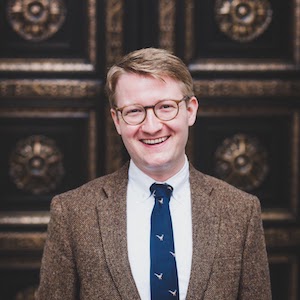
Christopher Utter is Associate Director of the Lincoln Scholars program and term professorial lecturer in the Department of Government in the School of Public Affairs at American University. He regularly teaches courses in the Lincoln Scholars program as well as upper level political theory courses. His research focuses mainly on classical political philosophy with a particular interest in the problem of theory and practice in Plato and Aristotle.
Christopher Utter is Associate Director of the Lincoln Scholars program and term professorial lecturer in the Department of Government in the School of Public Affairs at American University. He regularly teaches courses in the Lincoln Scholars program as well as upper level political theory courses. His research focuses mainly on classical political philosophy with a particular interest in the problem of theory and practice in Plato and Aristotle.
Readings:
Discussion Questions:
Readings:
Discussion Questions:
Readings:
Discussion Questions:
Readings:
Discussion Questions:
Readings:
Discussion Questions:
Readings:
Discussion Questions:
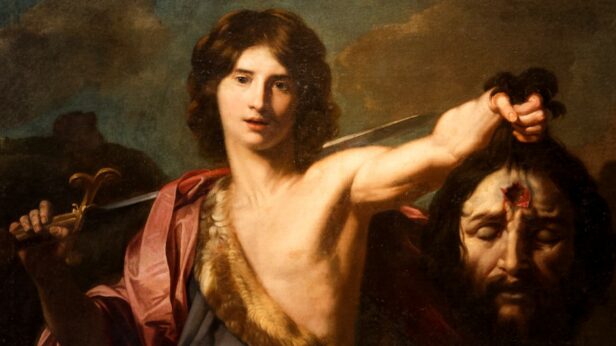
Explore one of the most pivotal transitions in Biblical history, tracing Israel’s path from tribal society to unified monarchy.

Reflect on the nature of faith, the foundations of ethics, & the limits of language.
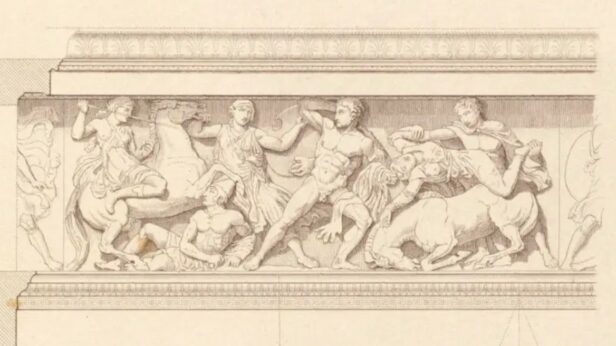
Read a Platonic dialogue between Socrates & Protagoras, a celebrated sophist & philosopher.
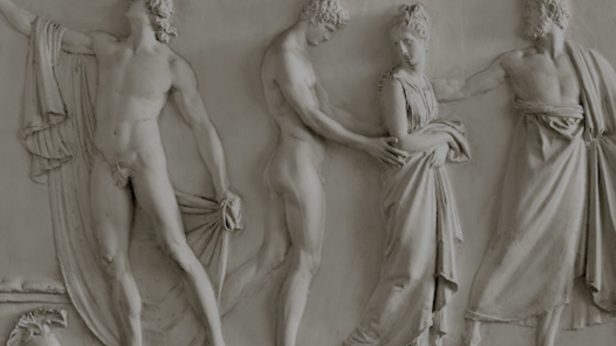
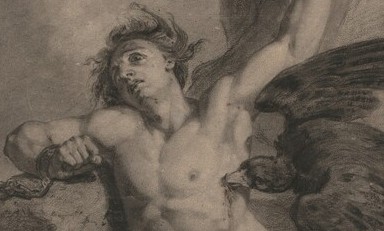
Read a Gothic–Romantic & early science fiction text that reflects on modern science, nature, & the ambitions of enlightenment.
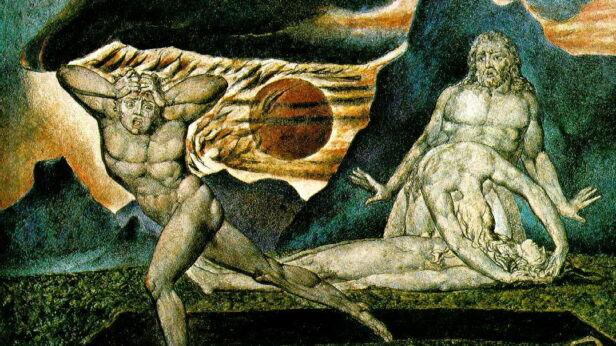
For Hertog alumni. Embark on an inquiry into origins—of creation, covenant, & character.

Gregory McBrayer
Greg McBrayer is Interim Provost at Ashland University and a political science professor specializing in political philosophy and international relations. He has published widely, co-authored and edited works on Plato and Xenophon, and previously held positions at Morehead State, Emory, and Gettysburg College.

Jacob Howland
Jacob Howland has published five books and roughly 60 scholarly articles and review essays on the thought of Plato, Aristotle, Xenophon, Kierkegaard, the Talmud, the Holocaust, ideological tyranny, and other subjects. His most recent book is Glaucon’s Fate: History, Myth, and Character in Plato’s Republic.
Mary Townsend
Mary Townsend is an associate professor of philosophy at St. John’s University, Queens, NY. Her 2017 book, The Woman Question in Plato’s Republic was named required reading by University of Pennsylvania’s Emily Wilson, translator of Homer’s Iliad and Odyssey, and her academic work on Plato, Beauvoir, and the American abolitionist Julia Ward Howe has appeared in Hypatia, Polis, and Social Philosophy Today.

Mary Elizabeth Halper
Mary Elizabeth Halper is Dean of the Humanities at Hertog program and a tutor at St. John’s College, Annapolis. Previously, she was Associate Director of the Hertog Foundation. She graduated with B.A.s in Philosophy and Classics from the University of Dallas and has since been devoted to liberal education in various forms.

Molly Brigid McGrath
Molly Brigid McGrath is a professor of philosophy at Assumption University. She specializes in phenomenology, social ontology, and political philosophy, with particular interests in the works of Husserl, Aristotle, Searle, and classic texts by Plato, Aquinas, and Montesquieu.
Christopher Utter
Christopher Utter is Associate Director of the Lincoln Scholars program and term professorial lecturer in the Department of Government in the School of Public Affairs at American University. He regularly teaches courses in the Lincoln Scholars program as well as upper level political theory courses. His research focuses mainly on classical political philosophy with a particular interest in the problem of theory and practice in Plato and Aristotle.