Kissinger & the Yom Kippur War
Learn how Henry Kissinger's strategy changed the future of the Middle East.
June 29–July 3, 2026
Washington, DC
In the third week of the Security Studies Program, fellows will examine a Middle East transformed by Hamas’s October 7 attack and the regional firestorm it ignited. That single day set in motion a high-stakes confrontation pitting the United States and its allies against Iran and the network of proxies it has spent decades cultivating.
At the same time, a disturbing surge of antisemitism—stretching from European capitals to American campuses—has amplified the political reverberations of the conflict far beyond the region. These global reactions shape the battlefield no less than events on the ground, complicating U.S. decision-making and straining key alliances.
This seminar will trace how the post-October 7 landscape is redrawing the region’s geopolitical map: the uncertain future of the Abraham Accords; the strategic calculus of the United Arab Emirates and other Gulf states; and the recalibration of regional heavyweights like Turkey, Saudi Arabia, and a post-war Syria.
Ultimately, we will confront the defining strategic questions of this new Middle East: Who sets the regional agenda? Can the United States still build and sustain a durable coalition? And what will the balance of power look like when the dust settles?
Dr. Doran on America's Strikes in Iran
This course is part of our residential Security Studies Program. Fellows participate in morning seminars and meet national security leaders and experts over afternoon and evening sessions. Up to 16 fellows will be selected.
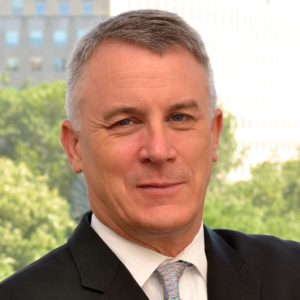
Michael Doran, an expert in U.S. policy toward the Middle East, radical Islam, and the Arab-Israeli conflict, is a Senior Fellow at the Hudson Institute. He has also held a number of senior U.S. government posts related to Middle East policy and strategic communication.
Michael Doran is a Senior Fellow at the Hudson Institute in Washington, DC. He specializes in Middle East security issues.
In the administration of President George W. Bush, Doran served in the White House as a senior director in the National Security Council, where he was responsible for helping to devise and coordinate United States strategies on a variety of Middle East issues, including Arab-Israeli relations and U.S. efforts to contain Iran and Syria. He also served in the Bush administration as a senior advisor in the State Department and a deputy assistant secretary of defense in the Pentagon.
Before coming to Hudson, Doran was a Senior Fellow at the Brookings Institution. He has also held teaching positions at NYU, Princeton, and the University of Central Florida. He is the author of Pan-Arabism before Nasser, which analyzes the first Arab-Israeli war as an inter-Arab conflict, and Ike’s Gamble: America’s Rise to Dominance in the Middle East, about President Eisenhower and the Middle East. He appears frequently on television, and has published extensively in Foreign Affairs, The American Interest, Commentary, Mosaic Magazine, The Wall Street Journal, The Washington Post, and The New York Times.
Born in Kokomo, Indiana, Doran went to elementary school in Carmel, outside of Indianapolis, before his family moved to Fullerton, California, where he graduated from Sunny Hills High School. He received a B.A. from Stanford and an M.A. and Ph.D. in Near Eastern Studies from Princeton.
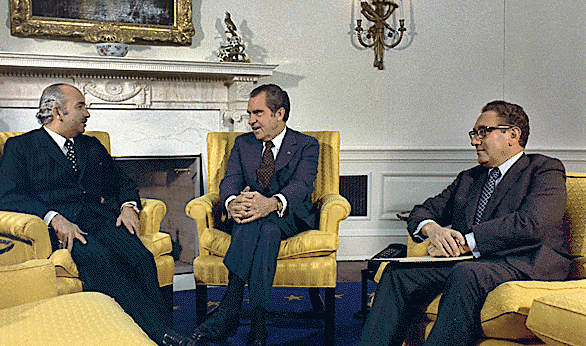
Learn how Henry Kissinger's strategy changed the future of the Middle East.
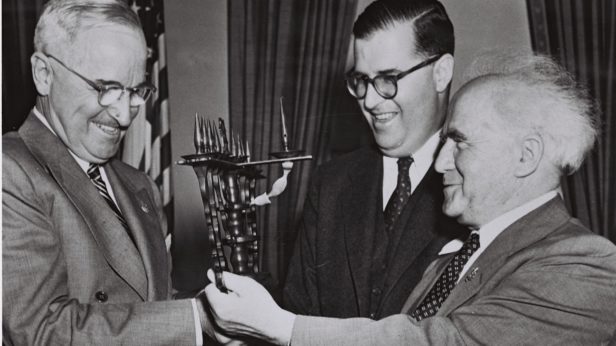
Explore the past, present, and future of the America-Israel strategic relationship.
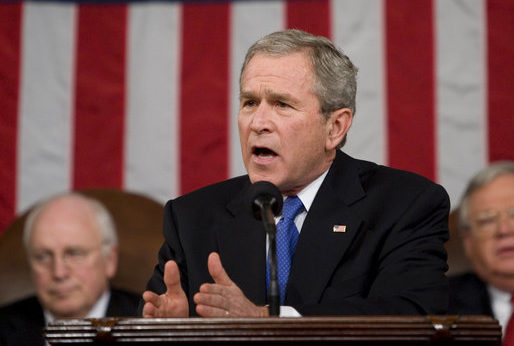
Examine key strategic decisions during one of the most dynamic confrontations of the late 20th and early 21st centuries: the U.S. and Iraq.
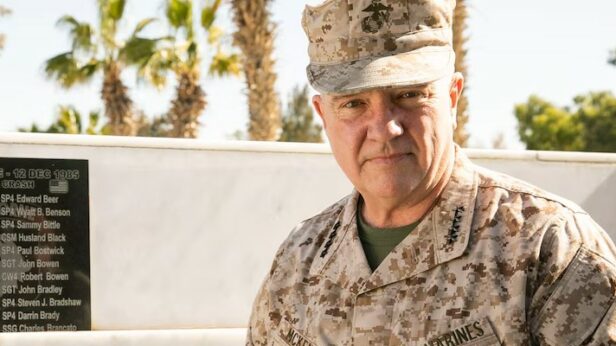
Examine what it means to command at the very highest levels of war with a former CENTCOM commander.
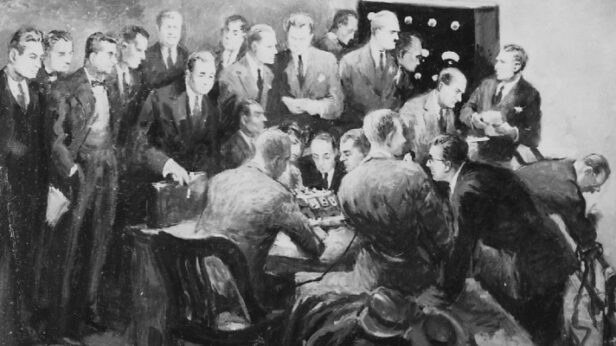
Read a history that's part biography of the scientists working at the advent of nuclear physics & part biography of the atom itself.
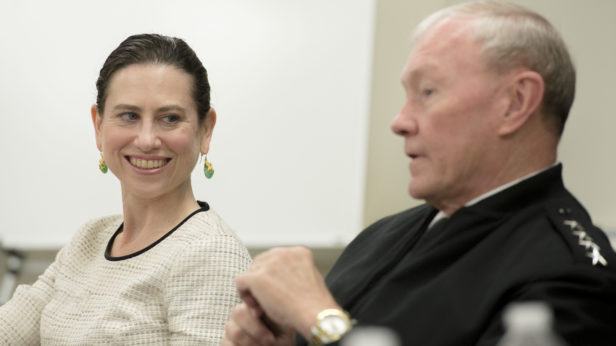
Learn the theory, practice, organization, and control of war and military forces.
Michael Doran
Michael Doran, an expert in U.S. policy toward the Middle East, radical Islam, and the Arab-Israeli conflict, is a Senior Fellow at the Hudson Institute. He has also held a number of senior U.S. government posts related to Middle East policy and strategic communication.
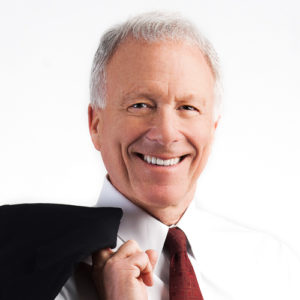
Lewis Libby
Lewis “Scooter” Libby is a distinguished fellow at the Foundation for Defense of Democracies. He has held several high level positions in the federal government related to his current work on national security and homeland security affairs. This included roughly a dozen years working in the White House, the U.S. Department of Defense, and the U.S. Department of State.
Paul Wolfowitz
Paul Wolfowitz is a scholar at the American Enterprise Institute. He spent more than three decades in public service and higher education. Most recently, he served as president of the World Bank and deputy secretary of defense.
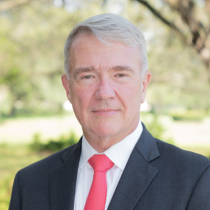
Gen. Kenneth F. McKenzie Jr.
Gen. Kenneth ‘Frank’ McKenzie Jr. is the former Commander of United States Central Command. He led a distinguished 42-year military career, commanding at multiple levels within the Marine Corps and serving on the Joint Staff. His leadership roles included commanding the First Battalion, Sixth Marines, and the 22nd MEU (SOC) during combat deployments to Afghanistan and Iraq.
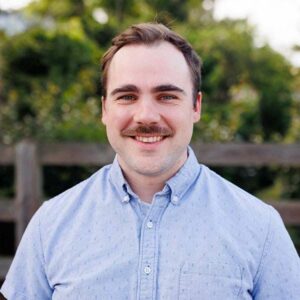
Patrick Coleman
Patrick Coleman is a Tutor at St. John’s College. He earned his Ph.D. in Physics from University of Illinois, Urbana-Champaign, with a dissertation on synchronization, and his B.S. in Physics from William & Mary College along with a minor in Philosophy. He is currently leading a research group on the integration of a Technology and Computation segment in St. John’s College’s Graduate Institute. Patrick has led seminars and reading groups for The Catherine Project, including a recent reading group on Richard Feynman’s Lectures on Computation, and is especially devoted to deepening scientific literacy.
Mick Ryan
Mick Ryan is a retired major general in the Australian Army. He is now an adjunct fellow at the Center for Strategic and International Studies in Washington DC, and a non-resident fellow of the Lowy Institute in Sydney. In January 2023 Mick was also appointed as an Adjunct Professor at the University of Queensland in Brisbane, Australia.