
Statesmanship & Founding
Consider lessons of statesmanship & founding from two ancient yet profoundly different sources.
July 13–17, 2026
Washington, DC
In the fifth week of the Security Studies Program, fellows will turn to the ancient origins of strategic thought through a study of Thucydides’ History of the Peloponnesian War. Written in the late fifth century BCE, Thucydides’ work was intended “not as an essay which is to win the applause of the moment, but as a possession for all time.” Statesmen, soldiers, and philosophers have returned to it ever since.
This course will consider what Thucydides can teach us about the permanent questions of political life: the origins of political order, the nature of human excellence, the causes and character of war, and the human longing for conflict. Fellows will also explore issues with particular relevance today: how democratic statesmen should respond to plagues, why political order collapse into faction, and under what conditions a rising power renders war “inevitable.”
Over five sessions, fellows will read much of Thucydides’ History and come to appreciate why his work has remained a strategic and philosophical “possession for all time.”
Prof. Liebert on Thucydides
This course is part of our residential Security Studies Program. Fellows participate in morning seminars and meet national security leaders and experts over afternoon and evening sessions. Up to 16 fellows will be selected.

Hugh Liebert is a Professor of American Politics in the Department of Social Sciences at the United States Military Academy in West Point, New York, where he teaches courses in political philosophy, American politics, and civil-military relations.
Dr. Liebert is the author of Plutarch’s Politics (2016, Cambridge University Press), which won the Delba Winthrop Award for Excellence in Political Science. He has also edited several volumes: Executive Power in Theory and Practice (2012, Palgrave Macmillan); Thinking Beyond Boundaries: Transnational Challenges to U.S. Foreign Policy (2014, Johns Hopkins University Press); American Grand Strategy and the Future of U.S. Landpower (2014, U.S. Army War College Press); What Is the Worst That Can Happen? The Politics and Policy of Crisis Management (2016, Sloan); and Confronting Inequality: Wealth, Rights, and Power (2016, Sloan). His articles have appeared in History of Political Thought, Review of Politics, and Armed Forces & Society.
He received his BA from Harvard University and his MA and PhD from the Committee on Social Thought at the University of Chicago.
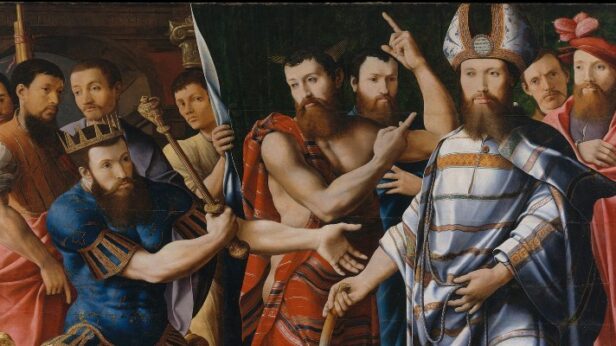
Consider lessons of statesmanship & founding from two ancient yet profoundly different sources.
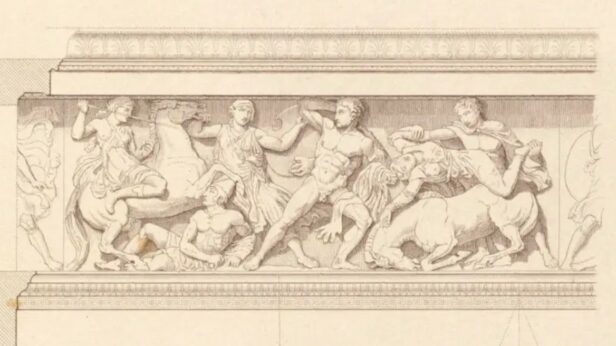
Read a Platonic dialogue between Socrates & Protagoras, a celebrated sophist & philosopher.

Explore one of the most pivotal transitions in Biblical history, tracing Israel’s path from tribal society to unified monarchy.
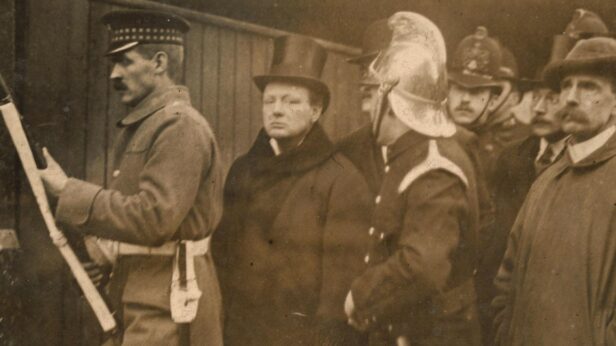
Study the first volume of The Second World War, Churchill's history of world events from WWI to his election to Prime Minister in 1940.
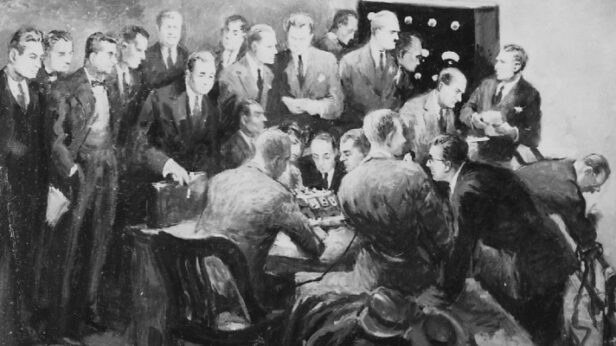
Read a history that's part biography of the scientists working at the advent of nuclear physics & part biography of the atom itself.

Examine what it means to command at the very highest levels of war with a former CENTCOM commander.
Daniel Burns
Daniel Burns is Associate Professor of Politics at the University of Dallas. His research in political philosophy focuses on the relation between religion and citizenship. He has recently served as a staffer for the U.S. Congress Joint Economic Committee and as a full-time contractor for the U.S. Department of Health and Human Services.
Jacob Howland
Jacob Howland has published five books and roughly 60 scholarly articles and review essays on the thought of Plato, Aristotle, Xenophon, Kierkegaard, the Talmud, the Holocaust, ideological tyranny, and other subjects. His most recent book is Glaucon’s Fate: History, Myth, and Character in Plato’s Republic.
Mary Townsend
Mary Townsend is an associate professor of philosophy at St. John’s University, Queens, NY. Her 2017 book, The Woman Question in Plato’s Republic was named required reading by University of Pennsylvania’s Emily Wilson, translator of Homer’s Iliad and Odyssey, and her academic work on Plato, Beauvoir, and the American abolitionist Julia Ward Howe has appeared in Hypatia, Polis, and Social Philosophy Today.
Gregory McBrayer
Greg McBrayer is Interim Provost at Ashland University and a political science professor specializing in political philosophy and international relations. He has published widely, co-authored and edited works on Plato and Xenophon, and previously held positions at Morehead State, Emory, and Gettysburg College.
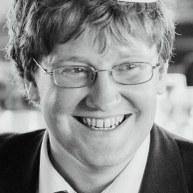
Samuel Garrett Zeitlin
Samuel Zeitlin is Lecturer in Modern Intellectual History at University College London, specializing in political thought, international relations, and the history of philosophy.
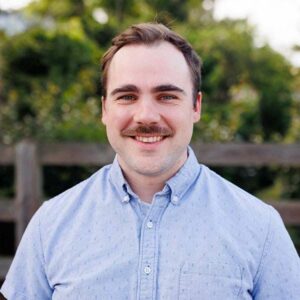
Patrick Coleman
Patrick Coleman is a Tutor at St. John’s College. He earned his Ph.D. in Physics from University of Illinois, Urbana-Champaign, with a dissertation on synchronization, and his B.S. in Physics from William & Mary College along with a minor in Philosophy. He is currently leading a research group on the integration of a Technology and Computation segment in St. John’s College’s Graduate Institute. Patrick has led seminars and reading groups for The Catherine Project, including a recent reading group on Richard Feynman’s Lectures on Computation, and is especially devoted to deepening scientific literacy.
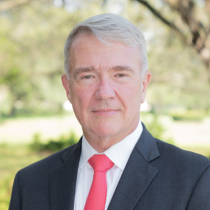
Gen. Kenneth F. McKenzie Jr.
Gen. Kenneth ‘Frank’ McKenzie Jr. is the former Commander of United States Central Command. He led a distinguished 42-year military career, commanding at multiple levels within the Marine Corps and serving on the Joint Staff. His leadership roles included commanding the First Battalion, Sixth Marines, and the 22nd MEU (SOC) during combat deployments to Afghanistan and Iraq.