Nuclear Strategy & World Order
Explore the ways nuclear weapons have transformed the world we inhabit today.
Wednesdays | Mar. 4–Apr. 1, 2026
Online
“It is a profound and necessary truth that the deep things in science are not found because they are useful; they are found because it was possible to find them.”
These words, from a speech given by J. Robert Oppenheimer, are quoted as the epigraph to the first part of Richard Rhodes’ magisterial The Making of the Atomic Bomb. This epigraph offers a thread that leads the reader through a labyrinth full of places, events, institutions, people, and the ultimate constitutive material parts of our cosmos. Part biography of the scientists working at the advent of nuclear physics, part biography of the atom itself, Rhodes’ history also continually reflects on the interplay of scientific discovery, political and social institutions, and economic and military contexts.
This seminar will discuss the first part of Rhodes’ multifaceted tome. In tracking the birth of nuclear physics through the turn of the century, the First World War, and into the 1930s, fellows will be invited to think about the different demands of theoretical versus applied scientific work, the institutions and intellectual characters that are required for or inhibit scientific progress, the conversion of scientific discovery into practical technology, and the mutual influence of that technology and its geopolitical situation.
Image: Gary Sheahan’s oil painting of the scene at the first sustained nuclear chain-reaction, NARA
Prof. Coleman on liberal education
This course is offered by Humanities at Hertog. It takes place weekly on Wednesdays, via Zoom, from 6 PM to 8 PM ET. Fellows will receive a $150 Amazon Bookshelf voucher contingent upon participation in the course and completion of a brief response paper. All course materials will be provided.
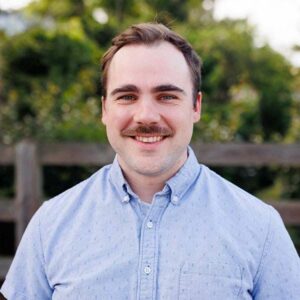
Patrick Coleman is a Tutor at St. John’s College. He earned his Ph.D. in Physics from University of Illinois, Urbana-Champaign, with a dissertation on synchronization, and his B.S. in Physics from William & Mary College along with a minor in Philosophy. He is currently leading a research group on the integration of a Technology and Computation segment in St. John’s College’s Graduate Institute. Patrick has led seminars and reading groups for The Catherine Project, including a recent reading group on Richard Feynman’s Lectures on Computation, and is especially devoted to deepening scientific literacy.
Patrick Coleman is a Tutor at St. John’s College. He earned his Ph.D. in Physics from University of Illinois, Urbana-Champaign, with a dissertation on synchronization, and his B.S. in Physics from William & Mary College along with a minor in Philosophy. He is currently leading a research group on the integration of a Technology and Computation segment in St. John’s College’s Graduate Institute. Patrick has led seminars and reading groups for The Catherine Project, including a recent reading group on Richard Feynman’s Lectures on Computation, and is especially devoted to deepening scientific literacy.
Readings:
Discussion Questions:
Readings:
Discussion Questions:
Readings:
Discussion Questions:
Readings:
Discussion Questions:
Readings:
Discussion Questions:
Explore the ways nuclear weapons have transformed the world we inhabit today.
Study the first volume of The Second World War, Churchill's history of world events from WWI to his election to Prime Minister in 1940.
Take a practitioner’s view of the most difficult national security challenges the United States.
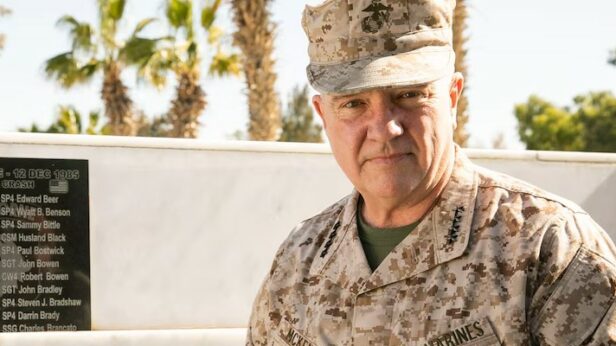
Examine what it means to command at the very highest levels of war with a former CENTCOM commander.
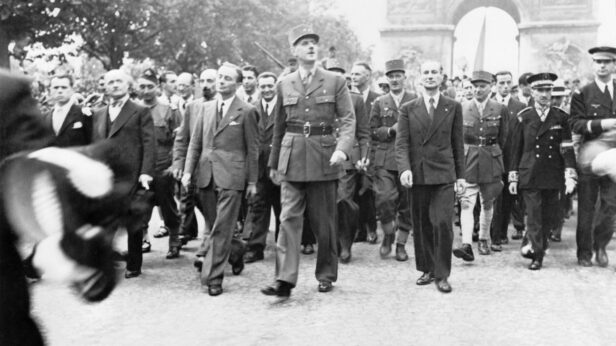
Study Charles de Gaulle, the mythic general who rallied the Free French during World War II.
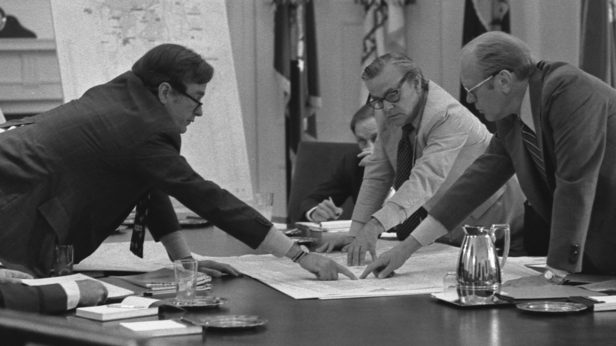
Analyze case studies to better understand presidential control over foreign policy and the meaning of executive power.
Eric S. Edelman
Ambassador Eric S. Edelman is Counselor at the Center for Strategic and Budgetary Assessments. He retired as a career minister from the U.S. Foreign Service on May 1, 2009. He has served in senior positions at the Departments of State and Defense as well as the White House, where he led organizations providing analysis, strategy, policy development, security services, trade advocacy, public outreach, citizen services, and congressional relations.
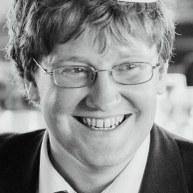
Samuel Garrett Zeitlin
Samuel Zeitlin is Lecturer in Modern Intellectual History at University College London, specializing in political thought, international relations, and the history of philosophy.
Meredith Potter
Meredith Potter is the Executive Director of the American Security Fund. Previously, she held positions at the U.S. Department of State, Atlantic Council, U.S. International Development Finance Corporation, and served as Director of Research & Policy for Dr. Henry Kissinger. She is a Term Member of the Council on Foreign Relations and a double graduate of Yale University (BA, MA), where she completed the Brady-Johnson Program in Grand Strategy and wrote her thesis under the advisement of General Stanley McChrystal.
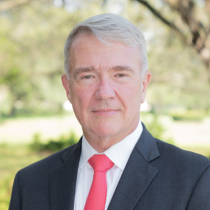
Gen. Kenneth F. McKenzie Jr.
Gen. Kenneth ‘Frank’ McKenzie Jr. is the former Commander of United States Central Command. He led a distinguished 42-year military career, commanding at multiple levels within the Marine Corps and serving on the Joint Staff. His leadership roles included commanding the First Battalion, Sixth Marines, and the 22nd MEU (SOC) during combat deployments to Afghanistan and Iraq.
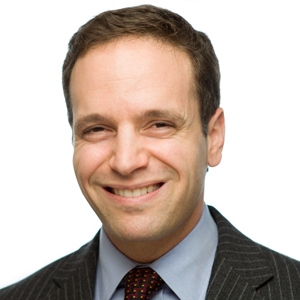
Vance Serchuk
Vance Serchuk is Executive Director of the KKR Global Institute and an Adjunct Senior Fellow at the Center for a New American Security. Prior to joining KKR, Mr. Serchuk served for six years as the senior national security advisor to Senator Joseph Lieberman (I-Connecticut).