
Text Study: Thucydides’ Peloponnesian War
Read a history of the war between Athens & Sparta to reflect on the permanent questions of political life.
June 15–19, 2026
Washington, DC
In the first week of the Security Studies Program, fellows will examine the empirical basis for America’s extensive global commitments, guided by readings from founders of classical geopolitical theory. From the turn of the 20th Century through World War II, these thinkers offered cautionary and realistic analyses of the requirements of security even as many western statesmen repeatedly embraced optimistic visions of a world kept peaceful through the power of international law. (The peak of such aspirations was arguably when, in 1929, the U.S. Senate ratified the Kellogg-Briand Pact, which outlawed war.) Hopes for mutual disarmament then motivated Cold War policymakers in both Republican and Democratic administrations—and ambitions for collective security, robust arms control, and in general the beating of swords into ploughshares remain very much alive today.
Those holding such optimistic views risk being mugged by geopolitical reality. To understand how liberal visions of peace through mutual understanding are undermined by human nature and by geography itself—and to organize our thinking about a realistic contemporary basis for America’s global policy—fellows will read substantial portions of Halford Mackinder’s Democratic Ideals and Reality, Nicholas Spykman’s America’s Strategy in World Politics, and also his The Geography of the Peace–foundational studies that remain relevant today. Spykman argued that that control of the Eurasian “Rimland” is the key to global security, an insight that has driven American grand strategy ever since, with varying degrees of self-consciousness. Fellows will work to apply this framework to understanding today’s endemic instability, from a land war in Europe to the threat of Chinese expansionism in the Pacific. What does classical geopolitical analysis prescribe for America’s challenges today?
Aaron MacLean on Why Study War
This course is part of our residential Security Studies Program. Fellows participate in morning seminars and meet national security leaders and experts over afternoon and evening sessions. Up to 16 fellows will be selected.
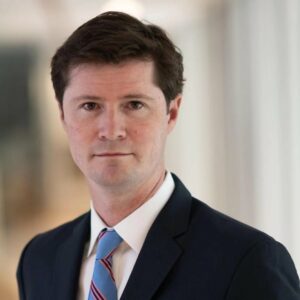
Aaron MacLean is dean of Hertog Security Studies, national security analyst for CBS News, and the host of the School of War podcast. Previously, Mr. MacLean was senior foreign policy advisor and legislative director to Senator Tom Cotton (R-AR). He served on active duty as a United States Marine for seven years, deploying to Afghanistan as an infantry officer in 2009–10.
Aaron MacLean is dean of Hertog Security Studies, national security analyst for CBS News, and the host of the School of War podcast.
Previously, Mr. MacLean was senior foreign policy advisor and legislative director to Senator Tom Cotton (R-AR). He served on active duty as a United States Marine for seven years, deploying to Afghanistan as an infantry officer in 2009–10. Following his time in the operating forces, he was assigned to the faculty of the US Naval Academy, where he was the 2013 recipient of the Apgar Award for Excellence in Teaching.
Mr. MacLean received a B.A. in philosophy and the history of math and science from St. John’s College, Annapolis, and an M.Phil. (Dist.) in medieval Arabic thought from the University of Oxford. He has been a Boren Scholar and a Marshall Scholar and lives in Virginia, where he was born.

Read a history of the war between Athens & Sparta to reflect on the permanent questions of political life.
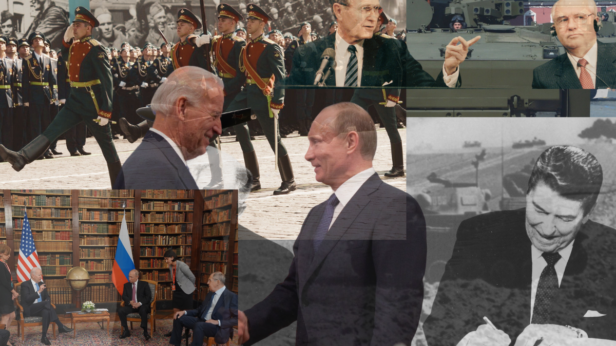
Study the trajectory of U.S. policy towards Russia from the Soviet collapse to the invasion of Ukraine.
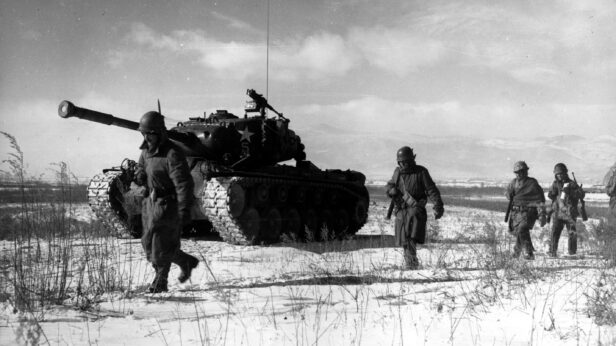
Study the Korean War and the lessons it offers for U.S.-China competition.
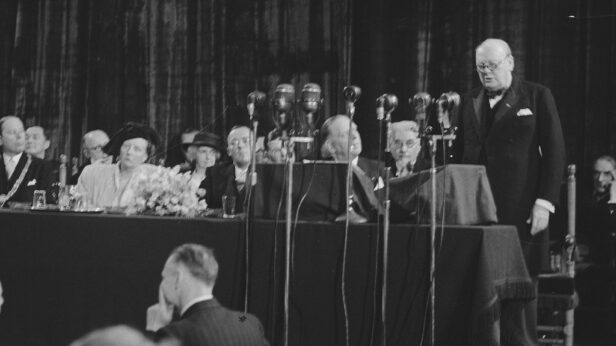
Consider the statesman’s role in democracy & whether political greatness is still possible today.
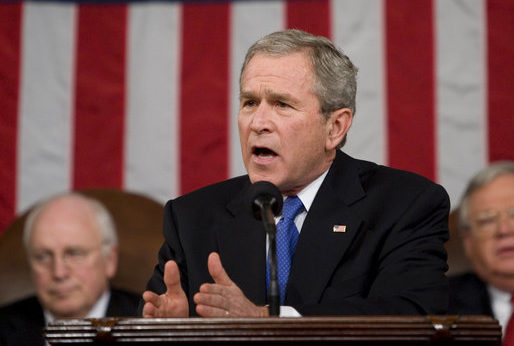
Examine key strategic decisions during one of the most dynamic confrontations of the late 20th and early 21st centuries: the U.S. and Iraq.

Hugh Liebert
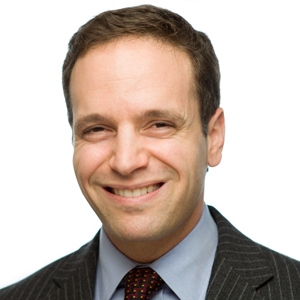
Vance Serchuk
Vance Serchuk is Executive Director of the KKR Global Institute and an Adjunct Senior Fellow at the Center for a New American Security. Prior to joining KKR, Mr. Serchuk served for six years as the senior national security advisor to Senator Joseph Lieberman (I-Connecticut).
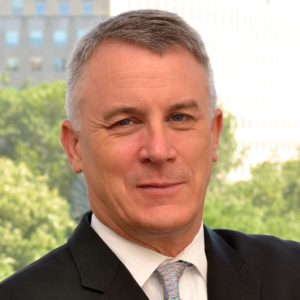
Michael Doran
Michael Doran, an expert in U.S. policy toward the Middle East, radical Islam, and the Arab-Israeli conflict, is a Senior Fellow at the Hudson Institute. He has also held a number of senior U.S. government posts related to Middle East policy and strategic communication.
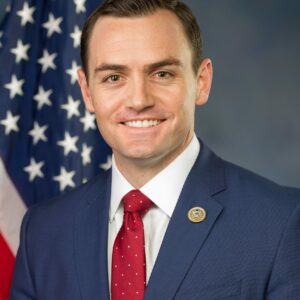
Mike Gallagher
Mike Gallagher served for four terms in the U.S. House of Representatives as Wisconsin’s 8th Congressional District representative. Previously, he served seven years on active duty in the U.S. Marine Corps, including two deployments to Iraq.
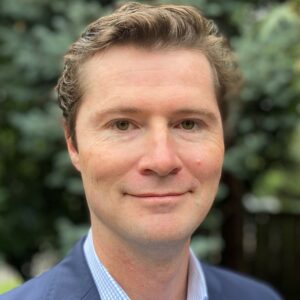
Aaron MacLean
Aaron MacLean is dean of Hertog Security Studies, national security analyst for CBS News, and the host of the School of War podcast. Previously, Mr. MacLean was senior foreign policy advisor and legislative director to Senator Tom Cotton (R-AR). He served on active duty as a United States Marine for seven years, deploying to Afghanistan as an infantry officer in 2009–10.
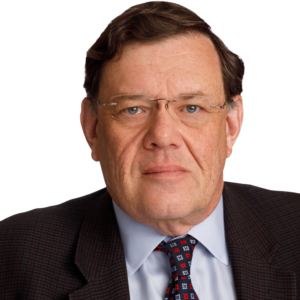
Henry Olsen
Henry Olsen, a senior fellow at the Ethics and Public Policy Center, studies and provides commentary on American politics. Mr. Olsen is an opinion columnist for The Washington Post, where he writes daily pieces focusing on politics, populism, foreign affairs and American conservative thought.
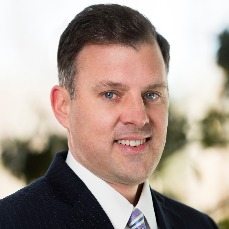
Flagg Taylor
Flagg Taylor is the Executive Director of the Center for Civics, Culture, & Society, at Miami University. His research specialty is in the history of political thought and American government, especially the question of executive power. He is Chair of the Academic Council of the Victims of Communism Memorial Foundation.
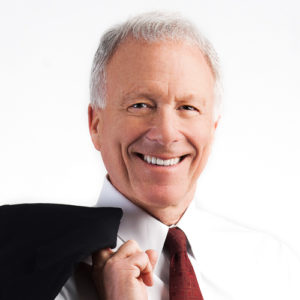
Lewis Libby
Lewis “Scooter” Libby is a distinguished fellow at the Foundation for Defense of Democracies. He has held several high level positions in the federal government related to his current work on national security and homeland security affairs. This included roughly a dozen years working in the White House, the U.S. Department of Defense, and the U.S. Department of State.
Paul Wolfowitz
Paul Wolfowitz is a scholar at the American Enterprise Institute. He spent more than three decades in public service and higher education. Most recently, he served as president of the World Bank and deputy secretary of defense.