Nixon in China: Did We Get China Wrong?
Study Nixon’s strategic opening to Beijing in 1972 and how it shaped U.S.-China relations today.
July 6–10, 2026
Washington, DC
In the fourth week of the Security Studies Program, fellows will turn to the challenge that has come to dominate American strategic planning: the rise of the People’s Republic of China. U.S. officials have labeled Beijing a “systemic challenge,” a “pacing threat,” and even a “peer adversary”—an emerging power whose military modernization, coercive diplomacy, and destabilizing behavior across the Indo-Pacific directly undermine American interests.
For the United States to compete effectively with a rising China, American strategists must understand how Chinese statecraft and grand strategy developed in the modern period. This course will explore the goals and purposes of China’s grand strategy—and especially its pursuit of “great national rejuvenation.” Fellows will trace major continuities and discontinuities in China’s approach to the world from the advent of the CCP’s victory in 1949 through today. We will consider how contemporary Chinese strategy seeks to shape China’s future.
Image: eng.chinamil.com.cn/Photo by Wang Shibin, Zhou Chaorong and Feng Kaixuan
Dan Blumenthal on Chinese Grand Strategy
This course is part of our residential Security Studies Program. Fellows participate in morning seminars and meet national security leaders and experts over afternoon and evening sessions. Up to 16 fellows will be selected.
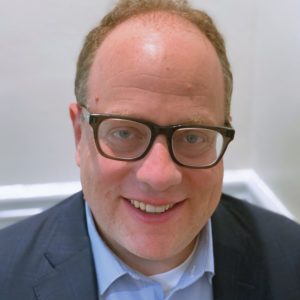
Dan Blumenthal is a senior fellow at the American Enterprise Institute, where he focuses on East Asian security issues and Sino-American relations. Mr. Blumenthal has served in and advised the US government on China issues for more than a decade.
Dan Blumenthal is a senior fellow at the American Enterprise Institute, where he focuses on East Asian security issues and Sino-American relations. Mr. Blumenthal has served in and advised the US government on China issues for more than a decade.
Before joining AEI, Mr. Blumenthal served as senior director for China, Taiwan, and Mongolia at the US Department of Defense. He served as a commissioner on the congressionally mandated US-China Economic and Security Review Commission from 2006 to 2012, and he was vice chairman of the commission in 2007. He also served on the Academic Advisory Board of the congressional US-China Working Group.
Mr. Blumenthal is the author of “The China Nightmare: The Grand Ambitions of a Decaying State” (AEI Press, November 2020) and coauthor of “An Awkward Embrace: The United States and China in the 21st Century” (AEI Press, November 2012).
He has testified before Congress and has been published in The Atlantic, Commentary, Foreign Policy, The Hill, Los Angeles Times, The National Interest, National Review, The New York Post, The New York Times, Newsweek, RealClearWorld, and The Wall Street Journal, among other outlets. His broadcast appearances include C-SPAN, Yahoo News, Bloomberg Radio, and many top-rated talk radio programs.
Mr. Blumenthal has a J.D. from Duke Law School, an M.A. from the School of Advanced International Studies at Johns Hopkins University, and a B.A. from Washington University in St. Louis. He also attended Capital Normal University in Beijing, China, where he focused on Chinese language studies.
Readings:
Discussion Questions:
Readings:
Discussion Questions:
Readings:
Discussion Questions:
Readings:
Discussion Questions:
Readings:
Discussion Questions:
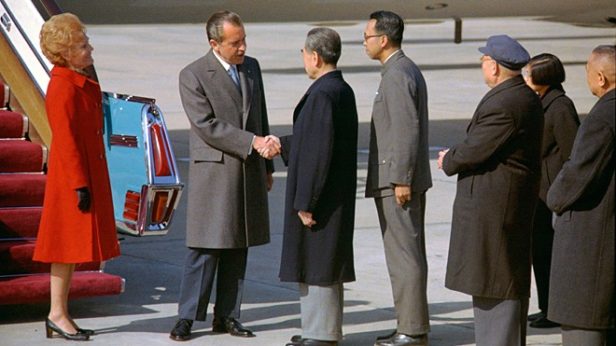
Study Nixon’s strategic opening to Beijing in 1972 and how it shaped U.S.-China relations today.

Study the trajectory of U.S. policy towards Russia from the Soviet collapse to the invasion of Ukraine.
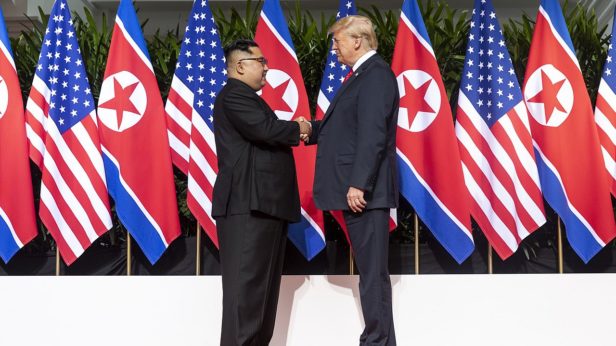
Consider the strategic options for dealing with North Korea.
Learn the theory, practice, organization, and control of war and military forces.

Explore the ways nuclear weapons have transformed the world we inhabit today.
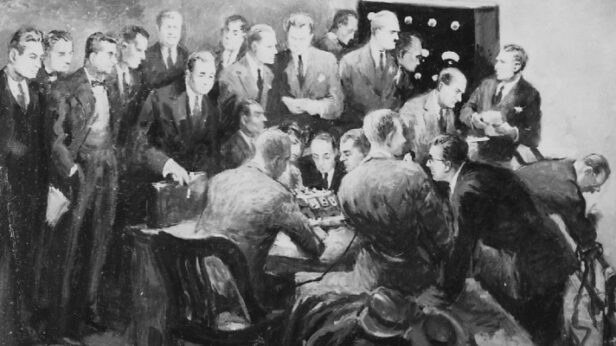
Read a history that's part biography of the scientists working at the advent of nuclear physics & part biography of the atom itself.

Daniel Blumenthal
Dan Blumenthal is a senior fellow at the American Enterprise Institute, where he focuses on East Asian security issues and Sino-American relations. Mr. Blumenthal has served in and advised the US government on China issues for more than a decade.
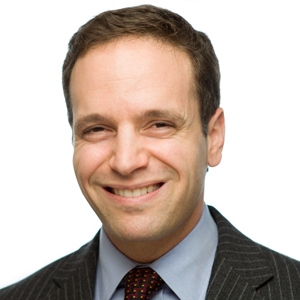
Vance Serchuk
Vance Serchuk is Executive Director of the KKR Global Institute and an Adjunct Senior Fellow at the Center for a New American Security. Prior to joining KKR, Mr. Serchuk served for six years as the senior national security advisor to Senator Joseph Lieberman (I-Connecticut).
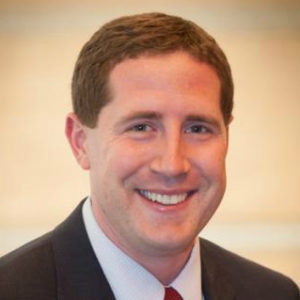
Christopher J. Griffin
Christopher Griffin is a national security expert, specializing in U.S. foreign and defense policy toward the Asia-Pacific. He served as legislative director to Senator Joseph I. Lieberman, advising the senator on the full range of legislative proposals and key votes. He serves as a Field Artillery Officer in the Army National Guard.
Mick Ryan
Mick Ryan is a retired major general in the Australian Army. He is now an adjunct fellow at the Center for Strategic and International Studies in Washington DC, and a non-resident fellow of the Lowy Institute in Sydney. In January 2023 Mick was also appointed as an Adjunct Professor at the University of Queensland in Brisbane, Australia.
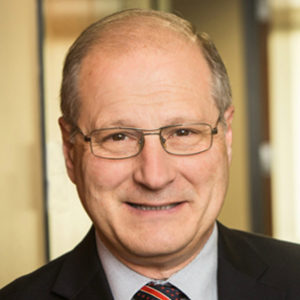
Eric S. Edelman
Ambassador Eric S. Edelman is Counselor at the Center for Strategic and Budgetary Assessments. He retired as a career minister from the U.S. Foreign Service on May 1, 2009. He has served in senior positions at the Departments of State and Defense as well as the White House, where he led organizations providing analysis, strategy, policy development, security services, trade advocacy, public outreach, citizen services, and congressional relations.

Patrick Coleman
Patrick Coleman is a Tutor at St. John’s College. He earned his Ph.D. in Physics from University of Illinois, Urbana-Champaign, with a dissertation on synchronization, and his B.S. in Physics from William & Mary College along with a minor in Philosophy. He is currently leading a research group on the integration of a Technology and Computation segment in St. John’s College’s Graduate Institute. Patrick has led seminars and reading groups for The Catherine Project, including a recent reading group on Richard Feynman’s Lectures on Computation, and is especially devoted to deepening scientific literacy.