Richard Rhodes’ The Making of the Atomic Bomb
Read a history that's part biography of the scientists working at the advent of nuclear physics & part biography of the atom itself.
June 21–26, 2026
Washington, DC
In the second week of the Security Studies Program, fellows will trace the trajectory of U.S. policy toward Russia from the Soviet collapse in 1991 to the invasion of Ukraine in 2022—an arc of history spanning six American presidents, three Kremlin leaders, and a period of profound global transformation.
It wasn’t supposed to turn out this way. Just over 30 years ago, the Cold War came to an improbably abrupt and peaceful end. After nearly half a century of rivalry with the U.S., Russia appeared poised to become a free-market democracy and a strategic partner to Washington. Instead, over the coming decades, Moscow would revert to authoritarian rule and today once again menaces the West—posing one of the most consequential tests of American power and leadership in the modern world.
This seminar will explore what went wrong, how we arrived at the current confrontation, and what this journey reveals about the character of two of the world’s most consequential countries, the United States and the Russian Federation.
Vance Serchuk & Gen David Petraeus on leadership
This course is part of our residential Security Studies Program. Fellows participate in morning seminars and meet national security leaders and experts over afternoon and evening sessions. Up to 16 fellows will be selected.
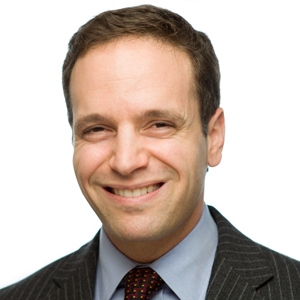
Vance Serchuk is Executive Director of the KKR Global Institute and an Adjunct Senior Fellow at the Center for a New American Security. Prior to joining KKR, Mr. Serchuk served for six years as the senior national security advisor to Senator Joseph Lieberman (I-Connecticut).
Vance Serchuk is Executive Director of the KKR Global Institute and an Adjunct Senior Fellow at the Center for a New American Security.
Prior to joining KKR, Mr. Serchuk served for six years as the senior national security advisor to Senator Joseph Lieberman (I-Connecticut). In this capacity, he worked on a broad range of international issues, including comprehensive sanctions legislation, the U.S. rebalance to the Asia-Pacific, and the U.S. response to the Arab Spring, traveling to over 60 countries in Asia, Latin America, Africa, and the Middle East.
From January to July 2013, he was a Council on Foreign Relations-Hitachi International Affairs Fellow, based in Japan, and a regular columnist for the Washington Post. His writings have also appeared in the New York Times, Wall Street Journal, and Los Angeles Times.
Mr. Serchuk is a summa cum laude graduate of Princeton University, holds a J.D. from Yale Law School, and was a Fulbright scholar in the Russian Federation.
Readings:
Key Questions:
Readings:
Key Questions:
Readings:
Key Questions:
Readings:
Ukraine Denuclearization
Key Questions:
Readings:
The NATO Expansion Debate
The Balkans
Key Questions:
Readings:
Key Questions:
Readings:
Key Questions:
Readings:
The Reset
Libya
Russian Internal Developments
US Human Rights Policy
Key Questions:
Readings:
Post-Reset Reflections… and What Next?
Syria and the Red Line (2013)
Ukraine Explodes (2013–16)
Syria Escalates (2014–16)
Key Questions:
Readings:
The 2016 Election
The Trump Administration
Key Questions:
Readings:
Opening Moves
The Road to War
Key Questions
Readings:
Key Questions:
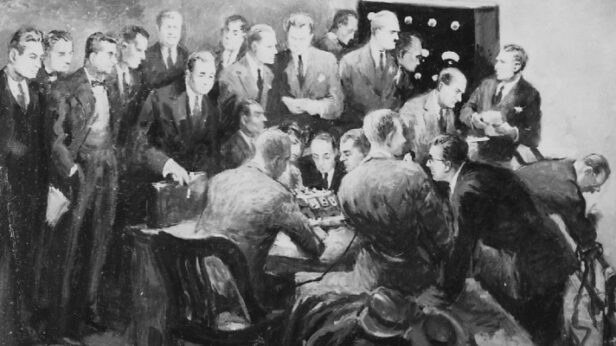
Read a history that's part biography of the scientists working at the advent of nuclear physics & part biography of the atom itself.
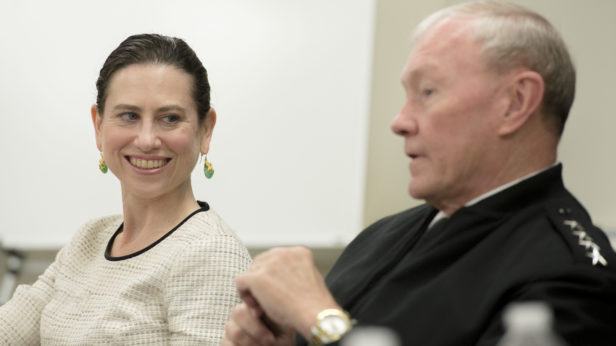
Learn the theory, practice, organization, and control of war and military forces.
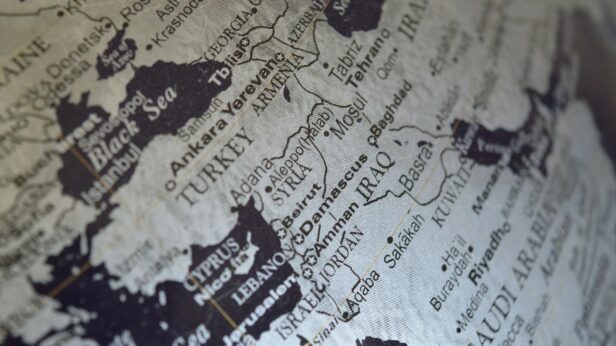
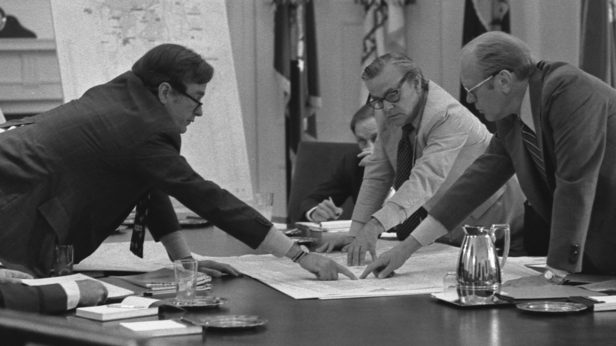
Analyze case studies to better understand presidential control over foreign policy and the meaning of executive power.
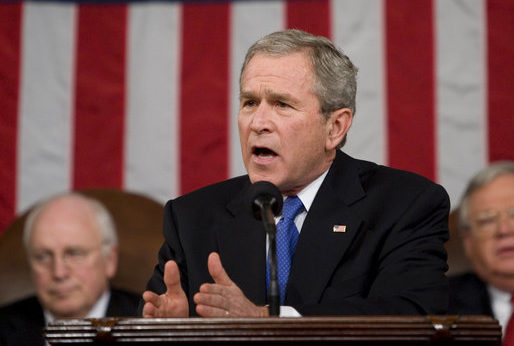
Examine key strategic decisions during one of the most dynamic confrontations of the late 20th and early 21st centuries: the U.S. and Iraq.
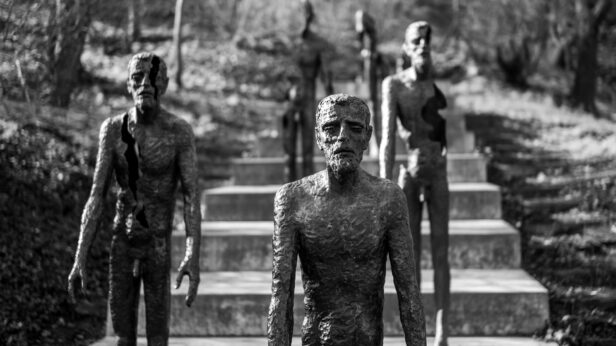
Reflect on the human consequence of modern thought with Doestovesky's 1864 novella.
Patrick Coleman
Patrick Coleman is a Tutor at St. John’s College. He earned his Ph.D. in Physics from University of Illinois, Urbana-Champaign, with a dissertation on synchronization, and his B.S. in Physics from William & Mary College along with a minor in Philosophy. He is currently leading a research group on the integration of a Technology and Computation segment in St. John’s College’s Graduate Institute. Patrick has led seminars and reading groups for The Catherine Project, including a recent reading group on Richard Feynman’s Lectures on Computation, and is especially devoted to deepening scientific literacy.
Mick Ryan
Mick Ryan is a retired major general in the Australian Army. He is now an adjunct fellow at the Center for Strategic and International Studies in Washington DC, and a non-resident fellow of the Lowy Institute in Sydney. In January 2023 Mick was also appointed as an Adjunct Professor at the University of Queensland in Brisbane, Australia.
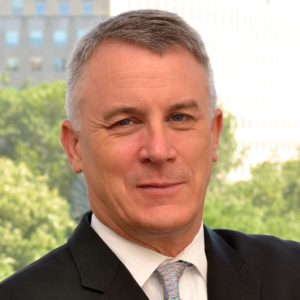
Michael Doran
Michael Doran, an expert in U.S. policy toward the Middle East, radical Islam, and the Arab-Israeli conflict, is a Senior Fellow at the Hudson Institute. He has also held a number of senior U.S. government posts related to Middle East policy and strategic communication.
Vance Serchuk
Vance Serchuk is Executive Director of the KKR Global Institute and an Adjunct Senior Fellow at the Center for a New American Security. Prior to joining KKR, Mr. Serchuk served for six years as the senior national security advisor to Senator Joseph Lieberman (I-Connecticut).
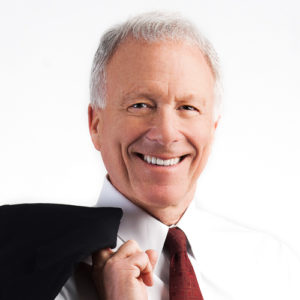
Lewis Libby
Lewis “Scooter” Libby is a distinguished fellow at the Foundation for Defense of Democracies. He has held several high level positions in the federal government related to his current work on national security and homeland security affairs. This included roughly a dozen years working in the White House, the U.S. Department of Defense, and the U.S. Department of State.
Paul Wolfowitz
Paul Wolfowitz is a scholar at the American Enterprise Institute. He spent more than three decades in public service and higher education. Most recently, he served as president of the World Bank and deputy secretary of defense.
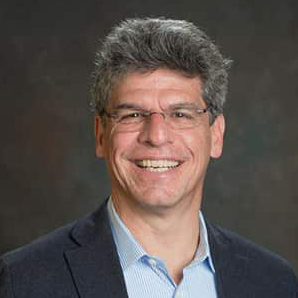
Jacob Howland
Jacob Howland has published five books and roughly 60 scholarly articles and review essays on the thought of Plato, Aristotle, Xenophon, Kierkegaard, the Talmud, the Holocaust, ideological tyranny, and other subjects. His most recent book is Glaucon’s Fate: History, Myth, and Character in Plato’s Republic.