
Thomas Mann’s The Magic Mountain
Follow one young man's education amid a Europe drifting toward the First World War.
Spring 2027
Online
The autobiography as a genre has had numerous notable entries, including those of Benjamin Franklin, Frederick Douglass, and Sir Winston Churchill. But these and sundry others stand in the shadow of the first autobiography, written during the wane of the Roman Empire at the end of the fourth century by the African bishop Saint Augustine of Hippo (354-430 AD). He profoundly shaped Western thought and culture for centuries—from medieval Roman Catholic philosophy to the Protestant Reformation to modern American thinkers like Reinhold Niebuhr.
Augustine’s Confessions, however, is much more than an autobiography. It is a work with long-standing status in the disciplines of theology, philosophy, and psychology. All these strands together make a single and singularly moving work by and about a restless soul in search of lasting happiness, first fleeing, and then seeking, its proper home.
This seminar will journey with Augustine as he explores some of the most profound and complex themes of human life, philosophy, and Christian reflection. These include the problem of evil, God and the soul; the struggle between the spirit and the flesh, sin and salvation; the relationship of classical culture to Christianity, friendship and love; the quest for happiness, time, and memory; the ephemeral character of earthly pleasures; and the sovereignty of grace.
Image: Fra Angelico, Conversion of Saint Augustine, 1430
Dr. Rosenthal on humanism and the Western tradition
This course is offered by Humanities at Hertog. It will take place weekly via Zoom; the meeting day and time will be announced. Fellows who complete the seminar in good standing, including full participation, timely completion of the response paper, and submission of the course evaluation, will receive a $150 Amazon gift card. Required course materials will be provided.

Alexander Rosenthal Pubul is an online lecturer in political thought at Johns Hopkins University’s Center for Data Analytics, Policy, and Government and teaches private courses on Udemy focused on classical and Christian thinkers. Among his books is The Theoretic Life: A Classical Ideal and its Modern Fate. He has a recent co-authored book, The Wisdom of Our Ancestors: Conservative Humanism and its Modern Fate. His work spans political philosophy, classical humanism, European intellectual history, religion and politics, and liberal democracy.
Alexander Rosenthal Pubul is an online lecturer in political thought at Johns Hopkins University’s Center for Data Analytics, Policy, and Government and teaches private courses on Udemy focused on classical and Christian thinkers. Among his books is The Theoretic Life: A Classical Ideal and its Modern Fate. He has a recent co-authored book, The Wisdom of Our Ancestors: Conservative Humanism and its Modern Fate. His work spans political philosophy, classical humanism, European intellectual history, religion and politics, and liberal democracy.
Meeting date, time, reading, and discussion details forthcoming.
Meeting date, time, reading, and discussion details forthcoming.
Meeting date, time, reading, and discussion details forthcoming.
Meeting date, time, reading, and discussion details forthcoming.
Meeting date, time, reading, and discussion details forthcoming.

Follow one young man's education amid a Europe drifting toward the First World War.

Read Faulkner's demanding Southern epic as a meditation on memory, inheritance, loyalty, & moral judgment.

Explore memory, family, inheritance, myth, & freedom in Morrison’s acclaimed novel.
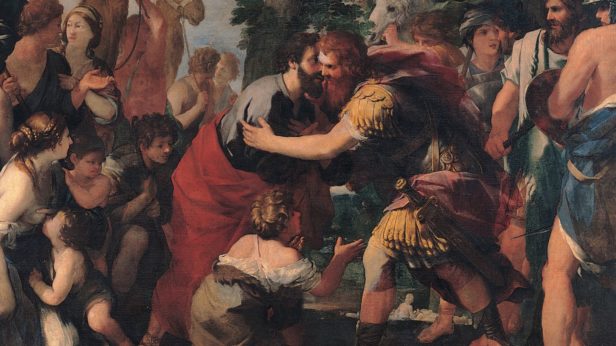
Explore the political teaching of the Book of Genesis.
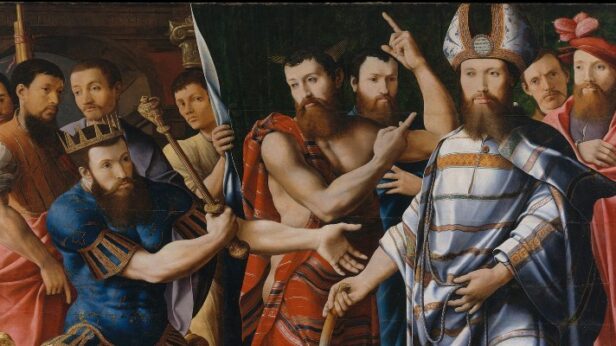
Consider lessons of statesmanship & founding from two ancient yet profoundly different sources.

Examine the influence of religion as a political force.
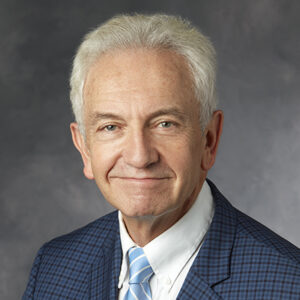
Russell A. Berman
Russell A. Berman is the Walter A. Haas Professor in the Humanities at Stanford University and a senior fellow at the Hoover Institution. His scholarship spans German and comparative literature, cultural theory, religion and culture, the Middle East, and international relations.

Sam Postell
Samuel Postell is Assistant Director of the Lyceum Scholars Program at Clemson University’s Snow Institute for the Study of Capitalism. He holds a Ph.D. in Politics from the University of Dallas, with a dissertation on Henry Clay, union, and legislative statesmanship. His teaching and research span American political thought, capitalism, politics and literature, and antebellum political life. He has a forthcoming book on Melville’s Moby-Dick entitled American Epic: Philosophy, Power, and Impiety in Melville’s Moby-Dick.

Lillian Law
Teaching Assistant
Lillian Law is pursuing an M.A. in English at The Catholic University of America and holds a B.A. in Political Science and French from Hillsdale College. Her background includes editorial and content-management work, and she studied William Faulkner’s Absalom, Absalom! in graduate school. A Hertog alumna, she will serve as teaching assistant for the Fall 2026 seminar on Faulkner’s novel.

Angel Adams Parham
Angel Adams Parham is Associate Professor of Sociology and senior fellow at the Institute for Advanced Studies in Culture (IASC) at the University of Virginia. She is active in public-facing teaching and scholarship where she provides resources and training for K-12 educators who are looking to better integrate Black writers and Black history into their teaching.
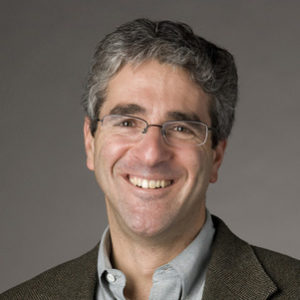
Laurence Cooper
Laurence Cooper is Professor of Political Science at Carleton College. Most of his research has addressed the question of human flourishing—what it is, how we can know what it is, what it requires from education and politics, and the risks that arise from misunderstanding it.

Daniel Burns
Daniel Burns is Associate Professor of Politics at the University of Dallas. His research in political philosophy focuses on the relation between religion and citizenship. He has recently served as a staffer for the U.S. Congress Joint Economic Committee and as a full-time contractor for the U.S. Department of Health and Human Services.

Jacob Howland
Jacob Howland has published five books and roughly 60 scholarly articles and review essays on the thought of Plato, Aristotle, Xenophon, Kierkegaard, the Talmud, the Holocaust, ideological tyranny, and other subjects. His most recent book is Glaucon’s Fate: History, Myth, and Character in Plato’s Republic.

Bryan Garsten
Bryan Garsten is Professor of Political Science at Yale University. He writes on questions about political rhetoric and deliberation, the meaning of representative government, the relationship of politics and religion, and the place of emotions in political life.