Constitutional Administration
Learn how policy is translated through the administrative state and the courts.
Summer 2027
Washington, DC
What does it mean to be a constitutional conservative? The Supreme Court’s conservative justices share many commitments, yet often disagree about how to interpret the Constitution, when to overturn precedent, and how to exercise judicial power. These debates offer a window into some of the most consequential constitutional questions of our time.
Led by Adam J. White, this two-week fellowship in Washington, DC, will explore the ideas and disagreements shaping constitutional conservatism. Fellows will begin with America’s foundational debates over judicial power, reading The Federalist, the Anti-Federalists, and John Marshall before turning to the constitutional controversies surrounding Lochner and the Warren Court. They will then examine the writings of recent and current conservative justices, considering how their approaches respond to the legacy of 20th-century liberal jurisprudence.
The second week will center on major Supreme Court cases involving constitutional rights, equality, and citizenship. Fellows will work in teams to present opposing sides of each case, defend their interpretations, and engage their classmates in close discussion of the justices’ reasoning. Throughout, they will ask how constitutional principles should guide judicial decisions and what responsibilities accompany the Court’s power. Afternoon conversations with judges and other legal practitioners will connect these questions to the work of the courts.
The guest faculty and speakers listed below visited past programs. Guest faculty and speakers for Summer 2027 will be announced soon.
Learn more about the Constitutional Studies Program.
AEI

U.S. District Court
George Washington Presidential Library

Lindsay Chervinsky
View MoreYale Law School

United States Court of Appeals
ADF
The Dispatch
Havard Law School
University of Notre Dame

AEI

U.S. Court of Appeals
UT-Austin

Jeffrey K. Tulis
View MoreYale Law School

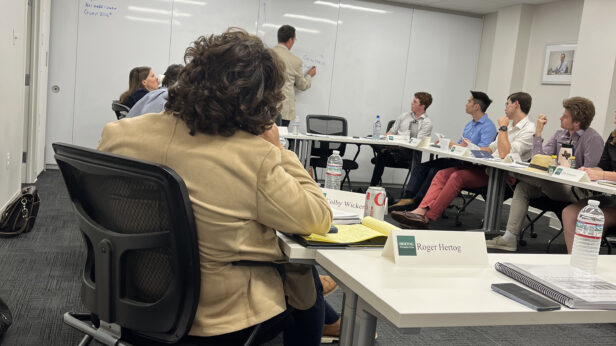
Under the guidance of legal expert Adam White, Constitutional Studies Fellows spend their mornings in rigorous seminar discussion, tracing the development of America’s constitutional institutions. We will connect ideas to institutions to statesmanship, and connect America’s history to the present day with an eye to the fellows’ own futures.
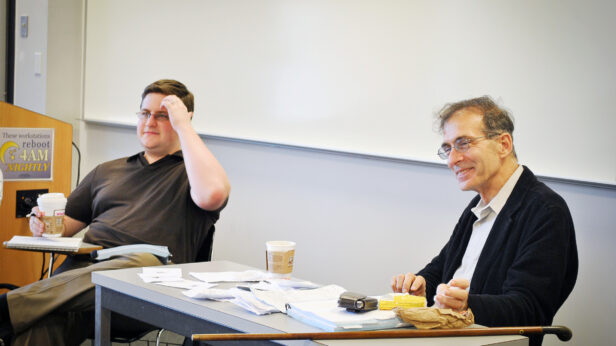
In the afternoons, fellows gain insights from prominent judges, legal scholars, and Supreme Court advocates who bring firsthand knowledge of law at the highest levels. Past guests included Sixth Circuit Judge Amul Thapar, legal analyst Sarah Isgur, and Harvard Law School admissions dean Kristi Jobson.

Over 2,000 students have participated in a Hertog fellowship. Hertog alumni are consistently accepted at top law schools like Harvard, Yale, Georgetown, UChicago, and UVA. A dozen alumni have gone on to clerk for a U.S. Supreme Court Justice.
Learn how policy is translated through the administrative state and the courts.
Consider The Federalist Papers anew through the lens of current events.
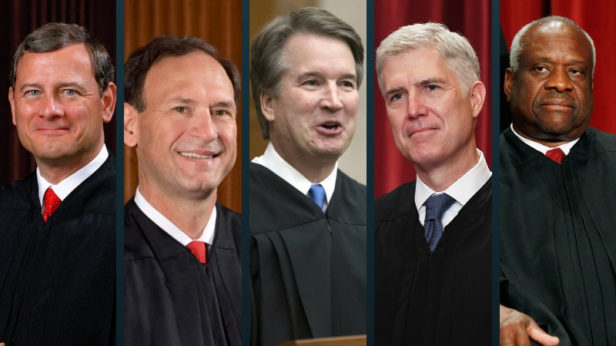
Explore the debates within conservative legal thought on the courts and the Constitution.
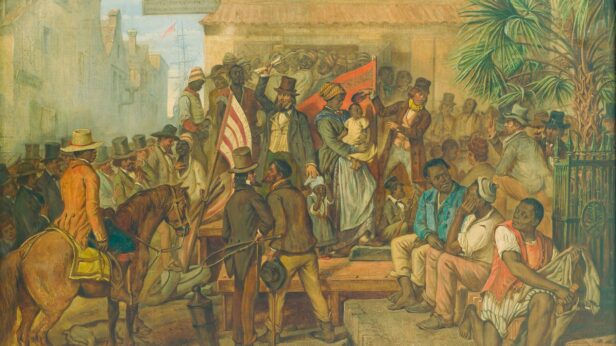
Consider the status of slavery and race in the American Founding.
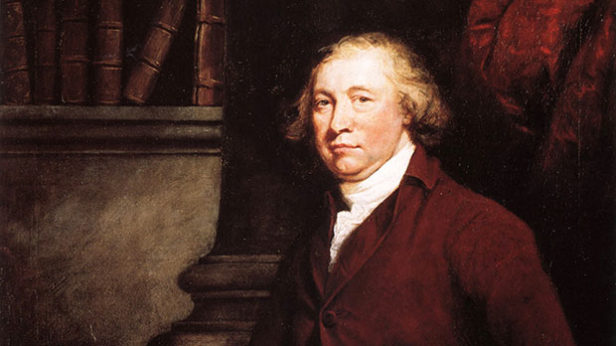
Study the work of Edmund Burke, the West’s first and arguably greatest conservative thinker.

Reflect on the ethical dilemmas implied by the pursuit of power.
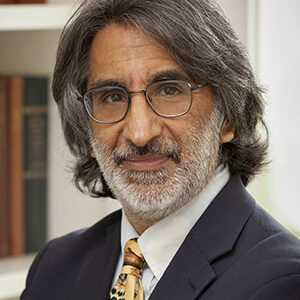
Akhil Reed Amar
Akhil Reed Amar is Sterling Professor of Law and Political Science at Yale University, where he teaches constitutional law in both Yale College and Yale Law School. He is Yale’s only currently active professor to have won the University’s unofficial triple crown — the Sterling Chair for scholarship, the DeVane Medal for teaching, and the Lamar Award for alumni service. He hosts a weekly podcast, Amarica’s Constitution.
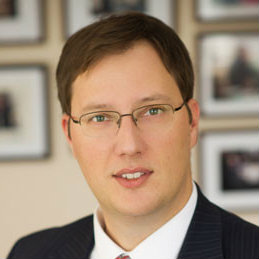
Adam J. White
Adam J. White is the Laurence H. Silberman Chair in Constitutional Governance and senior fellow at the American Enterprise Institute, where he focuses on the Supreme Court and the administrative state. Concurrently, he codirects the Antonin Scalia Law School’s C. Boyden Gray Center for the Study of the Administrative State.
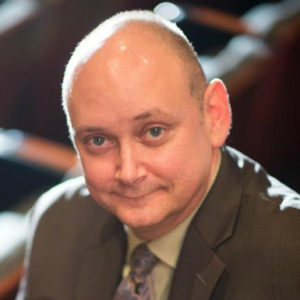
Greg Weiner
Greg Weiner is President of Assumption University and founding director of the Daniel Patrick Moynihan Center for Scholarship and Statesmanship. He is the author of American Burke: The Uncommon Liberalism of Daniel Patrick Moynihan and Old Whigs: Burke, Lincoln and the Politics of Prudence.
Thomas Merrill
Thomas Merrill is an associate professor in the School of Public Affairs at American University. He is the author of Hume and the Politics of Enlightenment. He is also the co-editor of three edited volumes, including The Political Thought of the Civil War.
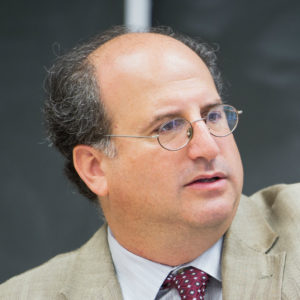
Alan M. Levine
Alan M. Levine is Associate Professor of political theory in the Department of Government and the founding director of the Political Theory Institute at American University. A specialist in the history of Western political thought, Professor Levine’s research interests include ancient and modern political theory.
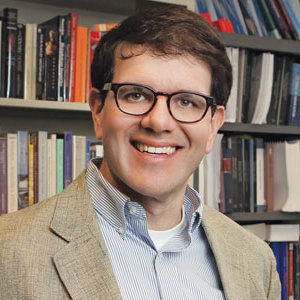
Ryan Patrick Hanley
Ryan Patrick Hanley is Professor of Political Science at Boston College. His research in the history of political philosophy focuses on the Enlightenment. He is the author of Our Great Purpose: Adam Smith on Living a Better Life and Love’s Enlightenment: Rethinking Charity in Modernity.
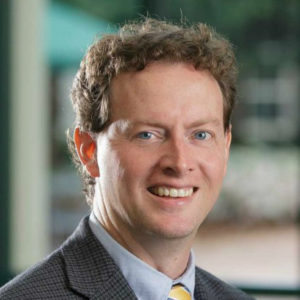
Benjamin Storey
Benjamin Storey is a senior fellow in Social, Cultural, and Constitutional Studies at the American Enterprise Institute (AEI), and co-director of AEI’s Center for the Future of the American University. He is concurrently an SNF Agora Fellow at Johns Hopkins University and a research fellow at the Civitas Institute at the University of Texas at Austin.