Thomas Mann’s The Magic Mountain
Follow one young man's education amid a Europe drifting toward the First World War.
Mondays | January 4 – February 1, 2027
Online
This course leads students through a close reading of the classic dystopian novel, in search of both its historical origins and its contemporary relevance. We will treat the book as a product of George Orwell’s time—the mid-20th century—and as the culmination of his thinking about liberalism, socialism, war, and totalitarianism. We will debate whether 1984′s message is inseparable from the milieu that spawned it or applicable universally—to today and, indeed, to the remote past.
A crucial issue will be the role of truth in politics—and the role of politics in generating truth. Does reality exist independently of power relationships? Or is some degree of force and coercion necessary to establish the “narrative” that organizes any society? And does that lead inevitably to the dystopia Orwell imagined or is a liberal order nevertheless sustainable? Is it possible to preserve a modicum of privacy and freedom even in the most repressive states?
Students will be challenged to determine whether 1984 is best considered a cautionary tale about modern politics—or a meditation on human nature’s inherent flaws.
Image: Giovanni Battista Piranesi, The Gothic Arch, published 1800/1809
Charles Lane discusses George Orwell's 1984
This course is offered by Humanities at Hertog. It takes place weekly on Monday, via Zoom, from 6 PM to 8 PM ET (with one Tuesday meeting on Jan. 19 from 7 PM to 9PM ET). Fellows who complete the seminar in good standing, including full participation, timely completion of the response paper, and submission of the course evaluation, will receive a $150 Amazon gift card. Required course materials will be provided.
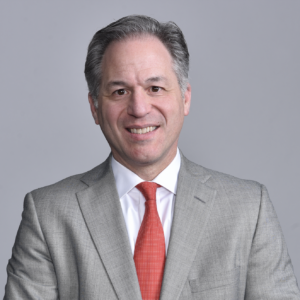
Charles Lane is a nonresident senior fellow at the American Enterprise Institute. A former Washington Post columnist, editorial writer, and Supreme Court reporter, he has written widely for U.S. and international media on constitutional law, civil rights, political institutions, and foreign affairs. He is the author of The Day Freedom Died (Henry Holt).
Charles Lane is a nonresident senior fellow at the American Enterprise Institute. He previously spent more than two decades at The Washington Post, where he served as deputy opinion editor and columnist, editorial writer, member of the editorial board, and Supreme Court reporter. Earlier in his career, he was editor and senior editor of The New Republic and a foreign correspondent for Newsweek. Lane is the author of three books on American history and legal affairs, including The Day Freedom Died: The Colfax Massacre, the Supreme Court, and the Betrayal of Reconstruction and Freedom’s Detective: The Secret Service, the Ku Klux Klan and the Man Who Masterminded America’s First War on Terror. His work ranges across constitutional law, civil rights, political institutions, and foreign affairs. He holds a B.A. in social studies from Harvard College and an M.S.L. from Yale Law School and is a member of the Council on Foreign Relations.
George Orwell, 1984, Signet Classics 75th Anniversary edition, with an afterword by Sandra Newman.
Reading and discussion details forthcoming.
Reading and discussion details forthcoming.
Note: This session has been rescheduled to Tuesday to accomodate the MLK Day holiday. It will meet from 7 to 9 PM ET.
Reading and discussion details forthcoming.
Reading and discussion details forthcoming.
Reading and discussion details forthcoming.

Follow one young man's education amid a Europe drifting toward the First World War.

Explore visions of utopian & dystopian societies in three short novels.
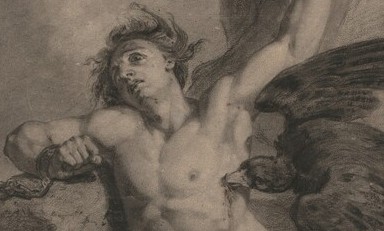
Read a Gothic–Romantic & early science fiction text that reflects on modern science, nature, & the ambitions of enlightenment.
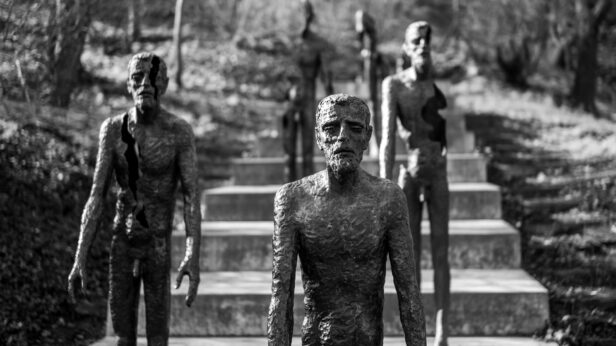
Reflect on the human consequence of modern thought with Doestovesky's 1864 novella.

Read Faulkner's demanding Southern epic as a meditation on memory, inheritance, loyalty, & moral judgment.
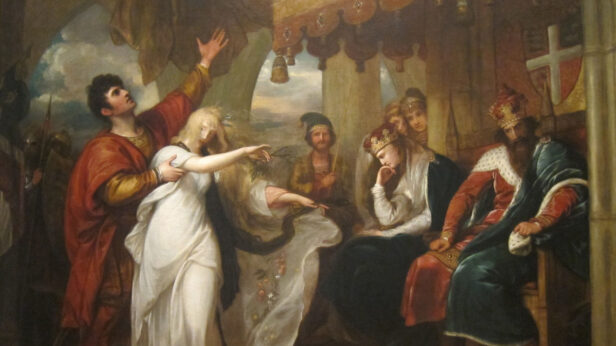
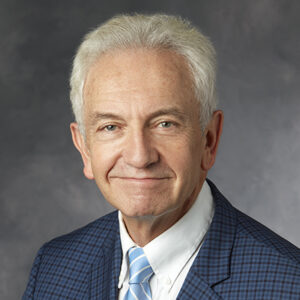
Russell A. Berman
Russell A. Berman is the Walter A. Haas Professor in the Humanities at Stanford University and a senior fellow at the Hoover Institution. His scholarship spans German and comparative literature, cultural theory, religion and culture, the Middle East, and international relations.

Darren Staloff
Darren Staloff is a retired Professor of History from the City College of New York and the Graduate Center of CUNY. Professor Staloff has published numerous papers and reviews on the subject of early American history.

Molly Brigid McGrath
Molly Brigid McGrath is a professor of philosophy at Assumption University. She specializes in phenomenology, social ontology, and political philosophy, with particular interests in the works of Husserl, Aristotle, Searle, and classic texts by Plato, Aquinas, and Montesquieu.
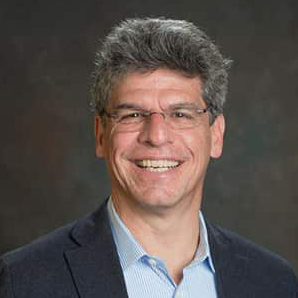
Jacob Howland
Jacob Howland has published five books and roughly 60 scholarly articles and review essays on the thought of Plato, Aristotle, Xenophon, Kierkegaard, the Talmud, the Holocaust, ideological tyranny, and other subjects. His most recent book is Glaucon’s Fate: History, Myth, and Character in Plato’s Republic.

Sam Postell
Samuel Postell is Assistant Director of the Lyceum Scholars Program at Clemson University’s Snow Institute for the Study of Capitalism. He holds a Ph.D. in Politics from the University of Dallas, with a dissertation on Henry Clay, union, and legislative statesmanship. His teaching and research span American political thought, capitalism, politics and literature, and antebellum political life. He has a forthcoming book on Melville’s Moby-Dick entitled American Epic: Philosophy, Power, and Impiety in Melville’s Moby-Dick.

Lillian Law
Teaching Assistant
Lillian Law is pursuing an M.A. in English at The Catholic University of America and holds a B.A. in Political Science and French from Hillsdale College. Her background includes editorial and content-management work, and she studied William Faulkner’s Absalom, Absalom! in graduate school. A Hertog alumna, she will serve as teaching assistant for the Fall 2026 seminar on Faulkner’s novel.

Alex Priou
Alex Priou is an Associate Professor of Political Theory at UATX. His research and teaching both focus on the history of political philosophy, with specialization in Plato and the Pre-Socratic poets and philosophers. He often writes for a broader audience on his Substack and Public Discourse and is the co-host of a weekly podcast The New Thinkery where he discusses a broad array of texts philosophical, historical, political, and literary.