
Liberal Education in America
Trace liberal education's contested promise—from Plato & Aristotle to the modern American university.
Thursdays | January 14 – February 4, 2027
Online
Join Hans Castorp on what begins as a three-week visit to a tuberculosis sanatorium high in the Swiss Alps—and becomes a seven-year intellectual journey through illness, ideas, love, and death.
Published in 1924, Thomas Mann’s The Magic Mountain is a fascinating modern novel of education, tracing the growth of an ordinary young engineer. Hans encounters competing visions of reason and mysticism, progress and pessimism, freedom and authority. Along the way, Mann explores the relativity of time, the impact of psychoanalysis, the power of myth, the appeal of music, and the relationship between medicine and the humanities. Meanwhile, the sanatorium becomes a miniature Europe moving toward the catastrophe of the First World War.
This seminar will explore the novel’s ideas, its distinctive literary form, and its place in German and European history. As we follow Hans’s education on the mountain, we will also ask what education itself is for: vocational preparation, entry into a cultural tradition, or intellectual and personal transformation. What does Hans learn during his long sojourn—and what can his experience teach us about how to live and learn?
Image: Ferdinand Hodler, Eiger, Mönch und Jungfrau in der Morgensonne, 1908
Prof. Berman on Thomas Mann's The Magic Mountain
This course is offered by Humanities at Hertog. It takes place weekly on Thursday, via Zoom, from 7 PM to 9 PM ET. Fellows who complete the seminar in good standing, including full participation, timely completion of the response paper, and submission of the course evaluation, will receive a $150 Amazon gift card. Required course materials will be provided.
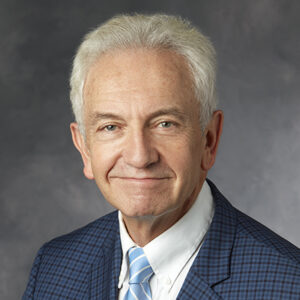
Russell A. Berman is the Walter A. Haas Professor in the Humanities at Stanford University and a senior fellow at the Hoover Institution. His scholarship spans German and comparative literature, cultural theory, religion and culture, the Middle East, and international relations.
Russell A. Berman is the Walter A. Haas Professor in the Humanities at Stanford University, where he is Professor of Comparative Literature and German Studies, and a senior fellow at the Hoover Institution. His scholarship spans German and comparative literature, cultural theory, religion and culture, the Middle East, and international relations. Berman has served as president of the Modern Language Association, editor of the journal Telos, senior adviser on the U.S. Department of State’s Policy Planning Staff, and a member of the Commission on Unalienable Rights. At Hoover, he directs the Working Group on the Middle East and the Islamic World. His books include Fiction Sets You Free: Literature, Liberty, and Western Culture, Anti-Americanism in Europe: A Cultural Problem, and Freedom or Terror: Europe Faces Jihad. His honors include the German Studies Association’s best book award, the Federal Service Cross of the Federal Republic of Germany, and Stanford awards for both undergraduate and graduate teaching. He holds a B.A. from Harvard University and a Ph.D. from Washington University in St. Louis.
Reading:
Discussion Questions:
Essay Prompts:
Reading:
Discussion Questions:
Essay Prompts:
Reading:
Discussion Questions:
Essay Prompts:
Reading:
Discussion Questions:
Essay Prompts:
Trace liberal education's contested promise—from Plato & Aristotle to the modern American university.
Read Tolstoy's classic novel as a moral laboratory of judgment, desire, guilt, freedom, & forgiveness.
Inquire into the ultimacy of faith, the limits of rationality, & their implications for understanding the good life.

Study one of literature's great heroines—Lily Bart—and her quest for love and freedom.
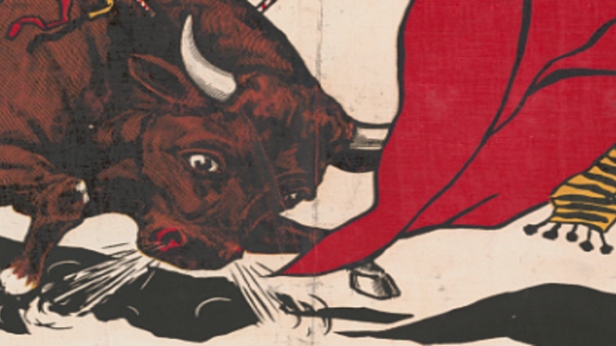
Read the classic postwar novel that made Hemingway the voice of the "Lost Generation."

Study Dostoyevsky’s first great novel, an astonishing prophecy of ideological terror & social insanity.
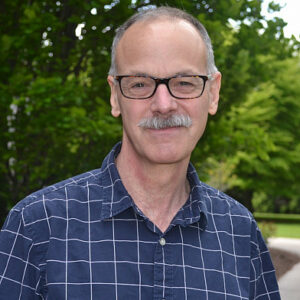
Paul Stern
Paul Stern is Professor of Politics Emeritus at Ursinus College and a scholar of classical political philosophy. His course connects great books teaching, institutional practice, and the enduring question of what liberal education is for.
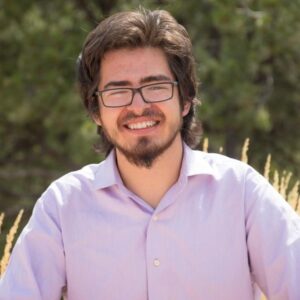
Nestor F. Aranibar Campero
Teaching Assistant
Nestor F. Aranibar Campero is an M.A. candidate in Political Theory and Democratic Culture at the Complutense University of Madrid. He studied philosophy and theology at KU Leuven and the Great Books at St. John’s College. Nestor has served as a teaching assistant for the Hertog Foundation and the Tikvah Fund and leads seminars for the Catherine Project. His research focuses on liberal education and Platonic political philosophy. He will serve as teaching assistant for Liberal Education in America.

Anna Bonta Moreland
Anna Bonta Moreland is Professor of Theology in Villanova University’s Department of Humanities and director of the University Honors Program. Her teaching and scholarship range across theology, interreligious dialogue, Thomas Aquinas, comparative theology, and questions of human flourishing.
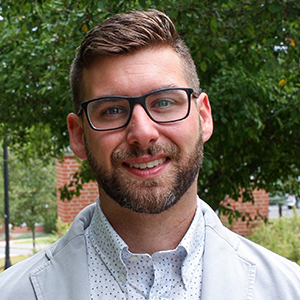
Matthew Dinan
Matthew Dinan is an Associate Professor in the Great Books Program at St. Thomas University in Fredericton, New Brunswick, Canada. He does research on Ancient Greek, Christian, and 19th and 20th Century Political Philosophy.
Cheryl Miller
Cheryl Miller is executive director at the Hertog Foundation. Previously, she served as deputy director of research in the Office of Presidential Speechwriting and as research assistant to David Brooks at The New York Times. Her reviews and commentary have appeared in such publications as The Wall Street Journal, Commentary, and The Weekly Standard. She graduated from the University of Dallas with Bachelor of Arts degrees in English and Politics.
Jacob Howland
Jacob Howland has published five books and roughly 60 scholarly articles and review essays on the thought of Plato, Aristotle, Xenophon, Kierkegaard, the Talmud, the Holocaust, ideological tyranny, and other subjects. His most recent book is Glaucon’s Fate: History, Myth, and Character in Plato’s Republic.