
Thomas Mann’s The Magic Mountain
Follow one young man's education amid a Europe drifting toward the First World War.
Tuesdays | January 5 – 26, 2027
Online
Leo Tolstoy’s Anna Karenina (1878) is a novel obsessed with judgment. Its characters judge one another ceaselessly—across drawing rooms, dinner tables, and the pages of their own diaries—and the novel invites its readers to do the same, only to make that judgment increasingly difficult to sustain.
This course reads Anna Karenina as a moral laboratory, tracing Tolstoy’s treatment of desire and self-deception, freedom and determinism, guilt and forgiveness, and the competing claims of passion and duty. Students will be invited to reflect upon their own judgments of the main characters, using the characters as a mirror to their inner selves.
No secondary reading will be required; instead, a slow, close reading of the novel will be the key ingredient to a fruitful seminar. While the instructor will provide questions for reflection, students are encouraged to bring to seminar discussion their own questions that emerge while reading.
Image: Pavel Fedotov, Major’s Marriage Proposal, 1848
Dr. Moreland on What We Learn from Dolly in Anna Karenina
This course is offered by Humanities at Hertog. It takes place weekly on Tuesday, via Zoom, from 6 PM to 8 PM ET. Fellows who complete the seminar in good standing, including full participation, timely completion of the response paper, and submission of the course evaluation, will receive a $150 Amazon gift card. Required course materials will be provided.
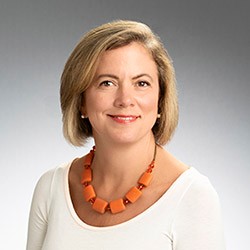
Anna Bonta Moreland is Professor of Theology in Villanova University’s Department of Humanities and director of the University Honors Program. Her teaching and scholarship range across theology, interreligious dialogue, Thomas Aquinas, comparative theology, and questions of human flourishing.
Anna Bonta Moreland is Professor of Theology in Villanova University’s Department of Humanities and the Anne Quinn Welsh Endowed Director of the University Honors Program. A member of the Villanova faculty since 2006, she teaches theology, interreligious dialogue, adult formation, and the rise of modern atheism. Her scholarship draws on Thomas Aquinas and comparative theology, with particular attention to Christianity and Islam. She is the author of Muhammad Reconsidered: A Christian Perspective on Islamic Prophecy and coauthor, with Thomas W. Smith, of The Young Adult Playbook: Living Like It Matters, a practical and philosophical guide to meaningful work, intimacy, leisure, and human flourishing. Moreland earned her Ph.D. at Boston College under Michael J. Buckley, S.J. She has also helped lead national work on purpose and hope in higher education, including a John Templeton Foundation-supported initiative.
Reading and discussion details forthcoming.
Reading and discussion details forthcoming.
Reading and discussion details forthcoming.
Reading and discussion details forthcoming.

Follow one young man's education amid a Europe drifting toward the First World War.
Meditate on Dostoevsky’s final – and greatest – novel.

Devote your winter to Eliot’s masterpiece—one of the greatest novels in the English language.

Read the story of a doomed poet & his wife's heroic dedication to the preservation of his verse.
Explore the political themes in Shakespeare's The Tempest and King Lear.
Read a poignant elegy for a culture destroyed by the two world wars.
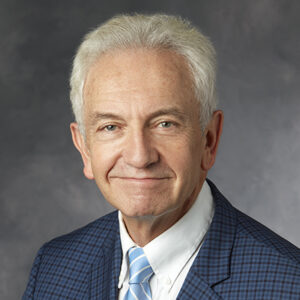
Russell A. Berman
Russell A. Berman is the Walter A. Haas Professor in the Humanities at Stanford University and a senior fellow at the Hoover Institution. His scholarship spans German and comparative literature, cultural theory, religion and culture, the Middle East, and international relations.
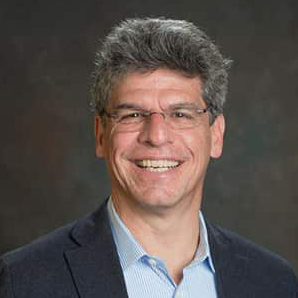
Jacob Howland
Jacob Howland has published five books and roughly 60 scholarly articles and review essays on the thought of Plato, Aristotle, Xenophon, Kierkegaard, the Talmud, the Holocaust, ideological tyranny, and other subjects. His most recent book is Glaucon’s Fate: History, Myth, and Character in Plato’s Republic.

Christopher Scalia
Christopher J. Scalia is a senior fellow in the Social, Cultural, and Constitutional Studies department at the American Enterprise Institute, where he focuses on literature, culture, and higher education. Prior to his role at AEI, Dr. Scalia was an English professor with a specialty in 18th-century and early 19th-century British literature.
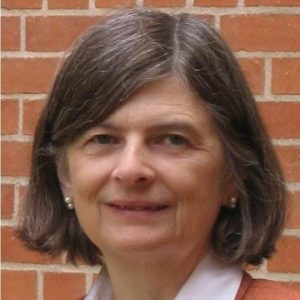
Mary P. Nichols
Mary P. Nichols is Professor Emerita of Political Science at Baylor University. She is author of Thucydides and the Pursuit of Freedom, and Socrates on Friendship and Community: Reflections on Plato’s Symposium, Phaedrus, and Lysis. She has delivered lectures on ancient political theory, Shakespeare, and film.
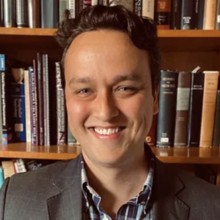
Ian Marcus Corbin
Ian Marcus Corbin is a philosopher on faculty in Neurology at Brigham and Women’s Hospital / Harvard Medical School, where he co-directs the Human Network Initiative, and is a Faculty Member at the HMS Center for Bioethics. His philosophical work examines the connections between modes of intersubjectivity, community, and cognitive flourishing.