.jpg)
Mark Twain’s Tom Sawyer & Huckleberry Finn
Read two great American novels that launched a literary & cultural revolution.
Spring 2026
Washington, DC
This spring, in honor of America’s 250th anniversary, Hertog alumni are invited to revisit a Great American Novel: Willa Cather’s My Ántonia (1918). Set on the Nebraska frontier, Cather’s work explores the formation of American identity through the intertwined themes of immigration, memory, and the building of community in a new land—an enduring effort to make one people out of many. In this semiquincentennial year, particular attention will be given to the novel’s elegiac epigraph, drawn from Virgil—“the best days are the first to flee”—and to Cather’s deeper ambition: to capture what she calls “the precious, the incommunicable past.”
This course is offered in-person, by invitation only to alumni of Hertog programs. It will meet bi-weekly on Wednesdays in Washington, DC.

Jeffrey E. Schulman is Program Manager for Academic Affairs at ACTA. He manages the What Will They Learn?® program and helps communicate ACTA’s mission of higher education reform through op-eds, blogs and articles. He earned a Ph.D. in ancient history from the University of Groningen with a dissertation on political culture in the late Roman empire for which he received the OIKOS PhD award.
Jeffrey E. Schulman is Program Manager for Academic Affairs at ACTA. He manages the What Will They Learn?® program and helps communicate ACTA’s mission of higher education reform through op-eds, blogs and articles. He earned a Ph.D. in ancient history from the University of Groningen with a dissertation on political culture in the late Roman empire for which he received the OIKOS PhD award. He also has an M.A. (ancient history) from Groningen and a B.A. (classics) from the University of Toronto (Trinity College). In his spare time, Jeffrey is an avid runner but also likes to ski and travel, having visited more than 40 countries.
Readings:
Discussion Questions:
Readings:
Discussion Questions:
Readings:
Discussion Questions:
Readings:
Discussion Questions:
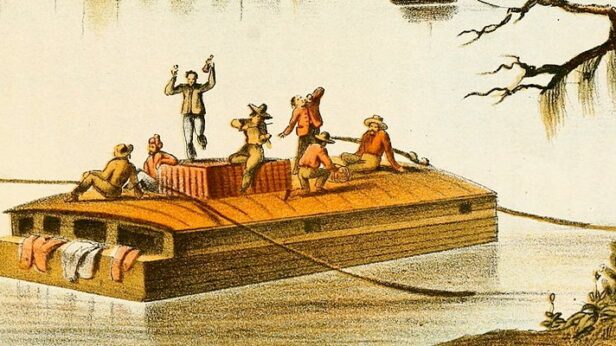
Read two great American novels that launched a literary & cultural revolution.
Explore the fundamental human question of the nature and existence of God with Melville's great American novel.

Follow the transatlantic adventures of a social-climbing American in this classic novel.

Reflect on man’s relation to the wilderness & the beauty that can be found in solitude.
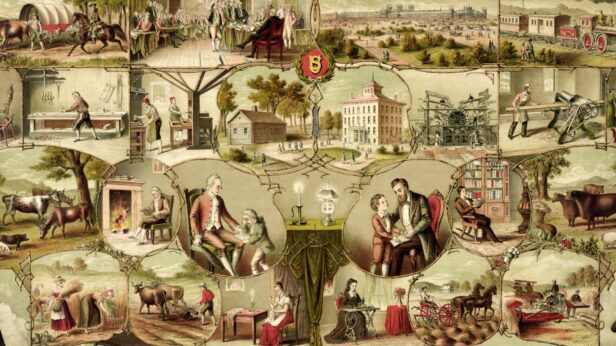
Reflect on what is required today to sustain (or revive) our free and liberal society.
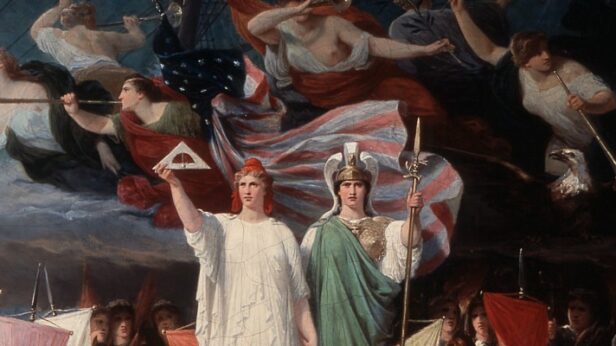
Reflect on the founding of the United States & its perpetuation.
Dorothea Wolfson
Dorothea Israel Wolfson is Managing Director of the Hertog Foundation. Previously, she was Director of the Master of Arts in Government Program at Johns Hopkins University. Her research and teaching interests center on democracy and civic engagement, American political thought, American politics, and family policy. She has published articles on Alexis de Tocqueville, Thomas Jefferson, Abigail Adams, and on John Locke and children’s literature.
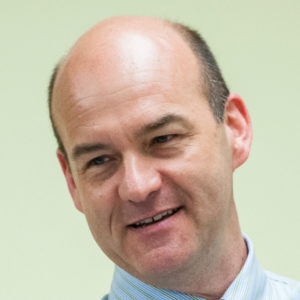
Robert C. Bartlett
Robert C. Bartlett is the Behrakis Professor of Hellenic Political Studies at Boston College. His principal area of research is classical political philosophy, with particular attention to the thinkers of ancient Hellas, including Thucydides, Plato, and Aristotle. He is the co-translator of a new edition of Aristotle’s Nicomachean Ethics.
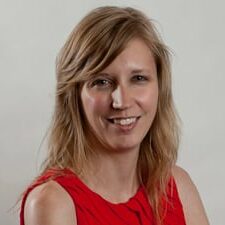
Cheryl Miller
Cheryl Miller is executive director at the Hertog Foundation. Previously, she served as deputy director of research in the Office of Presidential Speechwriting and as research assistant to David Brooks at The New York Times. Her reviews and commentary have appeared in such publications as The Wall Street Journal, Commentary, and The Weekly Standard. She graduated from the University of Dallas with Bachelor of Arts degrees in English and Politics.

Mary Elizabeth Halper
Mary Elizabeth Halper is Dean of the Humanities at Hertog program and a tutor at St. John’s College, Annapolis. Previously, she was Associate Director of the Hertog Foundation. She graduated with B.A.s in Philosophy and Classics from the University of Dallas and has since been devoted to liberal education in various forms.

Yuval Levin
Yuval Levin is a Resident Scholar and Director of Social, Cultural, and Constitutional Studies at the American Enterprise Institute and the Editor of National Affairs magazine. Mr. Levin served on the White House domestic policy staff under President George W. Bush.
Jenna Silber Storey
Jenna Silber Storey is a senior fellow in the Social, Cultural, and Constitutional Studies department at the American Enterprise Institute (AEI), and co-director of AEI’s Center for the Future of the American University. She is concurrently an SNF Agora Fellow at Johns Hopkins University, and a research fellow at the Civitas Institute at the University of Texas at Austin. She also serves on the executive committee of the Alliance for Civics in the Academy.
Meir Y. Soloveichik
Rabbi Dr. Meir Y. Soloveichik is one of the world’s preeminent Jewish thinkers and educators, and he’s one of America’s most influential religious leaders. He is the senior rabbi of Congregation Shearith Israel in Manhattan, the oldest Jewish congregation in the United States. He is also director of the Zahava and Moshael Straus Center for Torah and Western Thought at Yeshiva University. Rabbi Soloveichik has lectured internationally to Jewish and non-Jewish audiences on topics relating to faith in America, the Hebraic roots of the American founding, Jewish theology, bioethics, wartime ethics, Jewish-Christian relations, and more.