Mark Twain’s Tom Sawyer & Huckleberry Finn
Read two great American novels that launched a literary & cultural revolution.
July 6–July 10, 2026
Washington, DC
In the fourth week of Political Studies, fellows will take up one of the most powerful ideas in the American tradition—the promise of equality at the heart of the Declaration of Independence.
The first section, led by political scientist Diana Schaub, explores Abraham Lincoln’s statesmanship in light of his literary and moral vision. Through close readings of his speeches, letters, and proclamations, fellows will trace Lincoln’s political career and reflect on the nature of democratic debate—how passion and reason together can shape public life. Special attention will be given to Lincoln’s engagement with the Founding and his effort to preserve its principles amid the moral crisis of slavery.
The second section, led by constitutional historian Akhil Reed Amar and legal scholar Adam J. White, turns to the dramatic constitutional transformations that followed the Civil War. Over eight decades, four amendments abolished slavery, established birthright citizenship, and extended suffrage regardless of race or gender. Together, these debates and reforms illuminate the long struggle to realize America’s founding promise of equality.
Image: An Incident in Contemporary American Life, Mural by Mitchell Jamieson, 1940-1943
Prof. Amar on We the People
This course is part of our residential Political Studies Program. Fellows participate in morning seminars and meet prominent men and women in public life over afternoon and evening sessions. Up to 32 fellows will be selected.
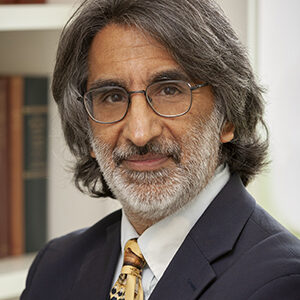
Akhil Reed Amar is Sterling Professor of Law and Political Science at Yale University, where he teaches constitutional law in both Yale College and Yale Law School. He is Yale’s only currently active professor to have won the University’s unofficial triple crown — the Sterling Chair for scholarship, the DeVane Medal for teaching, and the Lamar Award for alumni service. He hosts a weekly podcast, Amarica’s Constitution.
Akhil Reed Amar is Sterling Professor of Law and Political Science at Yale University, where he teaches constitutional law in both Yale College and Yale Law School. After graduating from Yale College, summa cum laude, in 1980 and from Yale Law School in 1984, and clerking for then Judge (now Justice) Stephen Breyer, Amar joined the Yale faculty in 1985 at the age of 26. He is Yale’s only currently active professor to have won the University’s unofficial triple crown — the Sterling Chair for scholarship, the DeVane Medal for teaching, and the Lamar Award for alumni service.
Amar’s work has won awards from both the American Bar Association and the Federalist Society, and he has been cited by Supreme Court justices across the spectrum in more than 40 cases — tops in his generation. He regularly testifies before Congress at the invitation of both parties; and in surveys of judicial citations and/or scholarly citations, he invariably ranks among America’s five most-cited mid-career legal scholars.
He is the author of more than a hundred law review articles and several books, most notably The Bill of Rights (1998 — winner of the Yale University Press Governors’ Award), America’s Constitution (2005 — winner of the ABA’s Silver Gavel Award), America’s Unwritten Constitution (2012 — named one of the year’s 100 best nonfiction books by The Washington Post), and The Constitution Today (2016 — named one of the year’s top ten nonfiction books by Time magazine). The first volume of his ambitious trilogy on American constitutional history from the Founding to the present, The Words That Made Us: America’s Constitutional Conversation, 1760-1840, came out in May 2021. The second volume, Born Equal: Remaking America’s Constitution, 1840-1920, was published in September 2025. He hosts a weekly podcast, Amarica’s Constitution.

Adam J. White is the Laurence H. Silberman Chair in Constitutional Governance and senior fellow at the American Enterprise Institute, where he focuses on the Supreme Court and the administrative state. Concurrently, he codirects the Antonin Scalia Law School’s C. Boyden Gray Center for the Study of the Administrative State.
Adam J. White is the Laurence H. Silberman Chair in Constitutional Governance and senior fellow at the American Enterprise Institute, where he focuses on the Supreme Court and the administrative state. Concurrently, he codirects the Antonin Scalia Law School’s C. Boyden Gray Center for the Study of the Administrative State.
Mr. White practiced constitutional and administrative law, particularly in the regulation of energy and financial markets. He started his legal career as a law clerk for Judge David B. Sentelle at the US Court of Appeals for the DC Circuit.
Mr. White has testified often before Congress, including before the Senate’s Committees on the Judiciary; Commerce, Science, and Transportation; and Homeland Security and Governmental Affairs and before the House’s Judiciary and Financial Services Committees. In 2018, the Senate Committee on the Judiciary called him to testify in Brett Kavanaugh’s Supreme Court confirmation hearings to advise senators on Kavanaugh’s approach to administrative law.
In 2021, he served on the Presidential Commission on the Supreme Court of the United States, where he criticized “Court packing” and other efforts to restructure the Supreme Court. In 2017, he was appointed to serve on the Administrative Conference of the United States. He also serves on the leadership council for the American Bar Association’s Administrative Law and Regulatory Practice Section, which he will chair in 2023–24. Before joining AEI, he was a research fellow at Stanford University’s Hoover Institution and an adjunct fellow at the Manhattan Institute.
Mr. White has a JD from Harvard Law School and a bachelor of business administration from the College of Business at the University of Iowa.
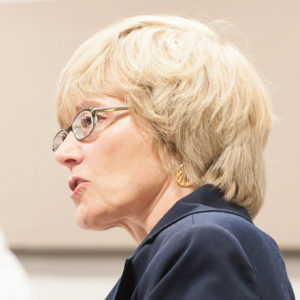
Diana Schaub is a nonresident senior fellow at the American Enterprise Institute (AEI), where her work is focused on American political thought and history, particularly Abraham Lincoln, Frederick Douglass, African American political thought, Montesquieu, and the relevance of core American ideals to contemporary challenges and debates. Concurrently, she is Professor Emerita of Political Science at Loyola University Maryland, where she taught for almost three decades.
Diana Schaub is a nonresident senior fellow at the American Enterprise Institute (AEI), where her work is focused on American political thought and history, particularly Abraham Lincoln, Frederick Douglass, African American political thought, Montesquieu, and the relevance of core American ideals to contemporary challenges and debates. Concurrently, she is Professor Emerita of Political Science at Loyola University Maryland, where she taught for almost three decades.
An expert in political philosophy, Dr. Schaub has lectured on a variety of topics and participated in conferences around the country. She has contributed chapters to multiple books on Shakespeare, liberal education, women, and religion, and she is the author of three books: His Greatest Speeches: How Lincoln Moved the Nation (St. Martin’s Press, 2021); What So Proudly We Hail: The American Soul in Story, Speech, and Song, coedited with Amy and Leon Kass (ISI Books, 2011); and Erotic Liberalism: Women and Revolution in Montesquieu’s “Persian Letters” (Rowman & Littlefield, 1995). Her monograph Emancipating the Mind: Lincoln, the Founders, and Scientific Progress (AEI, 2018) is based on her remarks at the 2018 Walter Berns Constitution Day Lecture.
Dr. Schaub has also been published in the popular press, including in the Baltimore Sun, the Claremont Review of Books, Commentary, and the Wall Street Journal.
Dr. Schaub has a PhD and an MA in political science from the University of Chicago. Her BA in political science is from Kenyon College.
Readings:
Discussion Questions:
Readings:
Discussion Questions:
Readings:
Discussion Questions:
Readings:
Discussion Questions:
Readings:
Discussion Questions:
Readings:
Discussion Questions:
Readings:
Discussion Questions:
Readings:
Discussion Questions:
Readings:
Discussion Questions:
Readings:
Discussion Questions:

Read two great American novels that launched a literary & cultural revolution.
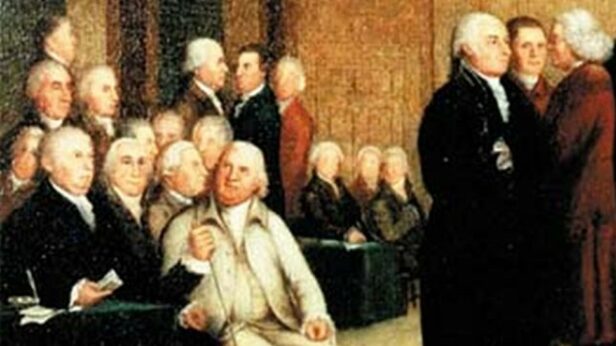
Revisit key constitutional questions through the lens of history and law.
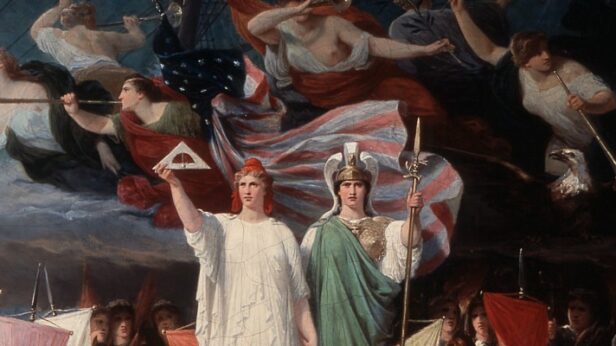
Reflect on the founding of the United States & its perpetuation.
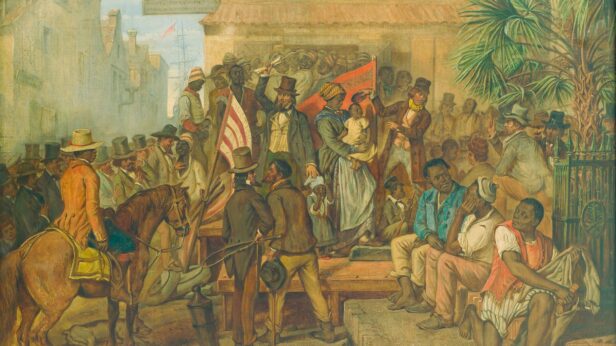
Consider the status of slavery and race in the American Founding.

Study this monumental work on race, identity, and citizenship in America.
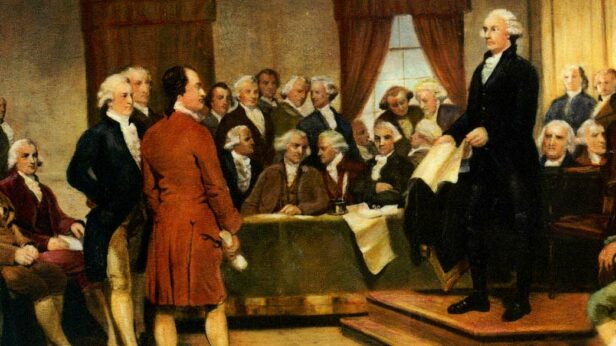
Evaluate the Constitutional Convention’s work through a close reading of The Federalist and the writings of the Anti-Federalists.
Dorothea Wolfson
Dorothea Israel Wolfson is Managing Director of the Hertog Foundation. Previously, she was Director of the Master of Arts in Government Program at Johns Hopkins University. Her research and teaching interests center on democracy and civic engagement, American political thought, American politics, and family policy. She has published articles on Alexis de Tocqueville, Thomas Jefferson, Abigail Adams, and on John Locke and children’s literature.
Akhil Reed Amar
Akhil Reed Amar is Sterling Professor of Law and Political Science at Yale University, where he teaches constitutional law in both Yale College and Yale Law School. He is Yale’s only currently active professor to have won the University’s unofficial triple crown — the Sterling Chair for scholarship, the DeVane Medal for teaching, and the Lamar Award for alumni service. He hosts a weekly podcast, Amarica’s Constitution.

Adam J. White
Adam J. White is the Laurence H. Silberman Chair in Constitutional Governance and senior fellow at the American Enterprise Institute, where he focuses on the Supreme Court and the administrative state. Concurrently, he codirects the Antonin Scalia Law School’s C. Boyden Gray Center for the Study of the Administrative State.
Jenna Silber Storey
Jenna Silber Storey is a senior fellow in the Social, Cultural, and Constitutional Studies department at the American Enterprise Institute (AEI), and co-director of AEI’s Center for the Future of the American University. She is concurrently an SNF Agora Fellow at Johns Hopkins University, and a research fellow at the Civitas Institute at the University of Texas at Austin. She also serves on the executive committee of the Alliance for Civics in the Academy.
Meir Y. Soloveichik
Rabbi Dr. Meir Y. Soloveichik is one of the world’s preeminent Jewish thinkers and educators, and he’s one of America’s most influential religious leaders. He is the senior rabbi of Congregation Shearith Israel in Manhattan, the oldest Jewish congregation in the United States. He is also director of the Zahava and Moshael Straus Center for Torah and Western Thought at Yeshiva University. Rabbi Soloveichik has lectured internationally to Jewish and non-Jewish audiences on topics relating to faith in America, the Hebraic roots of the American founding, Jewish theology, bioethics, wartime ethics, Jewish-Christian relations, and more.
Thomas Merrill
Thomas Merrill is an associate professor in the School of Public Affairs at American University. He is the author of Hume and the Politics of Enlightenment. He is also the co-editor of three edited volumes, including The Political Thought of the Civil War.
Ralph Lerner
Ralph Lerner is the Benjamin Franklin Professor Emeritus in the College and professor emeritus in the Committee on Social Thought at the University of Chicago. He is the author, most recently, of Naïve Readings: Reveilles Political and Philosophic (University of Chicago Press).