Solzhenitsyn’s The Gulag Archipelago
Read Solzhenitsyn's searing & deep indictment of the Communist project for its 50th anniversary.
July 13–July 17, 2026
Washington, DC
In the fifth week of Political Studies, fellows will focus on revolution and tyranny—and what becomes of statesmanship in times of crisis and upheaval.
The first section, led by Dr. Flagg Taylor, examines the distinctive tyranny that dominated much of the twentieth century: totalitarianism. Through the writings of Aleksandr Solzhenitsyn, Hannah Arendt, and Václav Havel, fellows will study the nature of “ideological tyranny” and its effort to control not only politics but conscience itself. Their reflections open broader questions about justice, moral courage, and the limits of human freedom under oppressive regimes.
The second section, led by Matthew Continetti, turns to revolution and its critics. Political scientist Samuel P. Huntington defined conservatism as the defense of inherited institutions against radical challenge. Conservatives, in this view, emerge amid upheaval to explain why the structures that give life direction and meaning are worth preserving. Fellows will trace this response across three revolutions: the American, through the Federalist effort to secure liberty by constitutional design; the French, through the critiques of Edmund Burke and Joseph de Maistre; and the Russian, through Winston Churchill’s warnings about Bolshevism and the rise of twentieth-century anti-Communist conservatism. Through close reading and discussion, fellows will consider what conservatism reveals about the enduring tension between renewal and preservation in political life.
Prof. Taylor on Women of the Gulag
This course is part of our residential Political Studies Program. Fellows participate in morning seminars and meet prominent men and women in public life over afternoon and evening sessions. Up to 32 fellows will be selected.
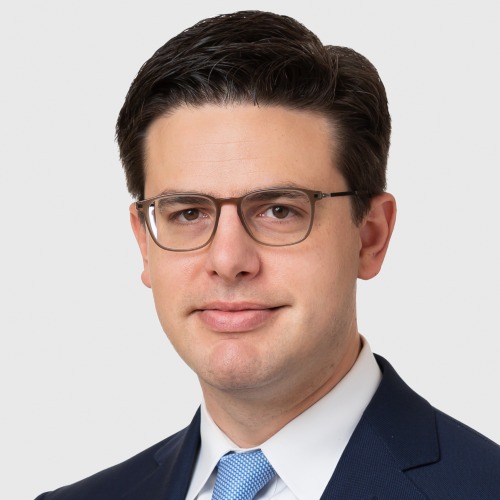
Matthew Continetti is the director of domestic policy studies and the inaugural Patrick and Charlene Neal Chair in American Prosperity at the American Enterprise Institute (AEI), where his work is focused on American political thought and history, with a particular focus on the development of the Republican Party and the American conservative movement in the 20th century.
Matthew Continetti is the director of domestic policy studies and the inaugural Patrick and Charlene Neal Chair in American Prosperity at the American Enterprise Institute (AEI), where his work is focused on American political thought and history, with a particular focus on the development of the Republican Party and the American conservative movement in the 20th century.
A prominent journalist, analyst, author, and intellectual historian of the right, Mr. Continetti was the founding editor and the editor in chief of The Washington Free Beacon. Previously, he was opinion editor at The Weekly Standard.
Mr. Continetti is the author of three books, including, most recently, The Right: The Hundred-Year War for American Conservatism (Basic Books, 2022).
He has a B.A. in history from Columbia University.
Flagg Taylor is the Executive Director of the Center for Civics, Culture, & Society, at Miami University. His research specialty is in the history of political thought and American government, especially the question of executive power. He is Chair of the Academic Council of the Victims of Communism Memorial Foundation.
Flagg Taylor is the Executive Director of the Center for Civics, Culture, & Society, at Miami University. His research specialty is in the history of political thought and American government, especially the question of executive power. He is Chair of the Academic Council of the Victims of Communism Memorial Foundation.
He is the co-author of The Contested Removal Power, 1789-2010, author of numerous articles, and editor of The Great Lie: Classic and Recent Appraisals of Ideology and Totalitarianism and The Long Night of the Watchman: Essays by Václav Benda, 1977–1989. He holds a Ph.D. and an M.A. in political science from Fordham University and a B.A. from Kenyon College.
Readings:
Discussion Questions:
Readings:
Discussion Questions:
Readings:
Discussion Questions:
Readings:
Discussion Questions:
Readings:
Discussion Questions:
Readings:
Readings:
Discussion Questions:
Readings:
Readings:
Readings:
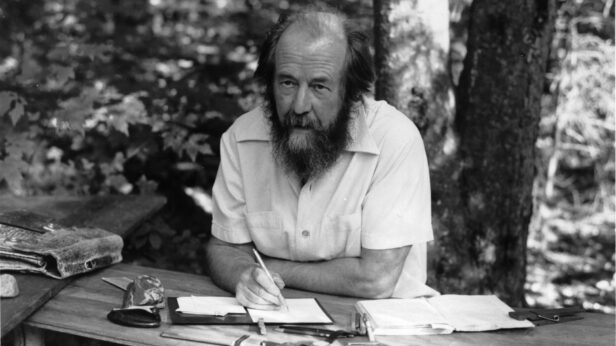
Read Solzhenitsyn's searing & deep indictment of the Communist project for its 50th anniversary.
Examine the ideology of “neoliberalism” and its challengers.

Study the trajectory of U.S. policy towards Russia from the Soviet collapse to the invasion of Ukraine.
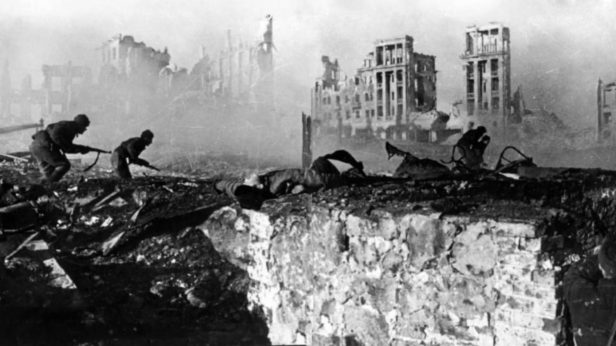
Read the novel known as the Soviet War & Peace, & reflect on the nature of totalitarianism.
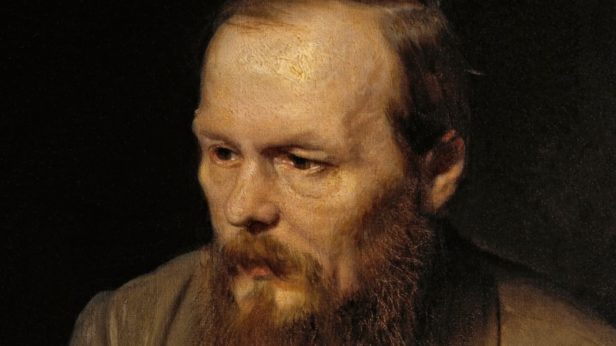
Study Dostoevsky's great novel on the nature, logic, and social origins of revolutionary politics.
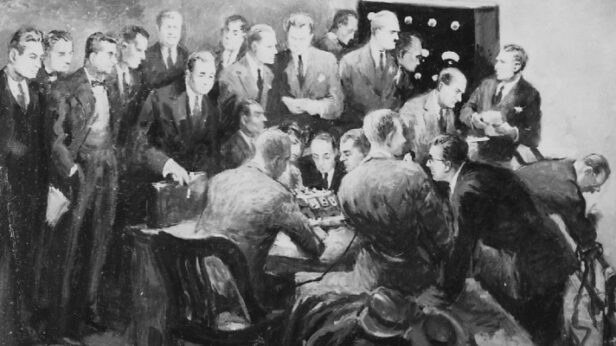
Read a history that's part biography of the scientists working at the advent of nuclear physics & part biography of the atom itself.
Flagg Taylor
Flagg Taylor is the Executive Director of the Center for Civics, Culture, & Society, at Miami University. His research specialty is in the history of political thought and American government, especially the question of executive power. He is Chair of the Academic Council of the Victims of Communism Memorial Foundation.
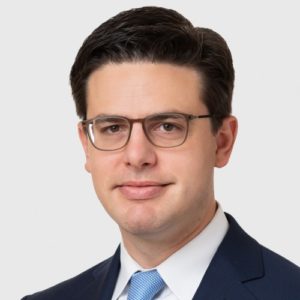
Matthew Continetti
Matthew Continetti is the director of domestic policy studies and the inaugural Patrick and Charlene Neal Chair in American Prosperity at the American Enterprise Institute (AEI), where his work is focused on American political thought and history, with a particular focus on the development of the Republican Party and the American conservative movement in the 20th century.
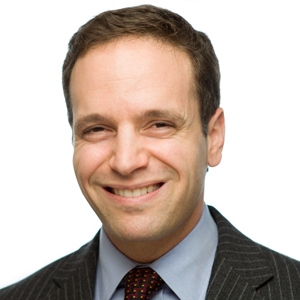
Vance Serchuk
Vance Serchuk is Executive Director of the KKR Global Institute and an Adjunct Senior Fellow at the Center for a New American Security. Prior to joining KKR, Mr. Serchuk served for six years as the senior national security advisor to Senator Joseph Lieberman (I-Connecticut).
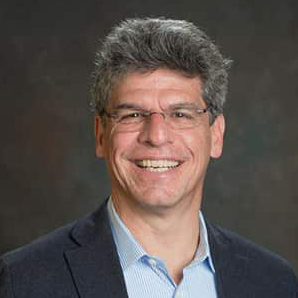
Jacob Howland
Jacob Howland is McFarlin Professor of Philosophy Emeritus at the University of Tulsa. He has written about Plato, Aristotle, Xenophon, Kierkegaard, the Talmud, the Holocaust, ideological tyranny, and other subjects. His most recent book is Glaucon’s Fate: History, Myth, and Character in Plato’s Republic.
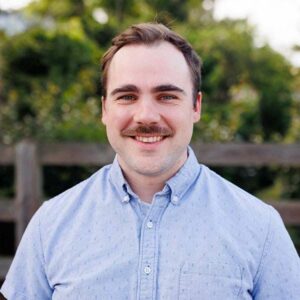
Patrick Coleman
Patrick Coleman is a Tutor at St. John’s College. He earned his Ph.D. in Physics from University of Illinois, Urbana-Champaign, with a dissertation on synchronization, and his B.S. in Physics from William & Mary College along with a minor in Philosophy. He is currently leading a research group on the integration of a Technology and Computation segment in St. John’s College’s Graduate Institute. Patrick has led seminars and reading groups for The Catherine Project, including a recent reading group on Richard Feynman’s Lectures on Computation, and is especially devoted to deepening scientific literacy.